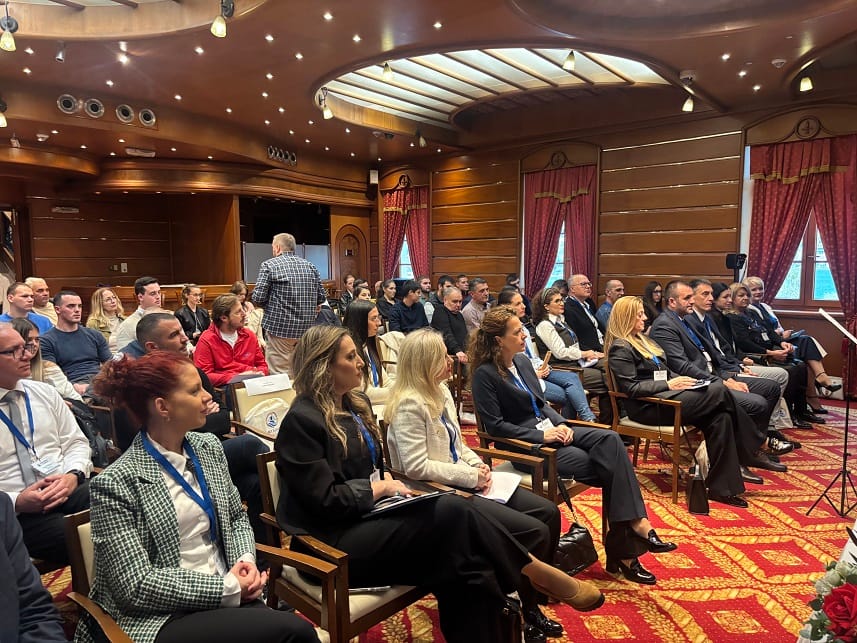
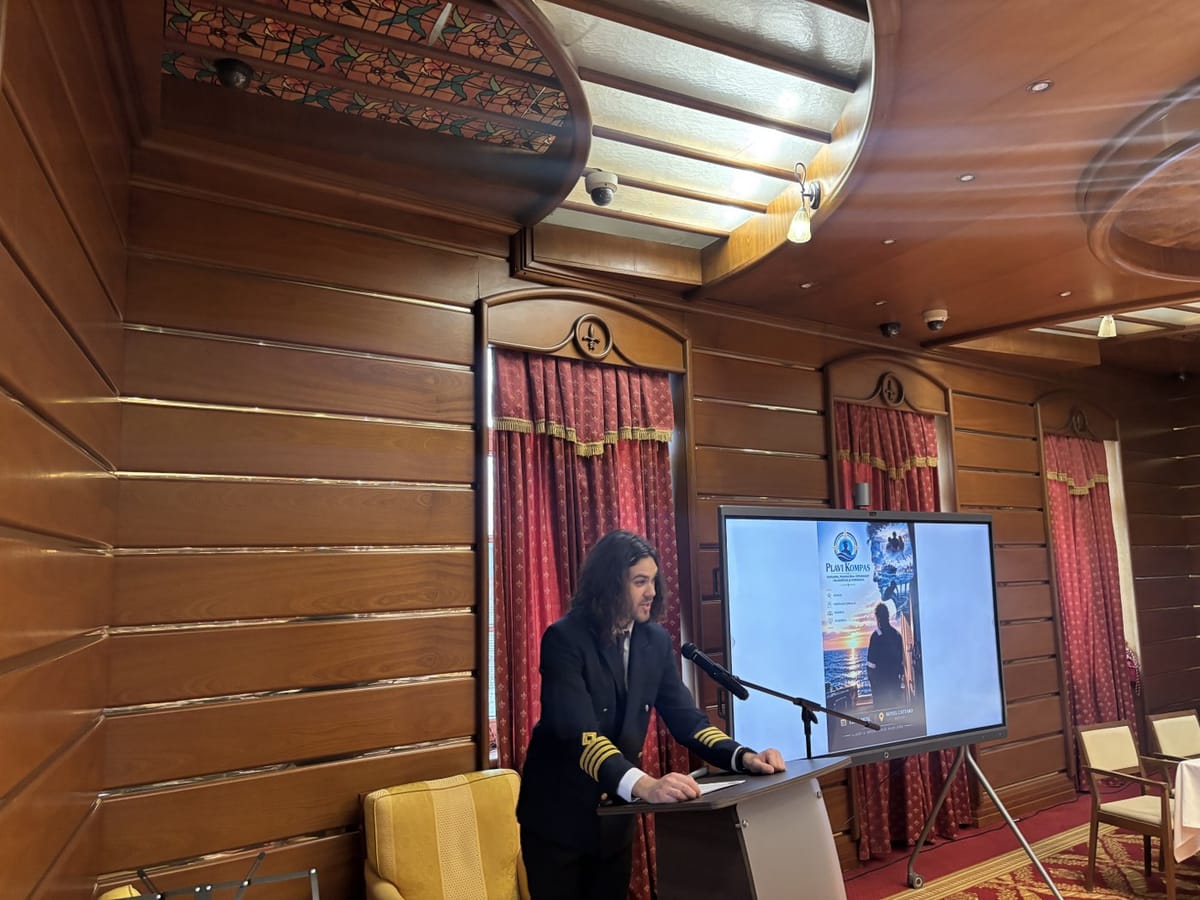
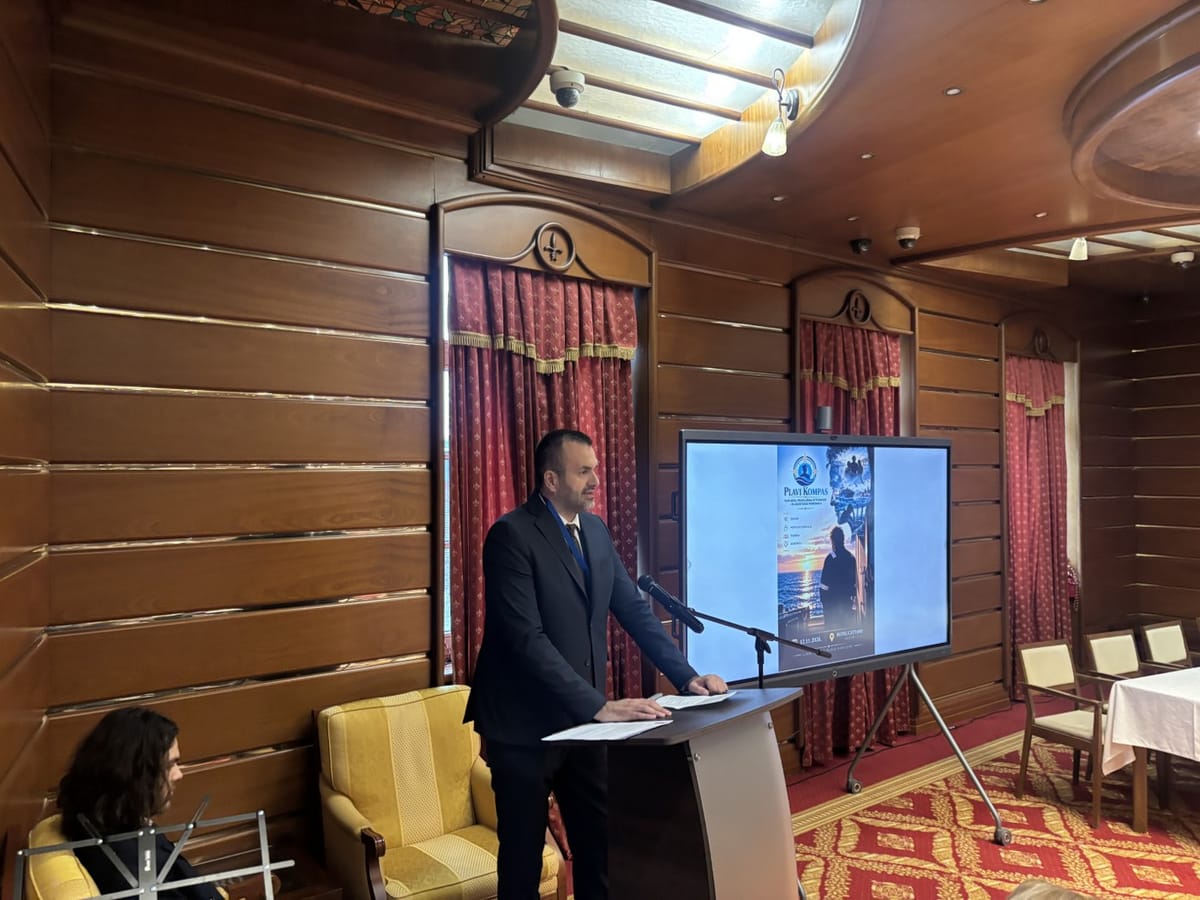
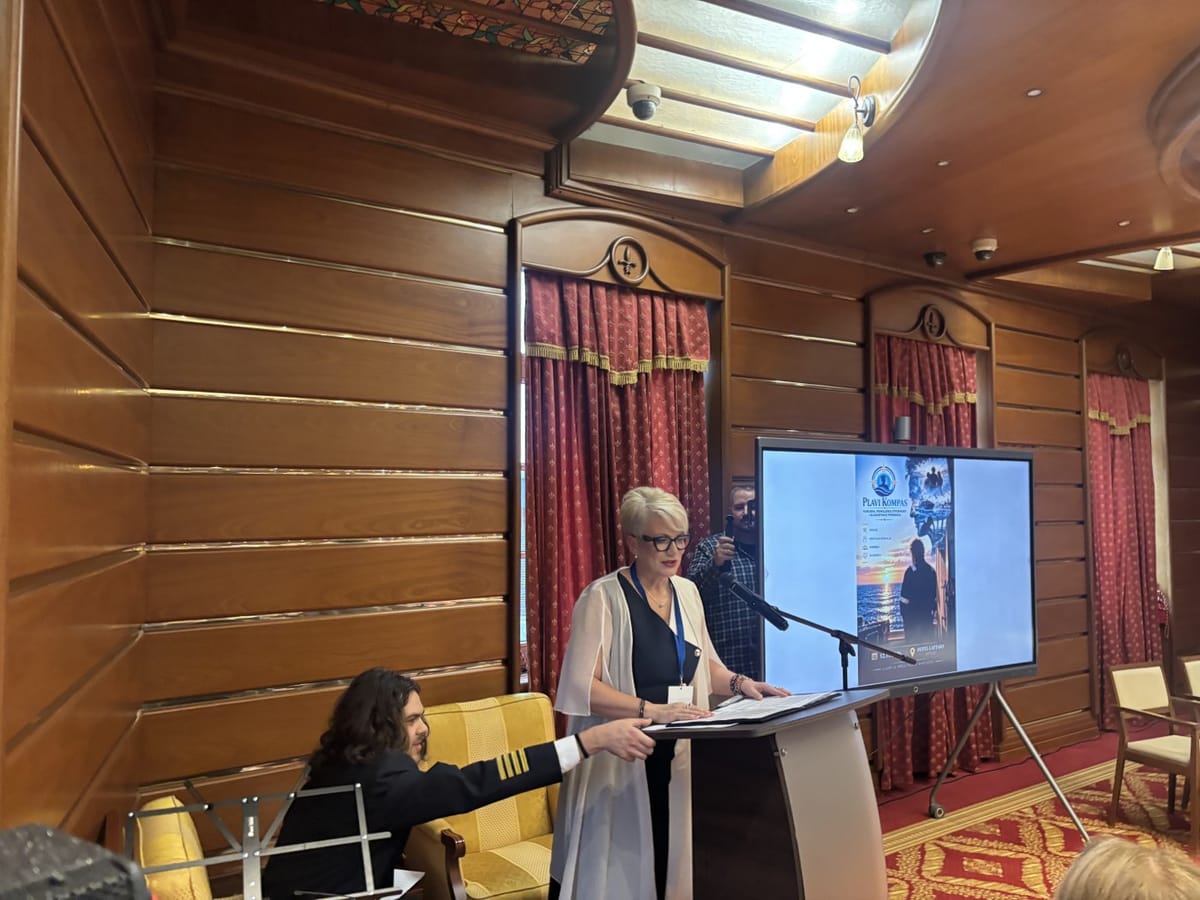
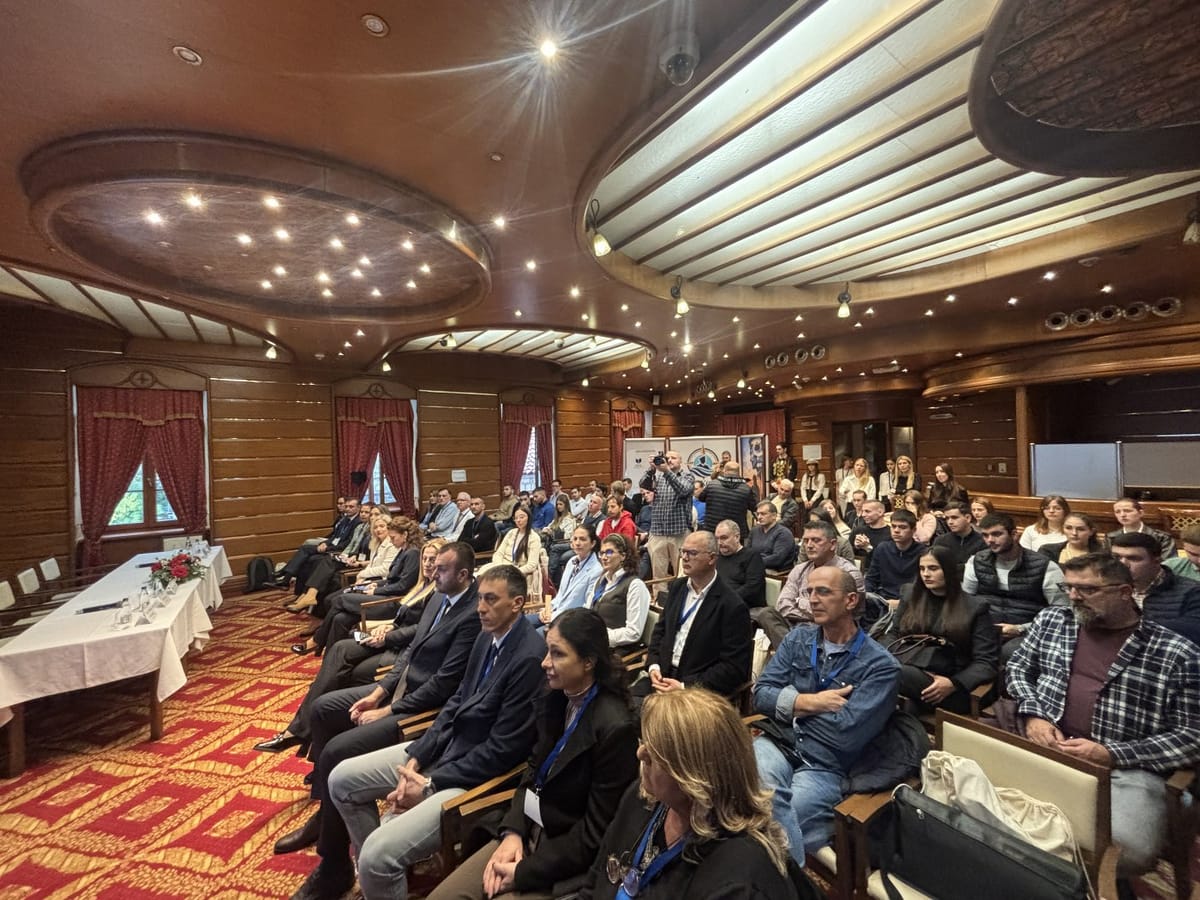
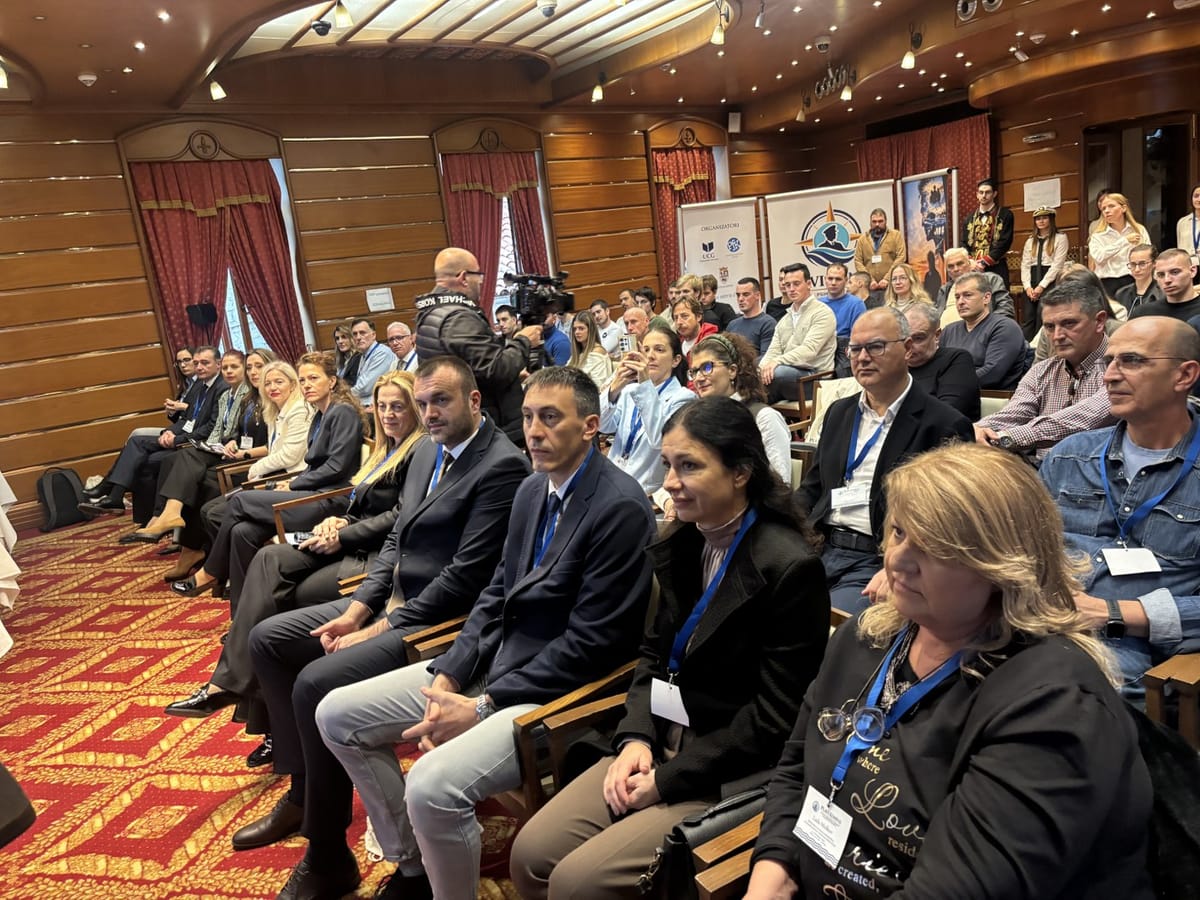
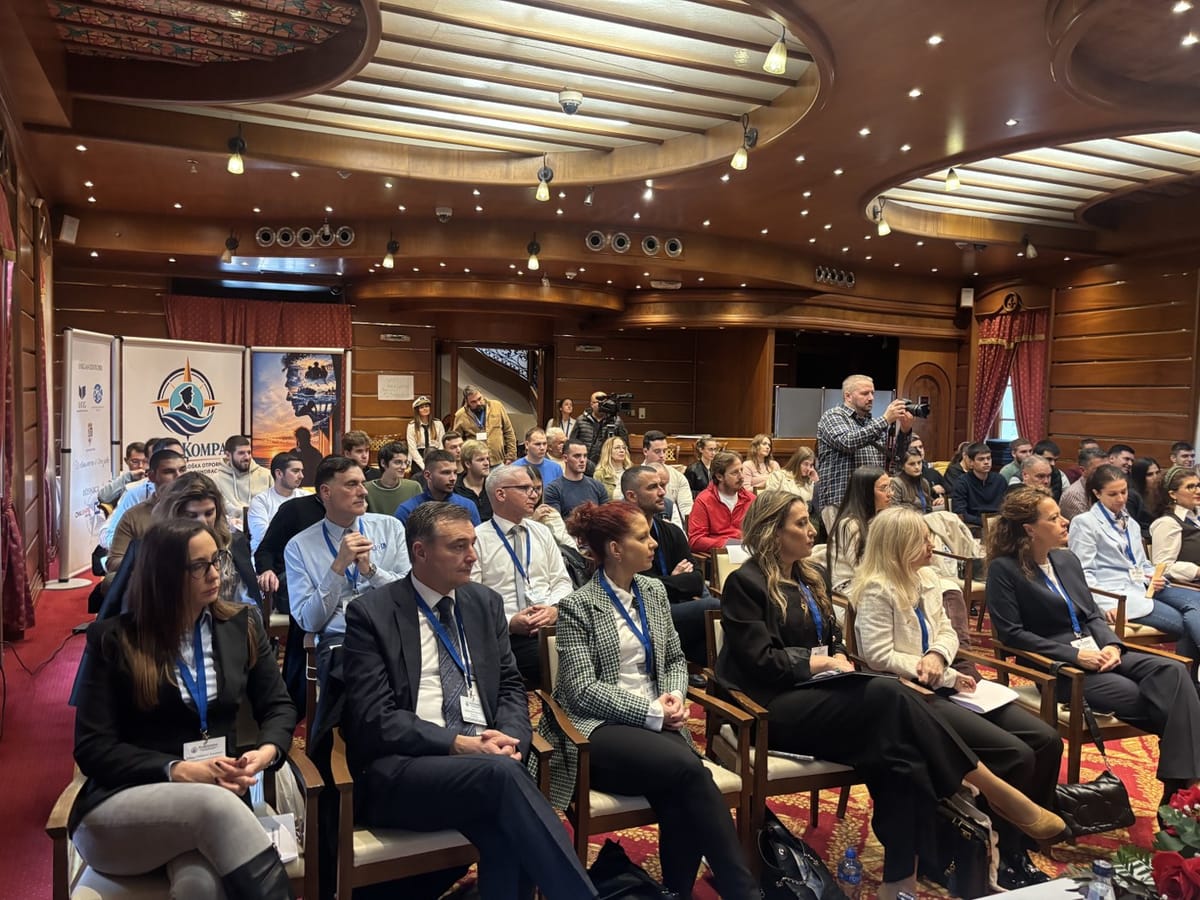
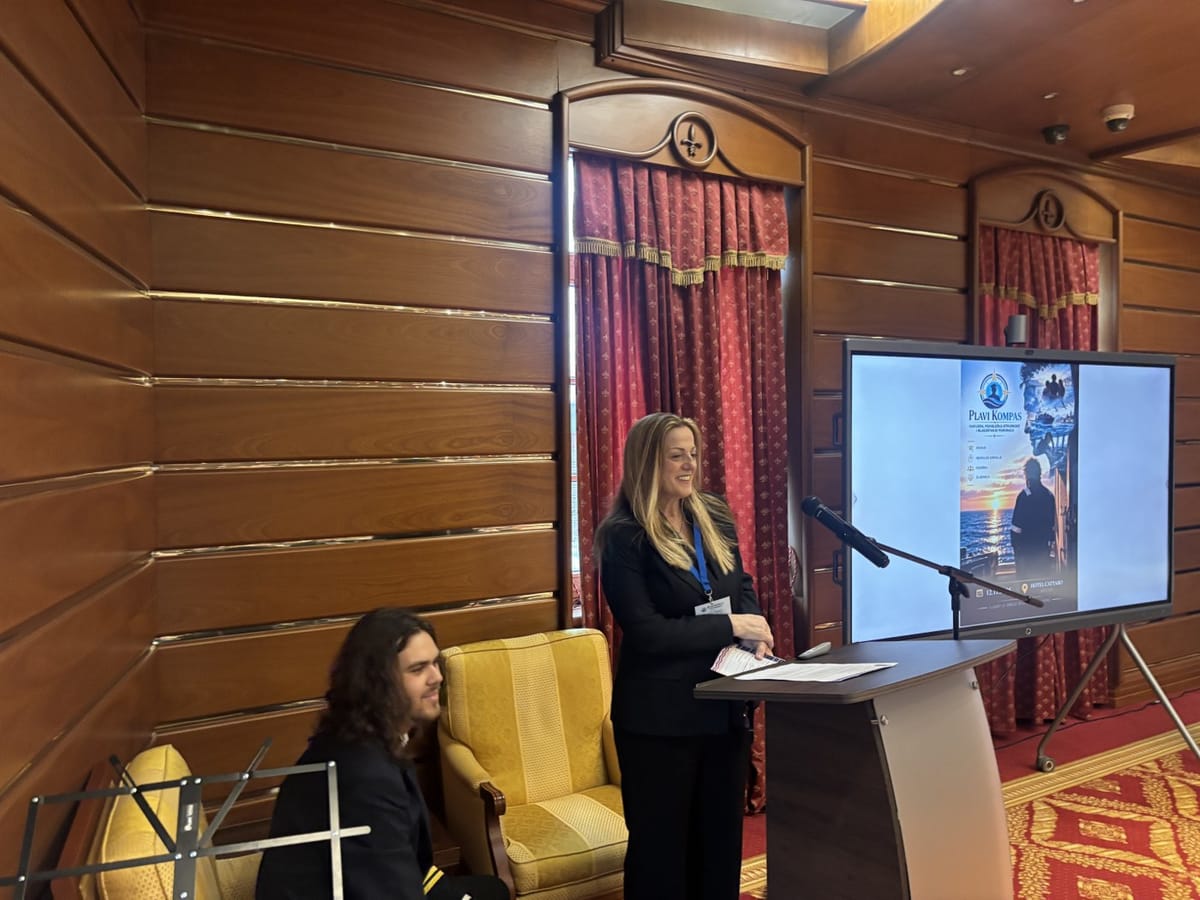
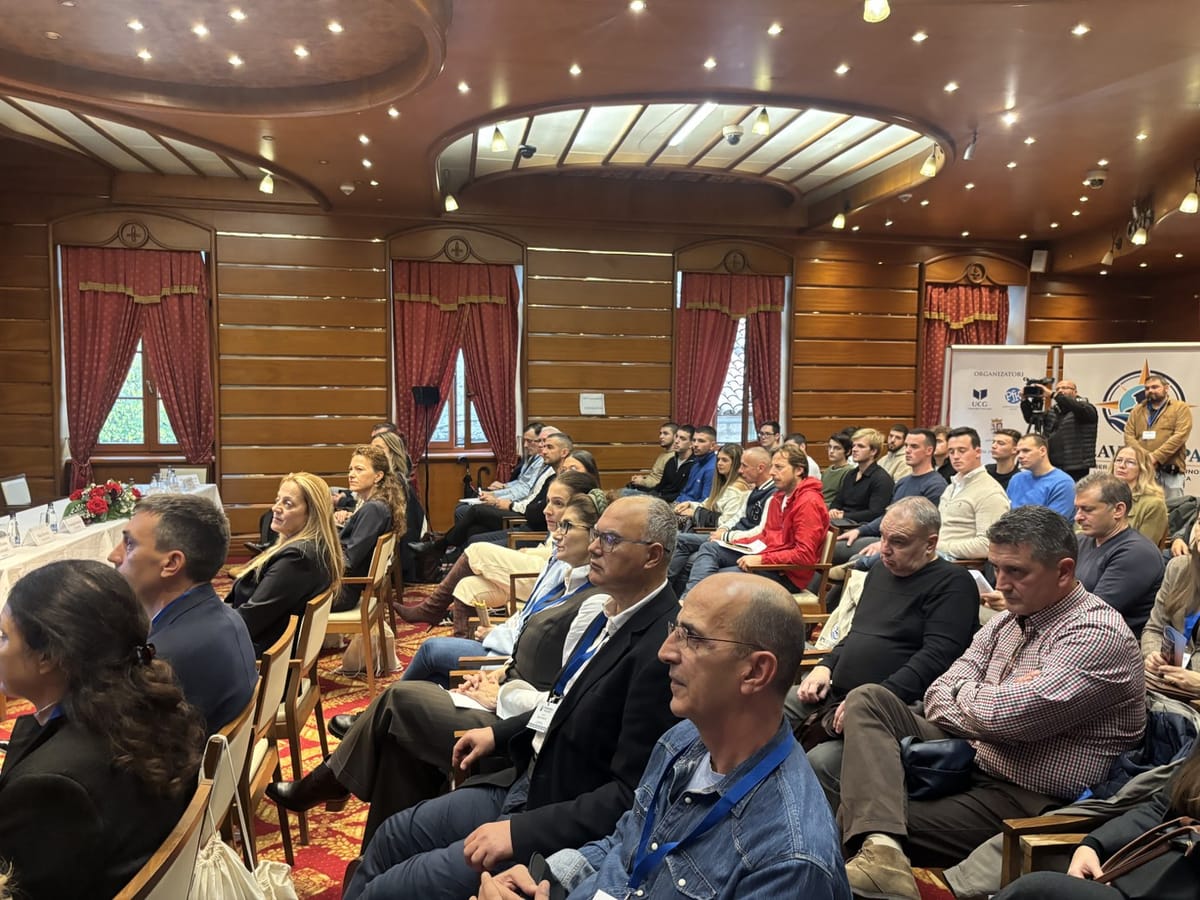
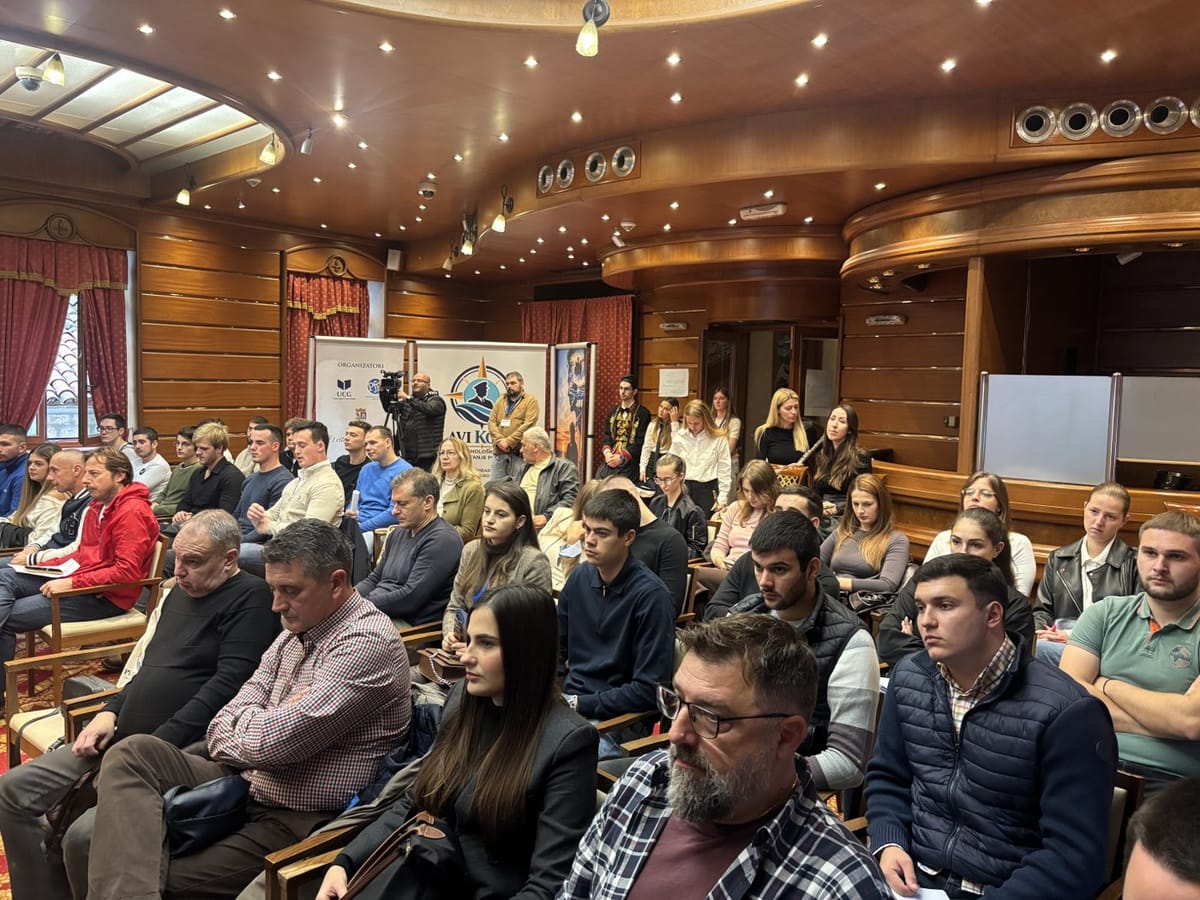
Those present were addressed by the Dean of the Faculty of Maritime Studies Kotor, Prof Tatjana Dlabač, Kotor's Deputy Mayor Stojan Milović and the organiser of the event, Assistant Professor Ranka Krivokapić.
The Dean of the Faculty of Maritime Studies Kotor, Prof Tatjana Dlabač, said that it was Assistant Professor Ranka Krivokapić who, thanks to her professional and personal experience, was particularly well placed to launch an event that looks at the seafaring profession beyond its professional boundaries.
“She is connected to seafaring both professionally and, above all, personally, as she has been married to a seafarer, a chief engineer, for more than 30 years. Everything the rest of us have learned through stories, conversations, from our godparents and friends or from the press, Ranka has lived through over these 30 years, through constant farewells, homecomings and worries, and through being both father and mother to her children during the periods when her husband was away. That is why I believe she is the best qualified person to speak on this subject,” said Dlabač.
According to Dlabač, Krivokapić has combined her personal experience with her professional work at the Faculty, where every day she meets students who have chosen seafaring as their future career, as well as working seafarers who are returning to education and professional training.
“She has managed to put together a wonderful story called ‘Blue Compass’. I must say this is not the first activity our Professor Ranka has organised. In the past, events devoted to blue careers have been held regularly, as well as meetings that brought our industry partners and companies together with students. Now, however, we have something extra. For the first time we are bringing together several important things, especially something people often don't think about. Besides the profession itself, professional work and career progression, there is also the other side of life at sea – what happens when seafarers are alone with themselves, when they are in their cabins, when they are waiting to be reunited with their loved ones, when they are wondering whether they will have a good internet connection so they can talk to their families,” Dlabač said.
She stressed that support for seafarers is important not only for the Faculty and Kotor but also for Montenegro, given the importance of seafaring to the country.
“I can only express my enormous satisfaction that you are here today and that you have supported this very important activity – not only for the Faculty of Maritime Studies, our town of Kotor and the local community, but for the whole of Montenegro. We know that we are among the world leaders in the number of seafarers, since seafarers make up one per cent of Montenegro's population. Our best ambassadors, the people who represent us best, are our seafarers, and we really should stand by them and give them our support, regardless of where they were educated and which part of the maritime industry they have chosen,” said Dlabač.
She thanked the organiser for the idea and Kotor Municipality for its support, noting that many of the Faculty of Maritime Studies' activities could not be carried out without cooperation with the local authorities.
Kotor's Deputy Mayor Stojan Milović recalled the centuries-old ties between Kotor and seafaring, stressing that there is hardly a family in the town that is not connected in some way with the sea and the seafaring profession.
“A great deal has been said about Kotor and seafaring. That bond has lasted for centuries, and there is hardly a family in our town that is not linked to seafaring in some way. I come from such a family myself, so I know very well that, for all the opportunities it offers, this profession also demands sacrifices. Seafaring has given many of our families a better life, but behind that better life lie months of separation, missed family moments and great sacrifices that are rarely talked about. That is why I am particularly pleased that this year's event puts the human being at its centre,” Milović said.
He pointed out that conversations about seafaring are mostly about careers, job opportunities, ships and earnings, while far less attention is paid to the seafarers themselves, their families and the challenges they face every day.
“It is important to understand that a successful seafaring career rests not only on expertise and promotion, but also on mental health, a sense of security and the support seafarers need to cope with all the challenges. It is important that we also talk about this with young people who are only now choosing their careers. Seafaring will offer them great opportunities, but it is equally important that they are aware of the responsibilities and challenges the profession brings. That is why our shared task is to give them not only a good education but also the support that will help them overcome those challenges,” said Milović.
In his words, responsibility for creating such an environment lies with educational institutions and shipping companies, but also with local government.
“We at Kotor Municipality fully recognise the importance of seafaring for our town and will always be a reliable partner for any events and initiatives that can help improve the position of seafarers. I believe that through talks and discussions we will help people better understand the seafaring profession and also create the conditions for new initiatives and cooperation. Because if we are talking about the future of seafaring, it is important not to forget what matters most – the people who are its foundation,” Milović concluded.
The organiser of the event, Assistant Professor Ranka Krivokapić, noted that throughout its history Kotor has grown alongside the sea and from the sea, and that generations of its people have built their lives and careers on ships all over the world, carrying with them the knowledge, the sense of responsibility and the values of the maritime tradition of the Bay of Kotor.
“While we speak with pride about their professional successes, their experience and their contribution to seafaring, I believe it is just as important to speak about what often goes unseen behind those successes. About the long months away from their families, the responsibility the seafaring profession demands every day, the challenges of adapting, the pressures and the loneliness, but also about the strength, perseverance and dedication of the people who have chosen this way of life. Because a seafarer is not just a crew member, an officer, a master or a chief engineer. A seafarer is at the same time someone's child, parent, spouse and friend. A human being with their own ambitions, worries, emotions and needs,” said Krivokapić.
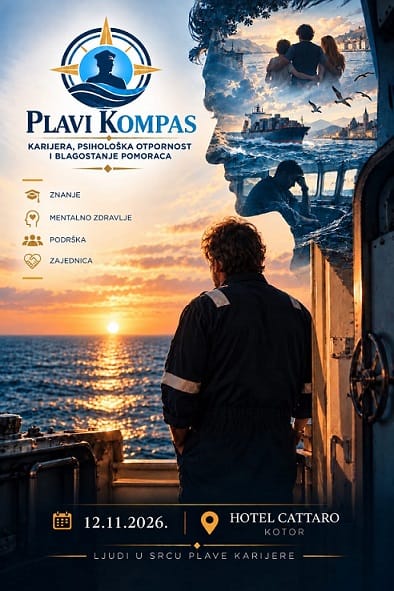
She explained that it was precisely this kind of thinking that gave rise to the idea for “Blue Compass”, with the aim of giving a new dimension to an event that traditionally brings students and shipping companies together.
“We wanted an event that traditionally brings students and shipping companies together to gain another, higher dimension. Alongside talks on employment and professional development, we wanted to make room for questions of seafarers' psychological health and well-being. I am especially pleased that we have with us today representatives of different generations and professional backgrounds – those with years at sea behind them, those who offer opportunities for professional development, and young people who are just getting ready to take their first steps in the maritime world. I believe that it is in this meeting of experience, knowledge and youth that the greatest value of today's event lies,” Krivokapić stressed.
She emphasised that the aim of the event was not to provide answers to every question in a single day, but to start a conversation about issues that deserve continued attention.
“Our aim is not to offer answers to every question in a single day, nor is that at all possible. We want to start conversations that will continue, to encourage mutual understanding and to remind people that looking after your mental health is not a sign of weakness but an important part of personal and professional responsibility,” said Krivokapić.
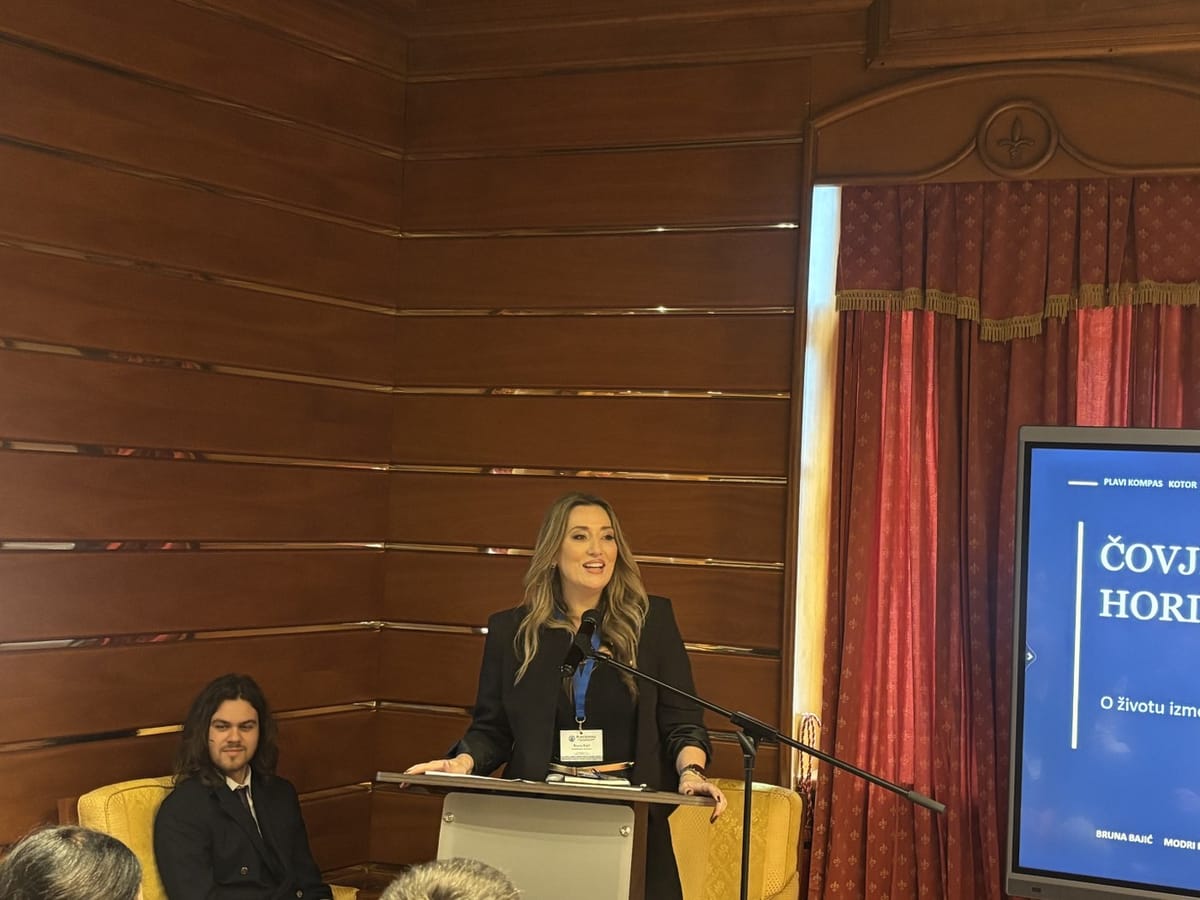
She thanked Kotor Municipality for its support in staging the event, the representatives of the shipping companies, the programme participants, Bruna Bajić MA, director of the film “The Blue Cage”, and everyone whose efforts had helped to organise the event.
She extended special thanks to the students of the Faculty of Maritime Studies, stressing that they are one of the most important reasons why gatherings like this are organised.
“Their future, professional development and well-being are a responsibility that we, as an educational institution, bear with particular care. At sea, the compass has always been a symbol of safety and of the right course. But I believe that every person, however experienced and strong, sometimes also needs someone to remind them that they do not have to weather every storm alone,” said Krivokapić.
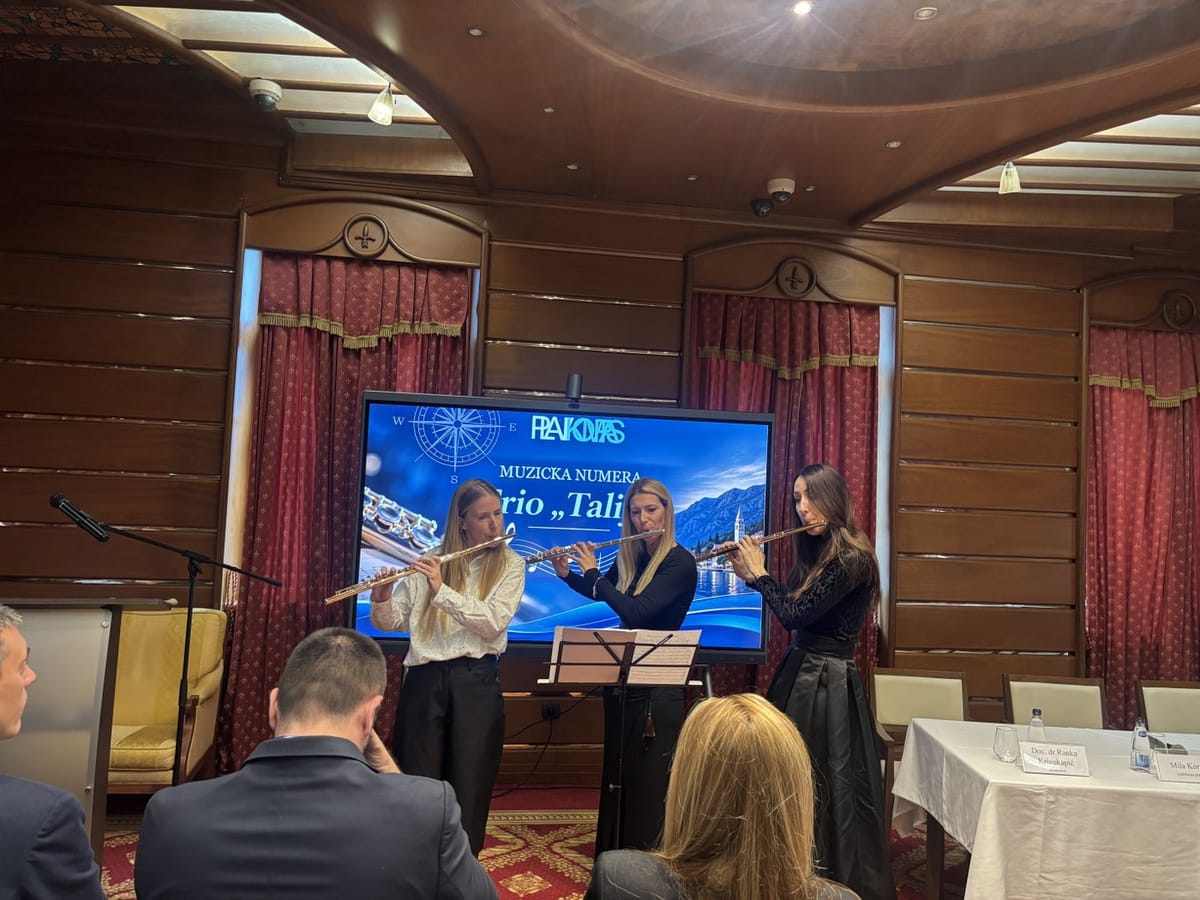
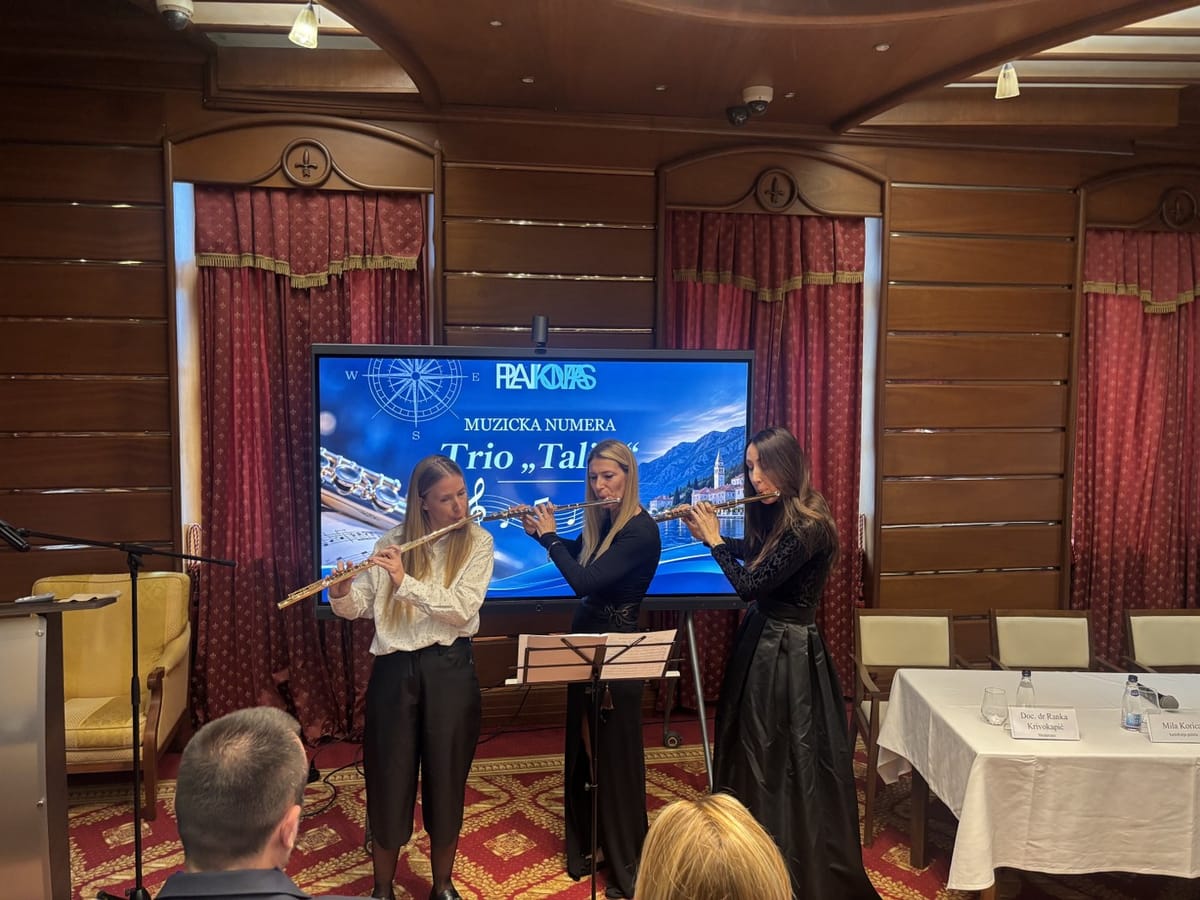
After the official opening, the programme continued with a performance by the “Talija” trio, followed by a segment on “The Blue Cage” from the perspective of the film's director, Bruna Bajić MA, which was devoted to the lives of seafarers and the challenges of their profession.
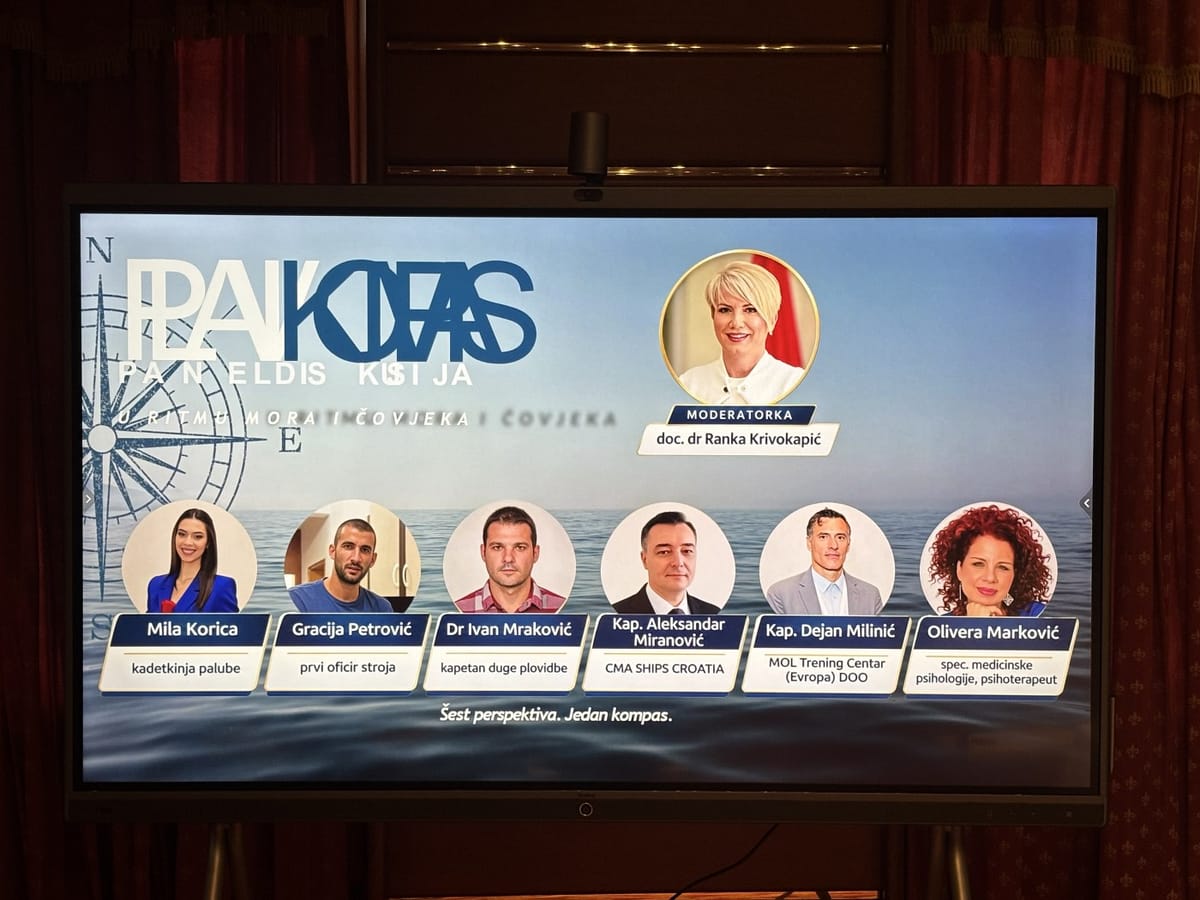
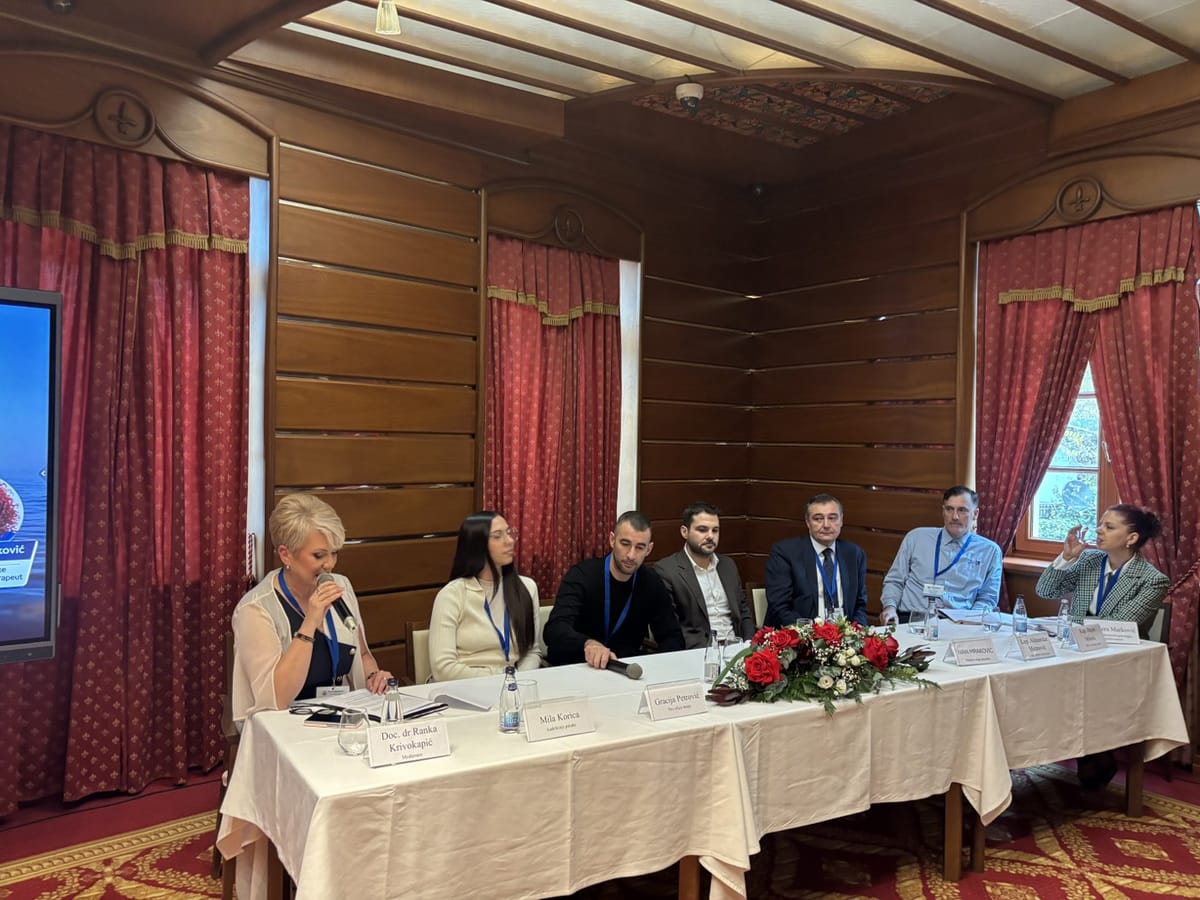
The centrepiece of the event was the panel discussion “In the Rhythm of the Sea and of People”, which brought together experienced seafarers, representatives of the maritime industry, young professionals and experts in psychology.
Speaking about their experiences at sea, the professional challenges and the importance of psychological support were captains Aleksandar Miranović and Dejan Milinić, first engineer officer Gracija Petrović, deck cadet Mila Korica, master mariner Dr Ivan Marković, and medical psychology specialist and psychotherapist Olivera Marković. The panel was moderated by Assistant Professor Ranka Krivokapić.
The event also included an interactive workshop, “Psychological Navigation”, devoted to the psychological aspects of the seafaring profession and the importance of looking after mental health.
In the final part of the programme, employers from the maritime sector – the companies CMA CGM and MOL Training Centre (Europe) Ltd – presented themselves, giving participants the chance to learn more about employment and professional development opportunities in seafaring.
The “Blue Compass” event highlighted the importance of linking education with the maritime industry, as well as the need, alongside the professional successes and opportunities that work at sea offers, to pay more attention to the people who are the foundation of seafaring, to their families, their mental health and the challenges they face.