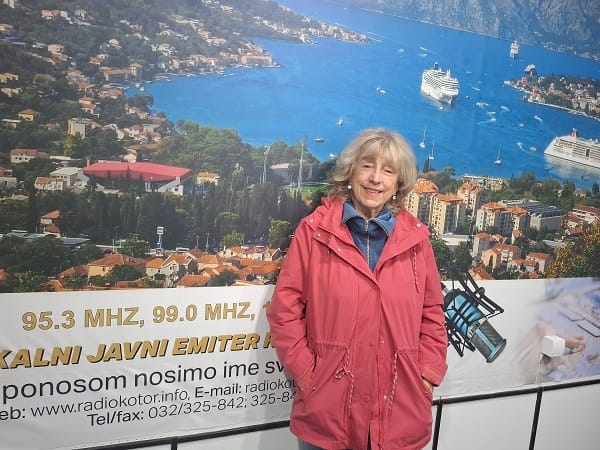
Ahead of this evening's launch of the monograph “Bisernice Boke – 50 Years”, which will take place at 18:00 in the Church of the Holy Spirit, we spoke on Radio Kotor's TOWN Magazine to the author of the monograph and founder of the klapa, the architect Vlasta Mandić.
Although the official jubilee is still a few years away, the 47 years of continuous work so far were reason enough to bring together in one place the rich history of a musical ensemble that has outlasted numerous social and political changes while preserving its continuity, its recognisable style and its love of klapa singing.
The monograph, Mandić explains, grew out of a need to preserve a testimony to long and dedicated work.
As she says, the klapa became part of her life long ago.
“It's simply under my skin by now: that great love, the consistency, the discipline, not only mine but that of all the members. That is not easy to sustain,” she stressed.
She conceived the book as a concise, visually rich publication of around a hundred pages, suited to today's reader. Rather than lengthy narrative, she gave priority to photographs, documents and facts, convinced that “pictures often say more than words”. They bear witness to numerous performances and tours across Europe and the former Yugoslavia, as well as to special stage productions and settings in which “Bisernice Boke” proudly represented their town.
Particular value is added to the monograph, she explains, by the documentation that her sister, Davorka Manojlović, carefully kept over the years, recording performances, songs and other details from the life of the klapa. Thanks to this archive, the book presents a selection of the most important events in the history of the klapa, which to date has given just over 1,500 performances.
Speaking about the position of klapa singing today, Mandić points to the challenges of preserving a traditional form of musical expression, especially among younger generations, who are strongly influenced by contemporary musical trends.
“Keeping the a cappella sound alive, that body of authentic songs, is not easy. The influence of new, contemporary musical forms is extremely strong, but somehow there is always a good ear and a good soul who recognises the value of this kind of performance,” she said.
Their recent performances also confirm that audiences are still interested. Mandić particularly singles out a recent appearance at a charity klapa concert in Tivat, where, she says, the group received fresh encouragement and confirmation that their work is still warmly received.
This evening's launch, our interviewee announces, will be a kind of musical journey through the different phases of the klapa's existence. The audience will have the chance to hear the songs that have marked their work, while also recalling the composers, lyricists and collaborators who helped to create and preserve the repertoire. They include Milorad Minja Vučinić as well as the Kotor songwriters Nikša Čučić, Zoran Proročić, Vlado Begović, Dubravka Jovanović, Stefko Boreje and Obrad Mandić.
Alongside the musical programme, the audience will also hear the odd entertaining anecdote from the many trips and tours that the members still fondly recall.
“Many generations of women have passed through Bisernice and each of them has woven a part of herself into our shared story. Wherever we went, we were always respected and warmly hosted, and audiences always welcomed us with joy,” notes Mandić, stressing that this very sense of togetherness has been one of the key pillars of the klapa's long life.
Preserving the rich klapa repertoire and the traditional way of singing is extremely important, she said, believing that this musical treasure trove must not only be preserved but also rediscovered, nurtured, performed and brought closer to new generations.
In that sense, the monograph is also a call for greater attention and support to be given to this valuable part of the cultural heritage, so that it can live on beyond the pages of the book and the memories of those who created it.
“A tradition is preserved when there are people ready to stay true to it,” Mandić says.