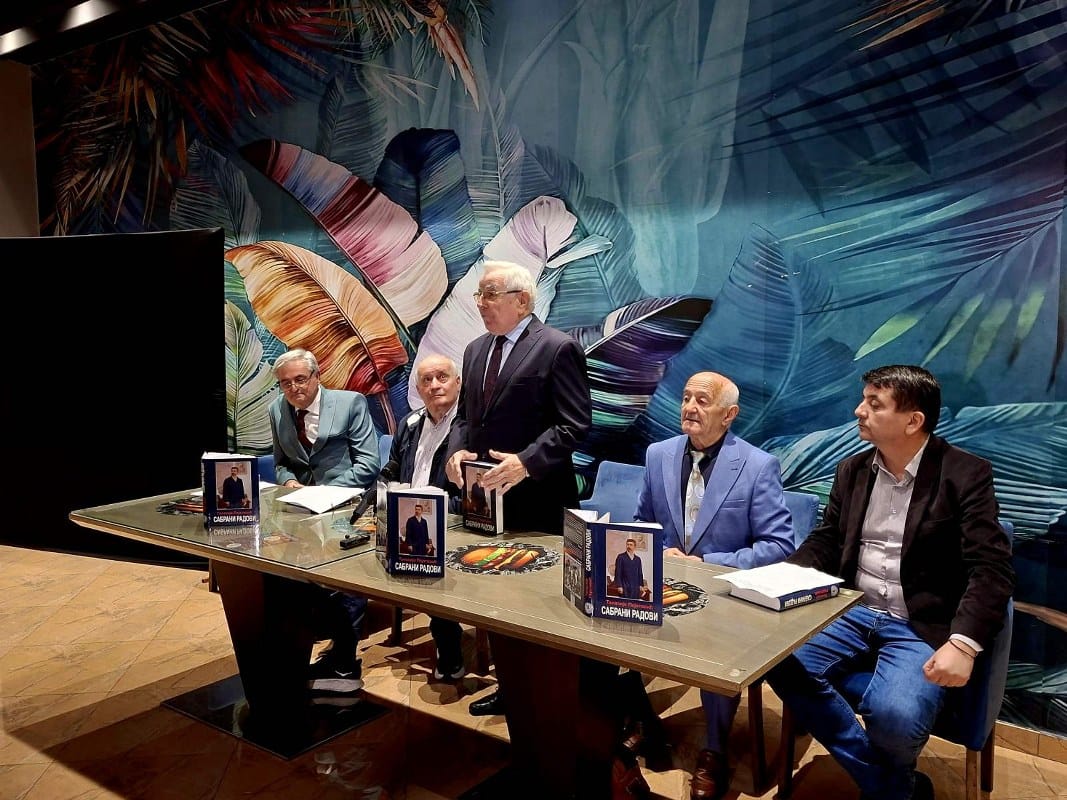
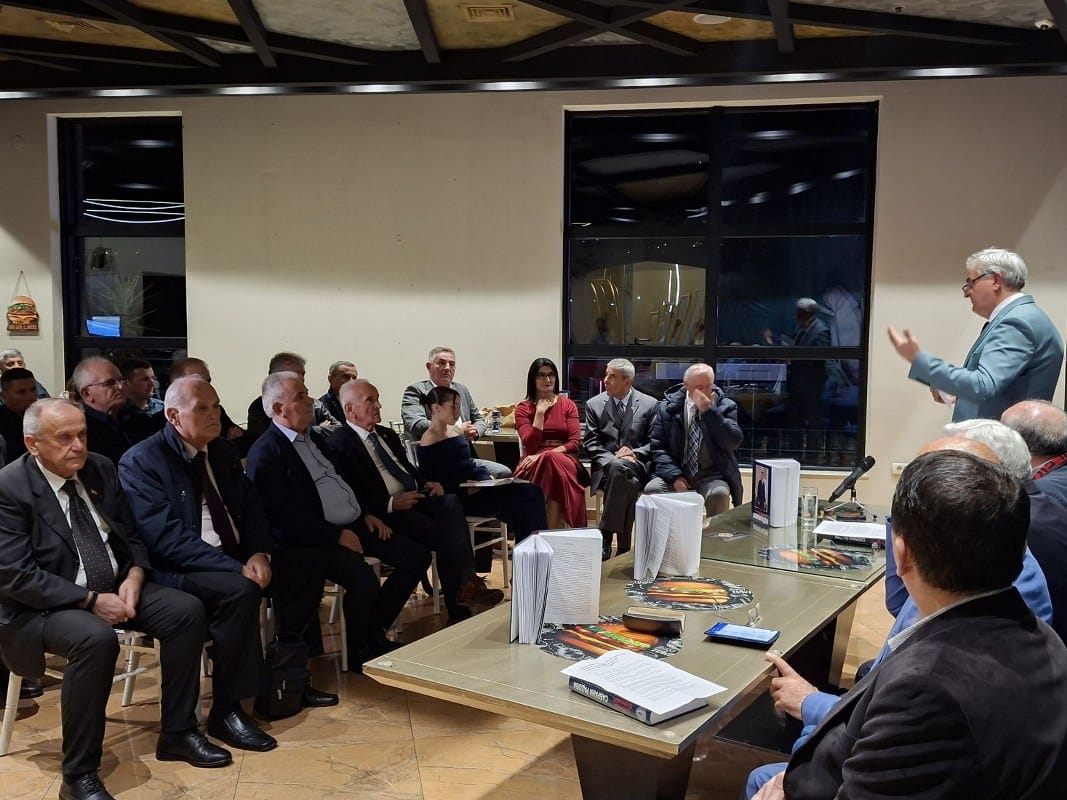
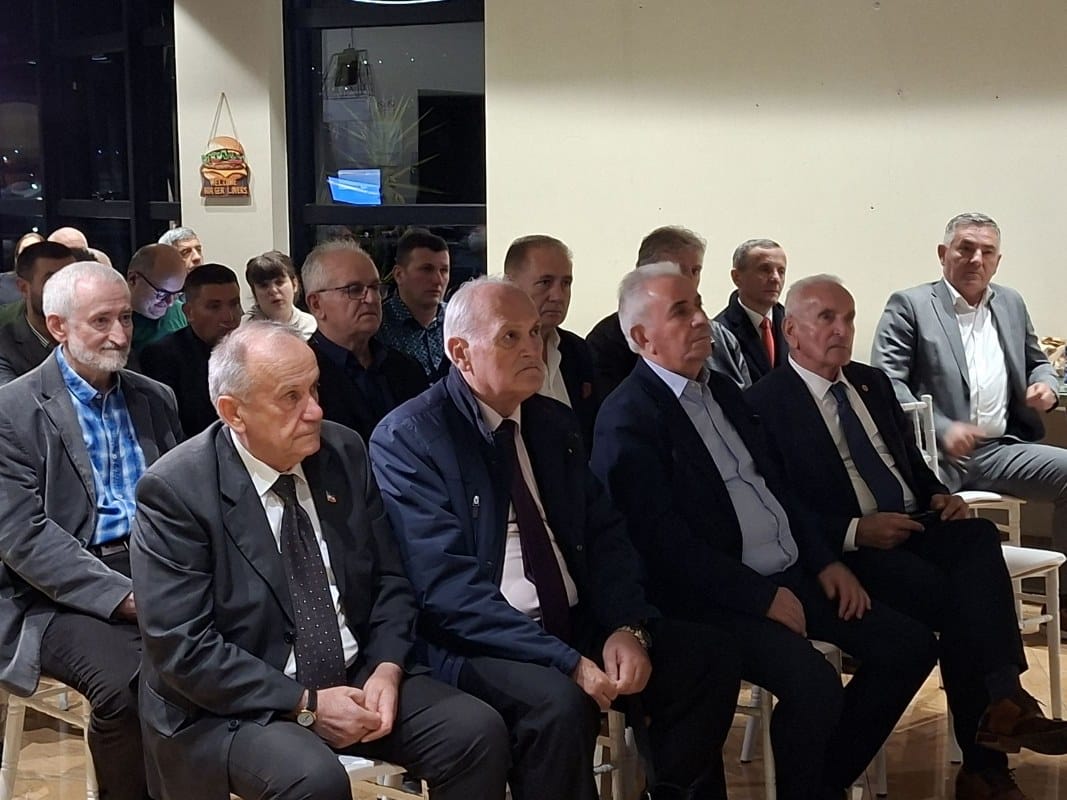
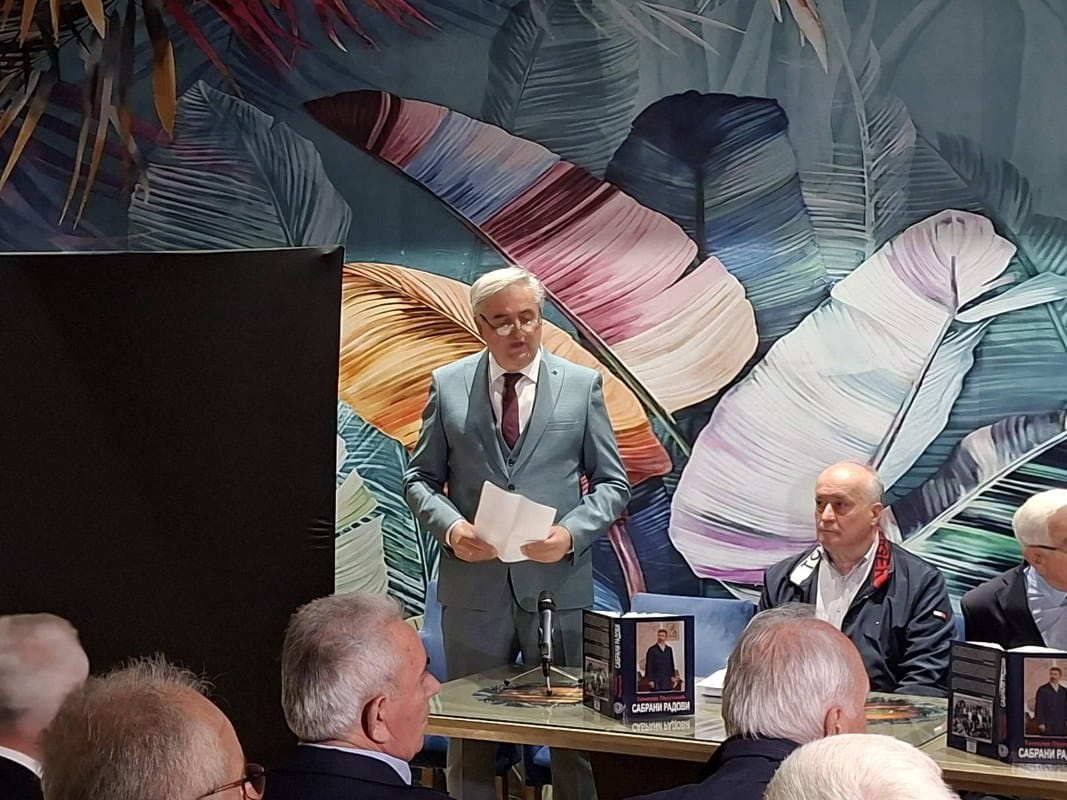
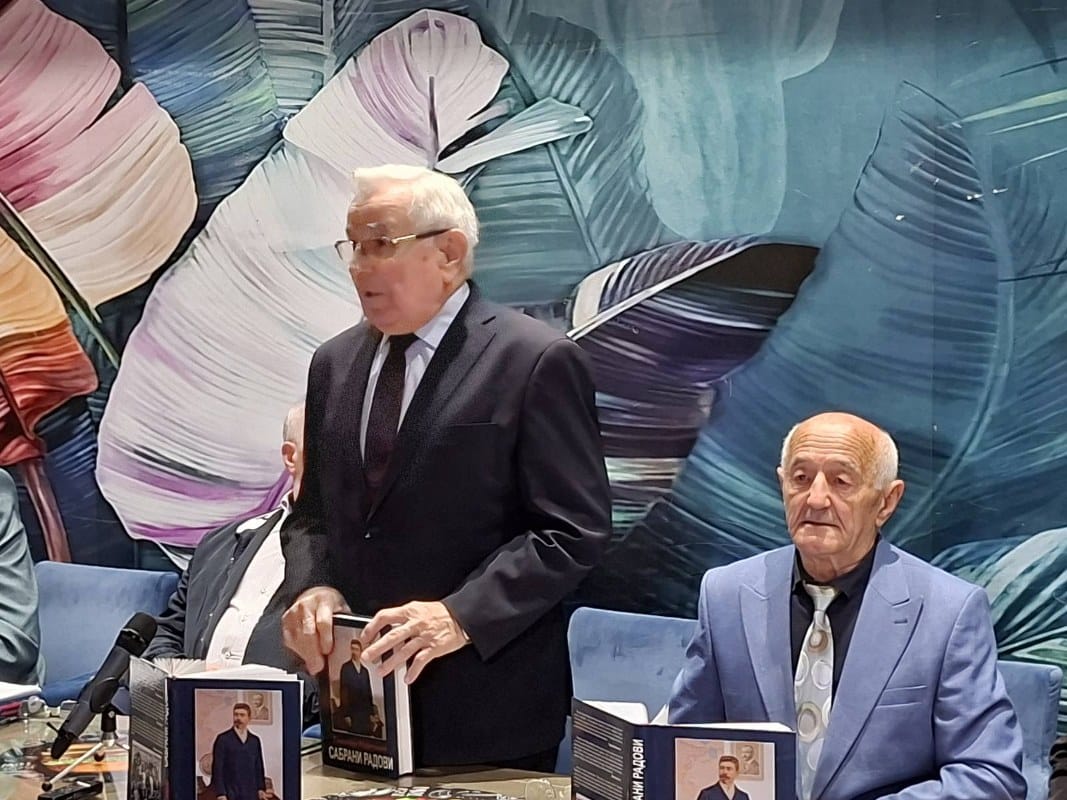
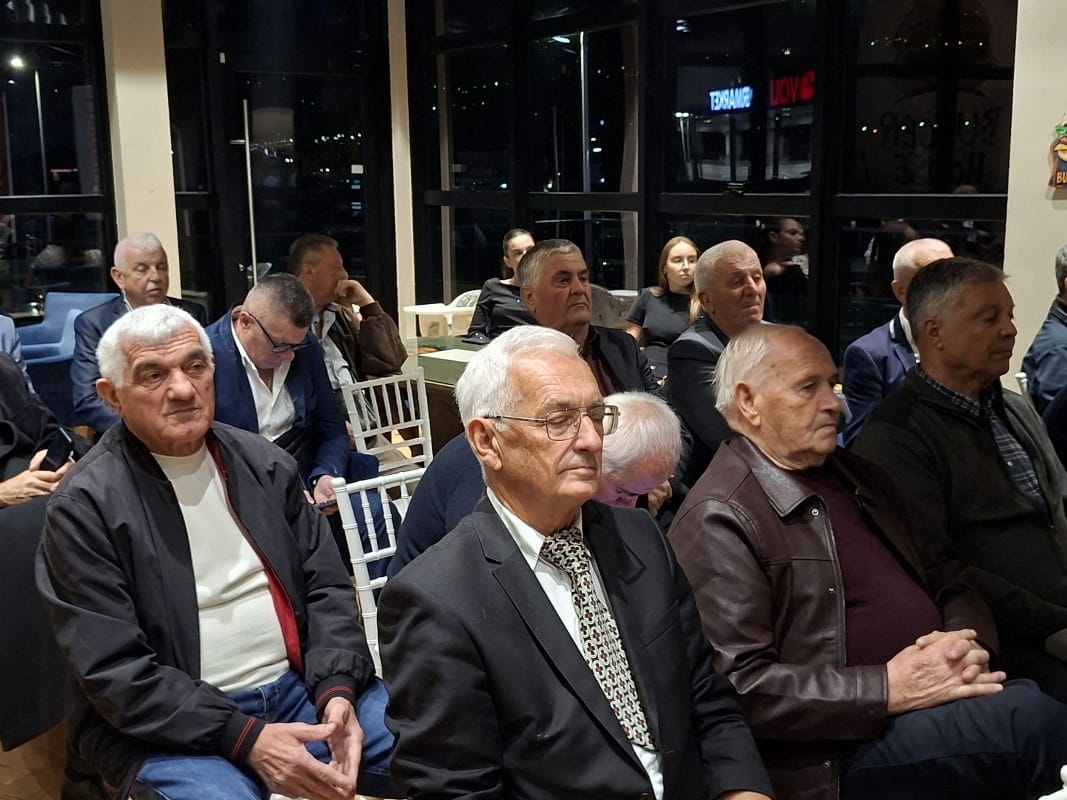
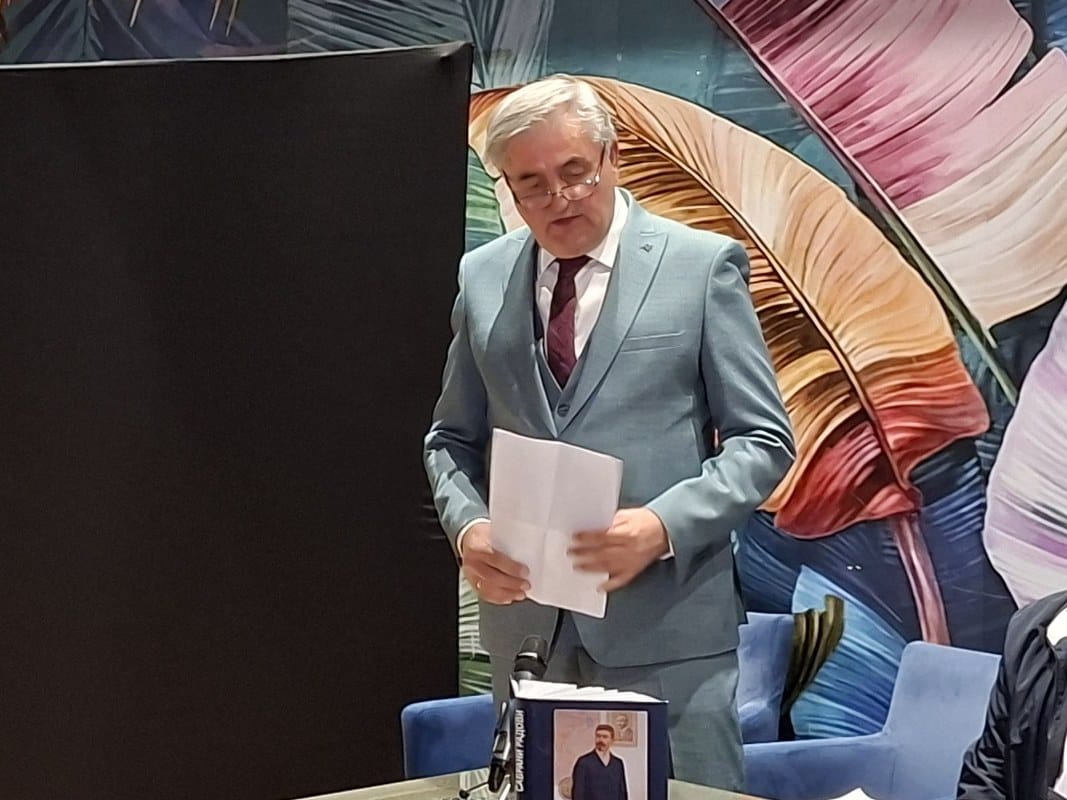
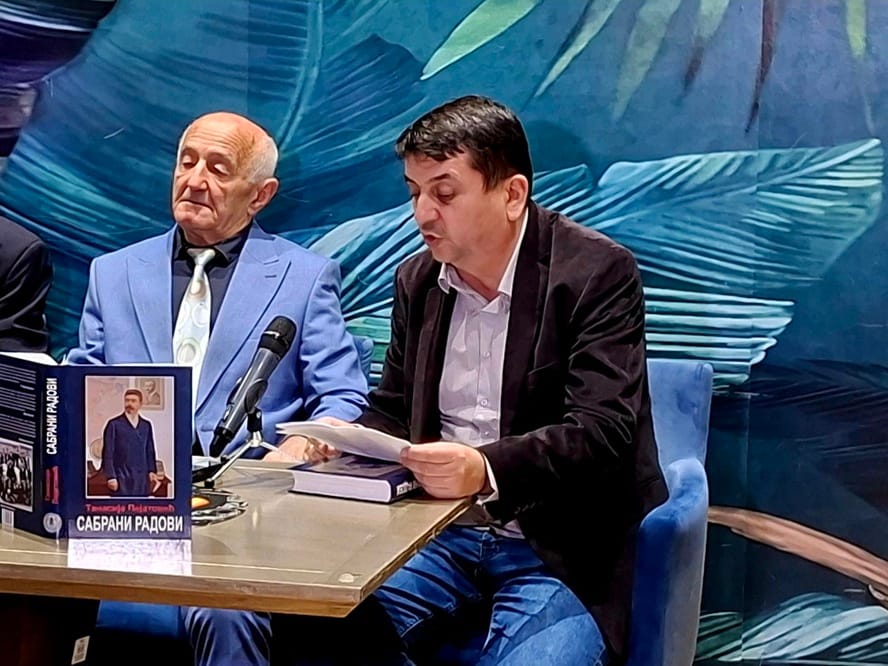
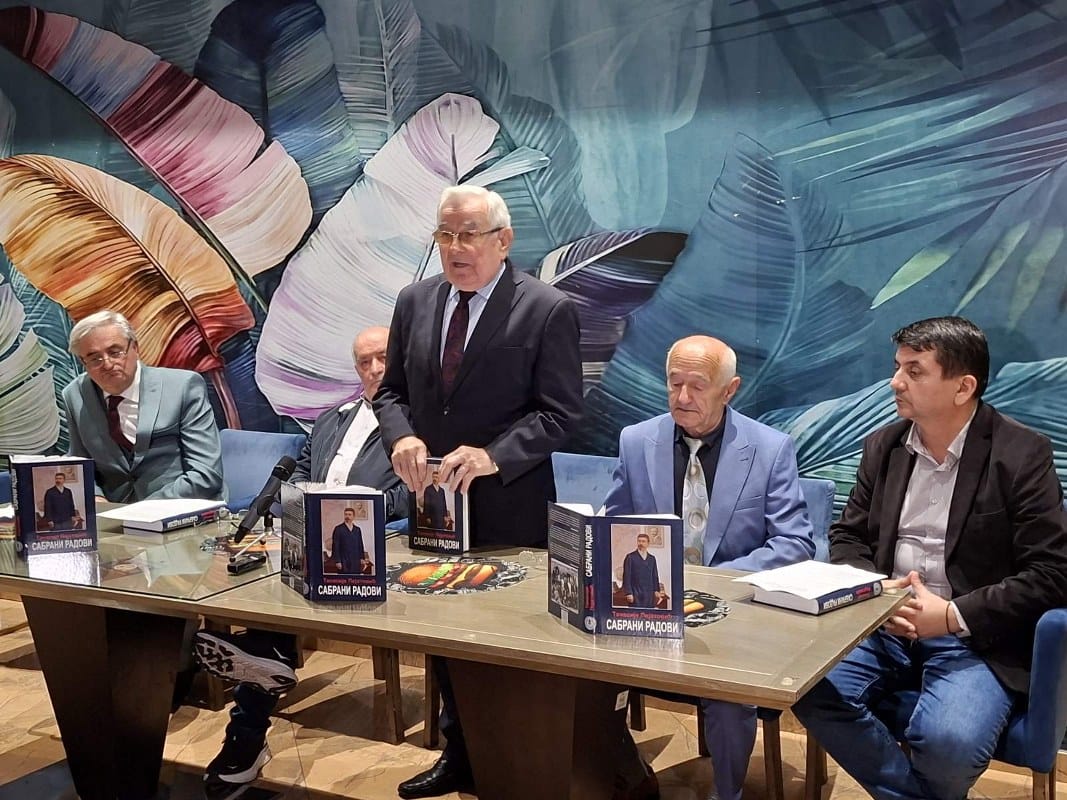
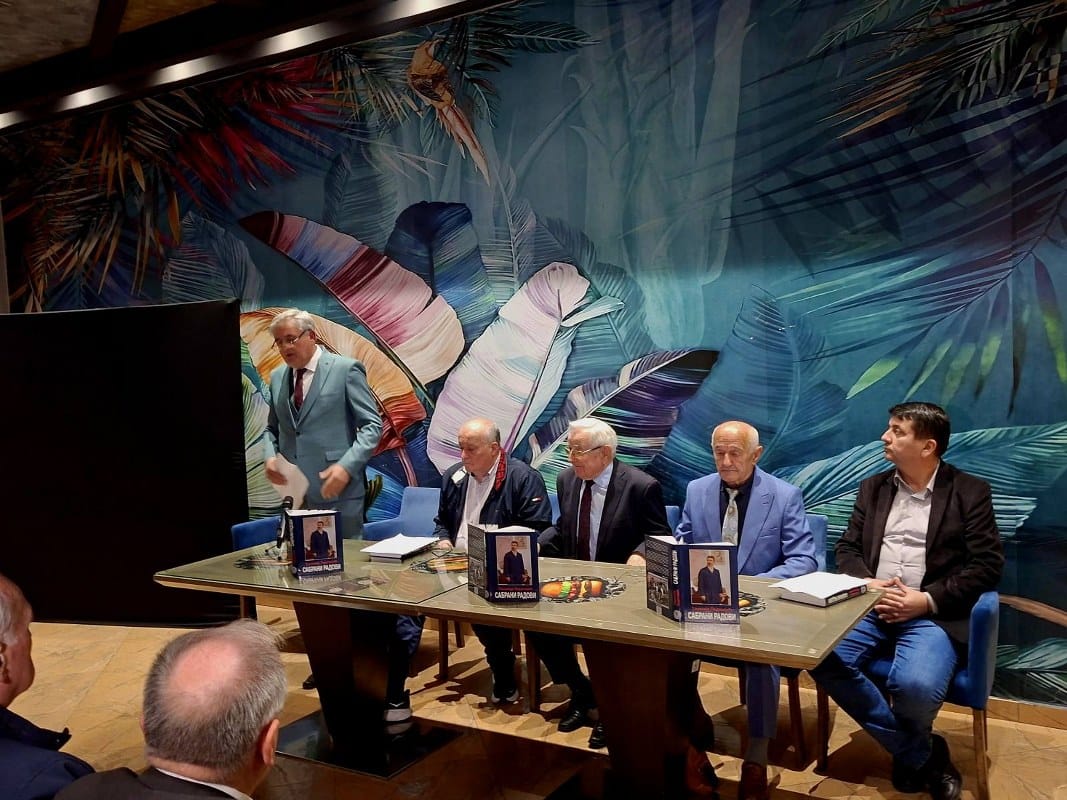
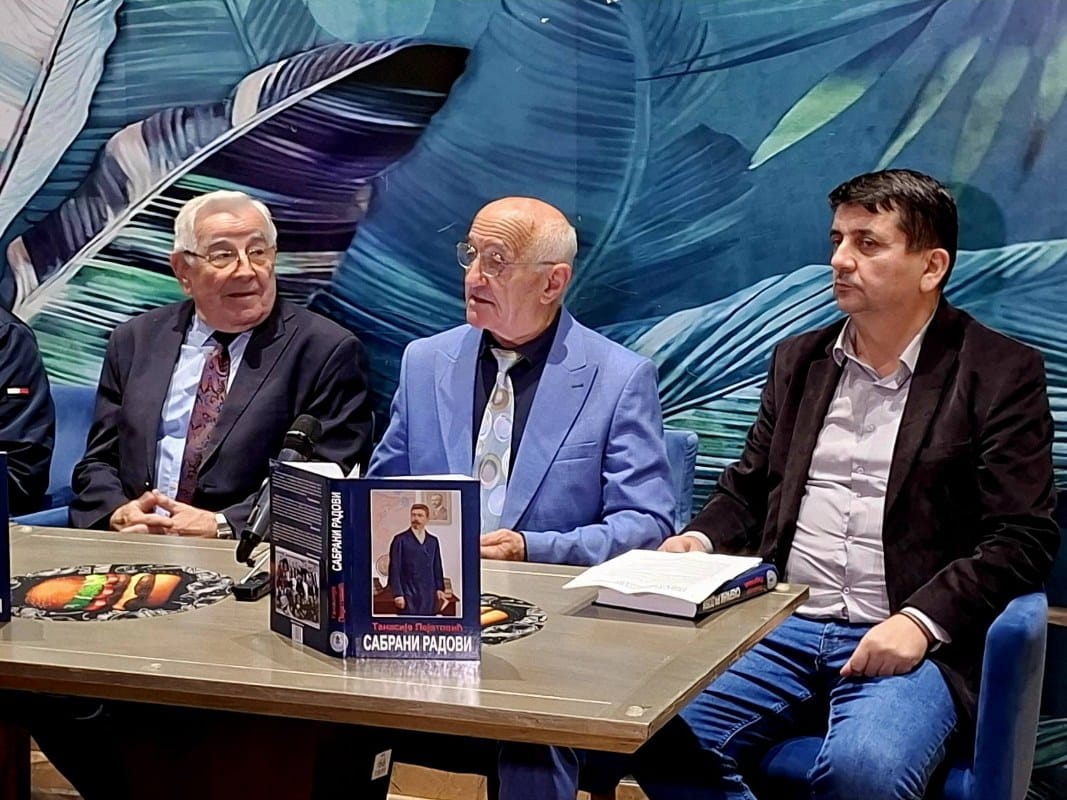
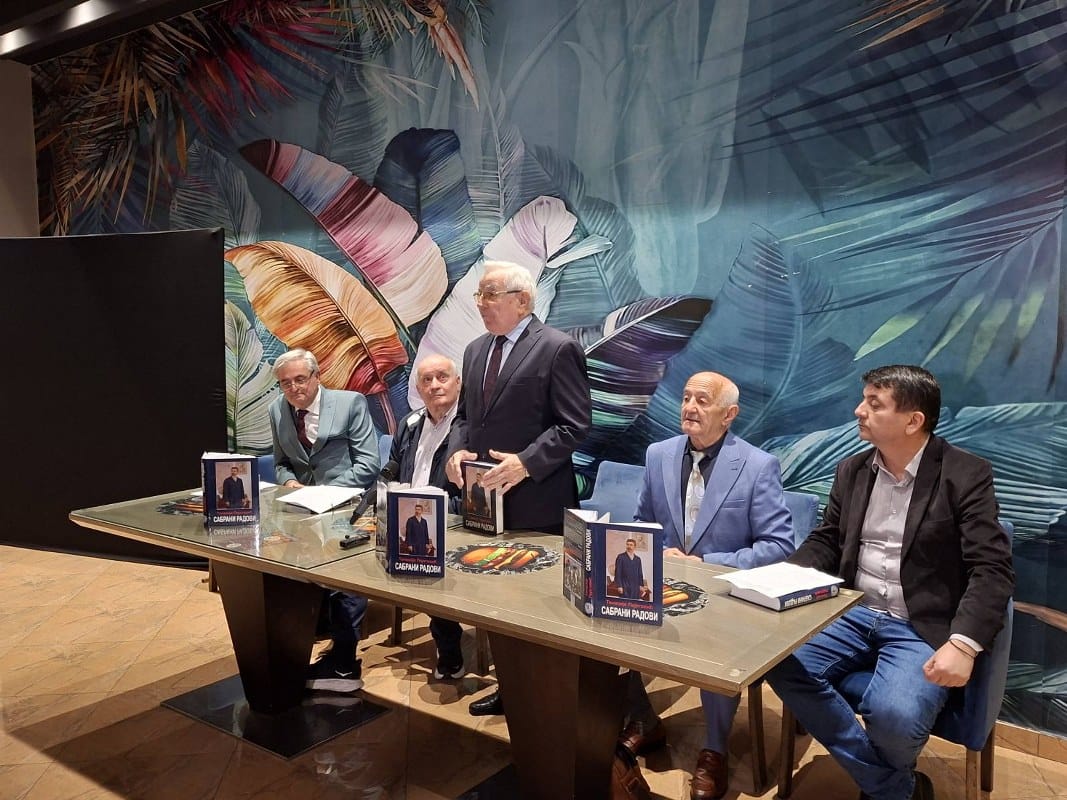
Borović particularly thanked the Belgrade-based “Breznik” Association of People from Pljevlja, its president Željko Pejović and the associates responsible for publishing the book, as well as the editor, Dobrilo Aranitović, a distinguished bibliographer and his former schoolmate.
Speaking about the importance of the publication, Borović noted that Pejatović's work goes beyond local boundaries and is valuable material for the study of history, geography and cultural heritage.
Željko Pejović, president of the “Breznik” Association of People from Pljevlja, spoke about the publishing venture and how the book came about. He recalled that the initiative to publish it came from Dobrilo Aranitović, who, after several years of research, had gathered Pejatović's published works and his surviving manuscript legacy.
Pejović said the association had accepted the proposal without hesitation, recognising the importance of preserving the work of a scholar who, despite his short life, left a deep mark on science and education.
According to him, the book brings together works that were held in various libraries, journals and other sources, and which the editor tracked down through long and dedicated research.
“After a fifty-year tradition and fifty years in existence, the Association of People from Pljevlja took on this publishing venture at the urging of our leading, renowned bibliographer, Dobrilo Aranitović,” Pejović said.
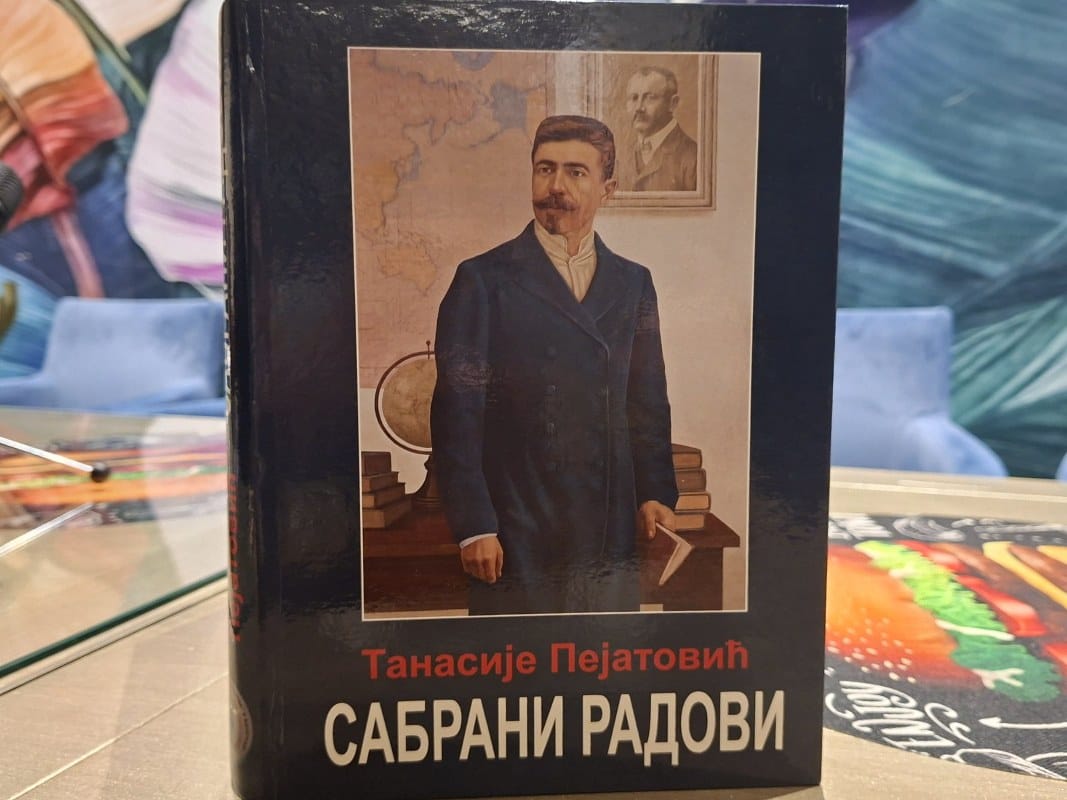
The book includes the anthropogeographical monograph “Middle Polimlje and Potarje”, travel writings, correspondence, edited source material, records and inscriptions, as well as writings by other authors about Tanasije Pejatović, his life and work, and the echoes of his work in professional and scholarly criticism.
Of exceptional value is the wealth of illustrative material, with photographs, sketches, drawings and other visual items. According to figures given by Pejović, the book has 520 pages of text in B5 format, hardbound, plus 80 pages of colour illustrations.
He said the publisher's aim was to bring Pejatović's work closer to new generations of pupils, researchers and readers, and for the book to be a lasting contribution to the preservation of cultural heritage.
“His work is not only a testimony to an era but the foundation on which the study of the history, geography and culture of our region rests,” Pejović said.
Professor Đorđe Račić spoke about the life, scholarly work and significance of Tanasije Pejatović, presenting the contents of the book in an extensive analysis and pointing to its value for a number of academic disciplines.
He stressed that Pejatović's work should be viewed not only through geography and anthropogeography, but also through his contribution to history, ethnography, anthropology, demography and the study of the cultural past.
He particularly highlighted the work of the editor, Dobrilo Aranitović, who searched libraries, specialist periodicals and university and private archives in an effort to bring together in one place as complete a record as possible of Pejatović's scholarly legacy.
Speaking about the author, Račić recalled that Tanasije Pejatović was born in Pljevlja in 1875, continued his education in Belgrade and graduated in 1899 from the history and geography department of the Higher School. During his studies he worked with Professor Jovan Cvijić, under whose influence he developed his interest in geography and anthropogeography.
After completing his studies he worked in Skopje, and was then involved in the preparations for opening the grammar school in Pljevlja, of which he was the first headmaster.
Račić singled out the monograph “Middle Polimlje and Potarje in the Sanjak of Novi Pazar”, published in 1902 as part of the Serbian Ethnographic Collection, describing it as a work that goes beyond the usual geographical description of an area.
“It is not merely a geographical description of an area, nor a mere description of villages, clans and families. It is an attempt to see the life of a region as a whole, to uncover its historical layers, genealogical ties, migrations, traditions, customs and the particular features of its social structure,” Račić said.
He pointed out that Pejatović researched an area he knew well, visiting settlements, talking to local people and gathering information on the origins of families, customs, migrations and ways of life. In his view, it is precisely this direct contact with people and the fieldwork that give the work its particular documentary and human value.
Račić also recalled the complex historical and social circumstances in which Pejatović gathered his material, stressing that such research was not easy, particularly in what was then the Sanjak of Novi Pazar.
He drew attention to the importance of the oral traditions and family accounts that Pejatović recorded at a time when they were still part of the living memory of the population.
He stressed, however, that such material must be viewed critically and compared with other historical sources, such as registers of births, marriages and deaths, Ottoman censuses, church records and archival documents. In this way, Pejatović's records can serve as a valuable starting point for new research.
Concluding his talk, Račić emphasised that the value of the book lies not only in the information it contains but also in its importance for collective memory and for preserving the identity of the area it describes.
“There are books that describe an era, there are those that explain a place, and there are those that become part of the very memory of that place. Pejatović's book belongs to this third category. It is a kind of monument to its native region, built not of stone but of recorded names, family traditions, geographical markers and historical testimonies,” Račić concluded.
Prof Radojko Gačević also spoke about the importance of publishing the book, recalling the significance of Pljevlja Grammar School and the contribution Pejatović made to the development of education and scholarly life in his native region.
He said that collecting and publishing his works was an important way of preserving the memory of this scholar, and also an opportunity for younger generations to learn about the circumstances in which education developed in this region.
Gačević spoke about the difficulties Pejatović faced during his field research, travelling on foot and on horseback, visiting villages, monasteries and other sites, often in unsafe and demanding conditions.
He highlighted his powers of observation and his dedication to research, noting that he carefully recorded whatever he considered important for the study of the life and past of this area.
In his words, an untimely death cut short the creative path of the young scholar, who, had he lived longer, could have left an even more significant body of work.
Gačević thanked the “Breznik” Association of People from Pljevlja and everyone involved in preparing and publishing the book, saying that it was a venture Pljevlja and its people can be proud of, wherever they live.
Božidar Jelovac, correspondent for “Dan” and a councillor in the Pljevlja Municipal Assembly, also spoke about the importance of presenting Pejatović's name and work in the communities where people from Pljevlja live.
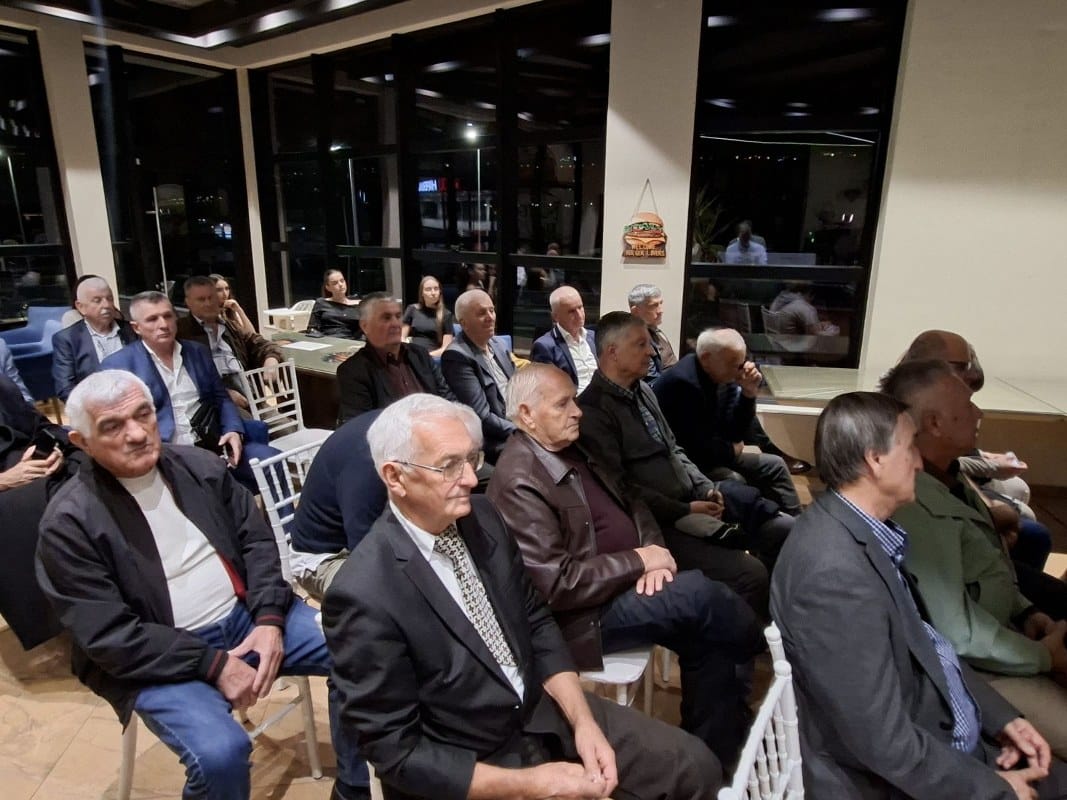
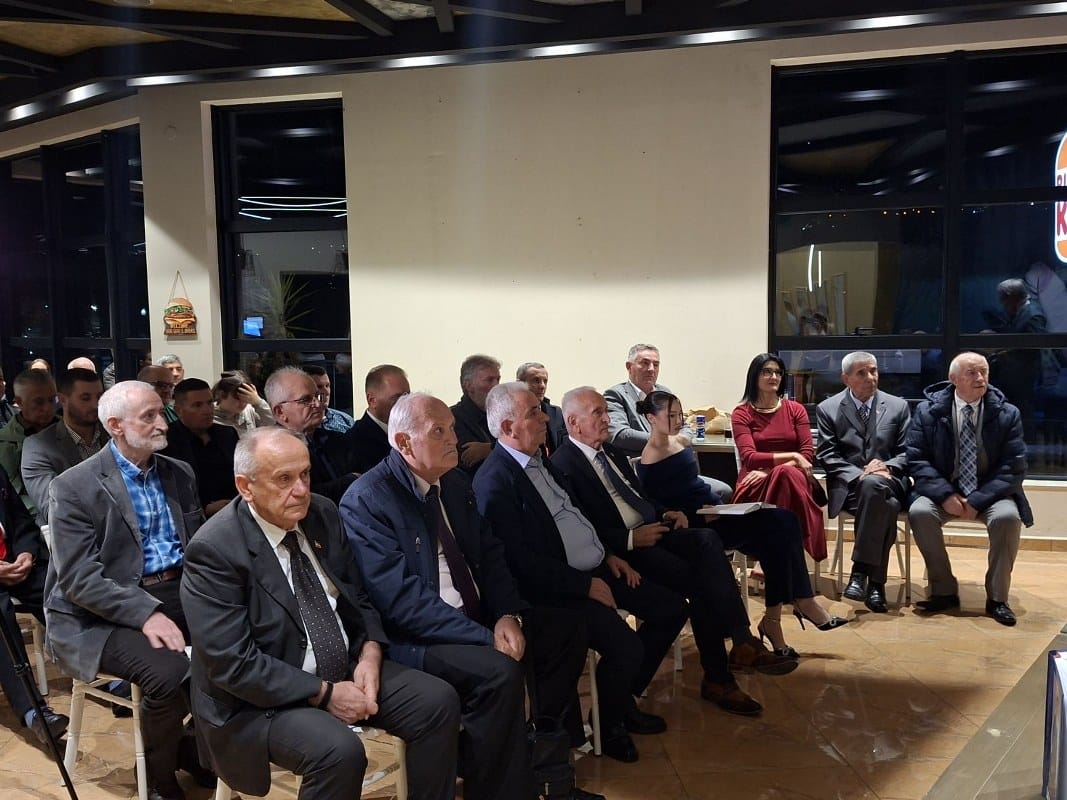
He said that presenting the book in Kotor, after its launch in Belgrade on 1 October as part of the 44th “Pljevlja Days in Belgrade”, continued the effort to bring the cultural and historical heritage of Pljevlja closer to people living away from their native region.
Jelovac stressed that in presenting Tanasije Pejatović, the people of Pljevlja are also presenting the community he came from and its rich cultural, scholarly and educational tradition.
He also recalled other notable figures connected with the Pejatović family, among them the painter and sculptor Risto Pejatović, as well as figures whose work left its mark on the cultural and social history of the Pljevlja area.
Speaking about the importance of the new edition, Jelovac pointed to the view of the editor, Dobrilo Aranitović, that Tanasije Pejatović has been more celebrated and praised than studied. In his words, the collected works will allow a fuller understanding of his work, his relations with the leading scholars of the time and his contribution to the development of science.
He particularly recalled a conversation with the late academician Ljubomir Zuković, who, speaking about the difficulties of field research, told him: “Whenever things get hard, remember Tanasije Pejatović; he went on foot from village to village, from ruined monastery to ruined monastery.”
Jelovac also stressed that Pejatović's work should be read by distinguishing between documented historical facts, oral traditions and the author's own interpretations, so that his research can be supplemented and linked with present-day scholarly knowledge.
An emotional moment of the evening was the reading of an excerpt from the historical material on Tanasije Pejatović. Anastasija Sredojević, a pupil at Kotor Grammar School, read a letter by one of his pupils, written after Pejatović's death, which bears witness to the respect he enjoyed and the deep mark this educator left among his contemporaries.
Tanasije Pejatović (1875–1903) was a history and geography teacher, a researcher and the first headmaster of Pljevlja Grammar School. He graduated from the Higher School in Belgrade, and developed as a scholar and researcher in collaboration with Jovan Cvijić. His study “Middle Polimlje and Potarje in the Sanjak of Novi Pazar”, published in 1902, remains one of the important works for the study of the geographical, anthropogeographical and ethnographic features of this area. He died in Pljevlja in 1903.
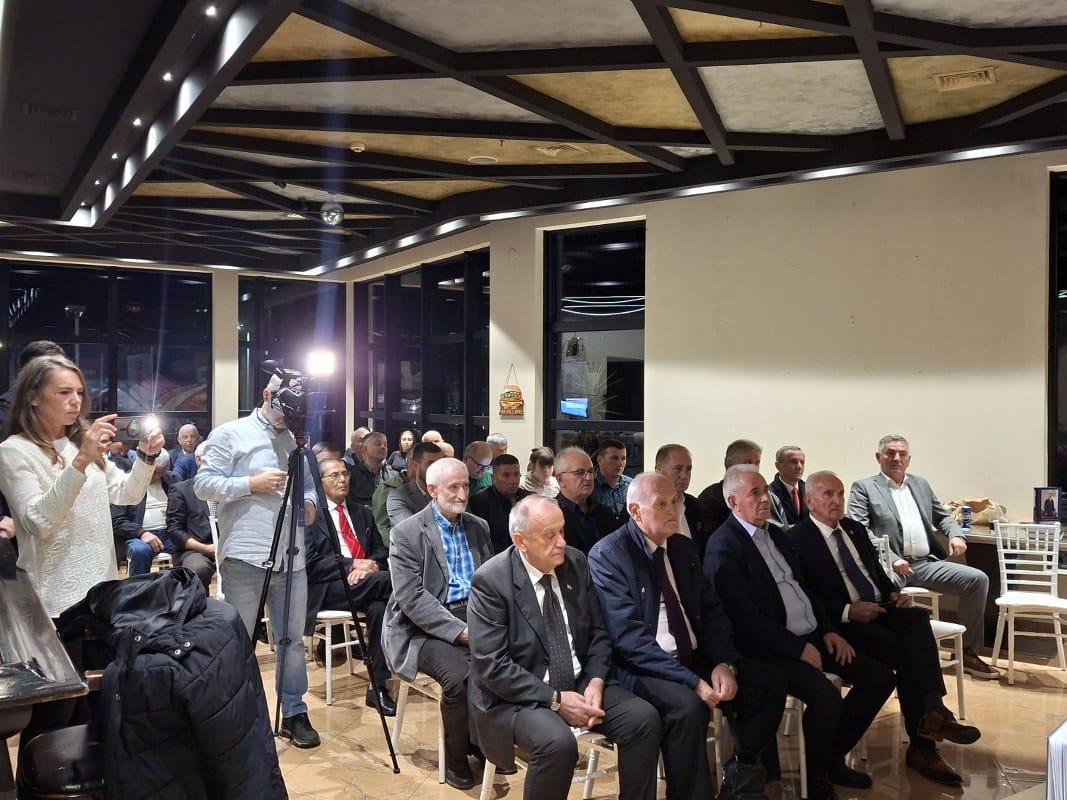
With the publication of the “Collected Works” and their presentation in different communities, Pejatović's work has a new chance to become more accessible to researchers and the wider public. Gatherings of hometown associations, like last night's, are especially important for preserving cultural heritage, cherishing the memory of notable people and connecting people who live away from their native region.