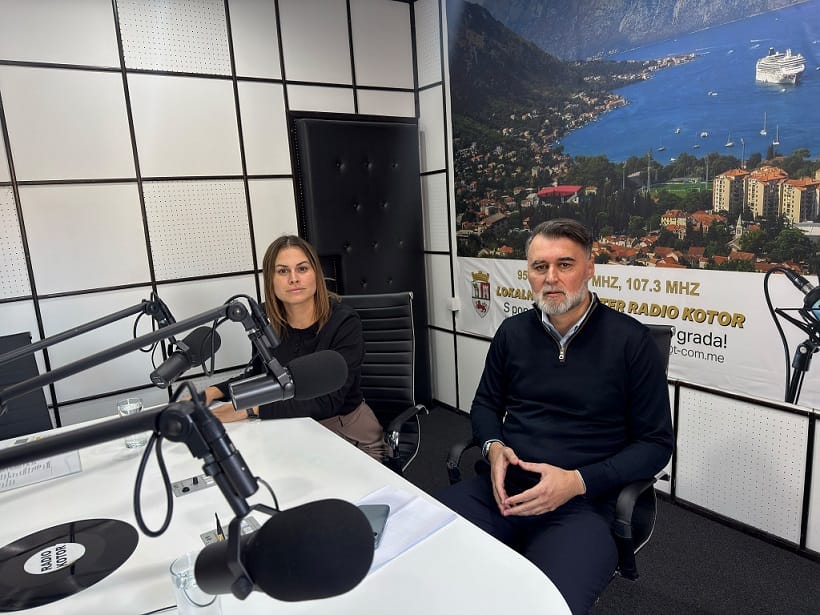
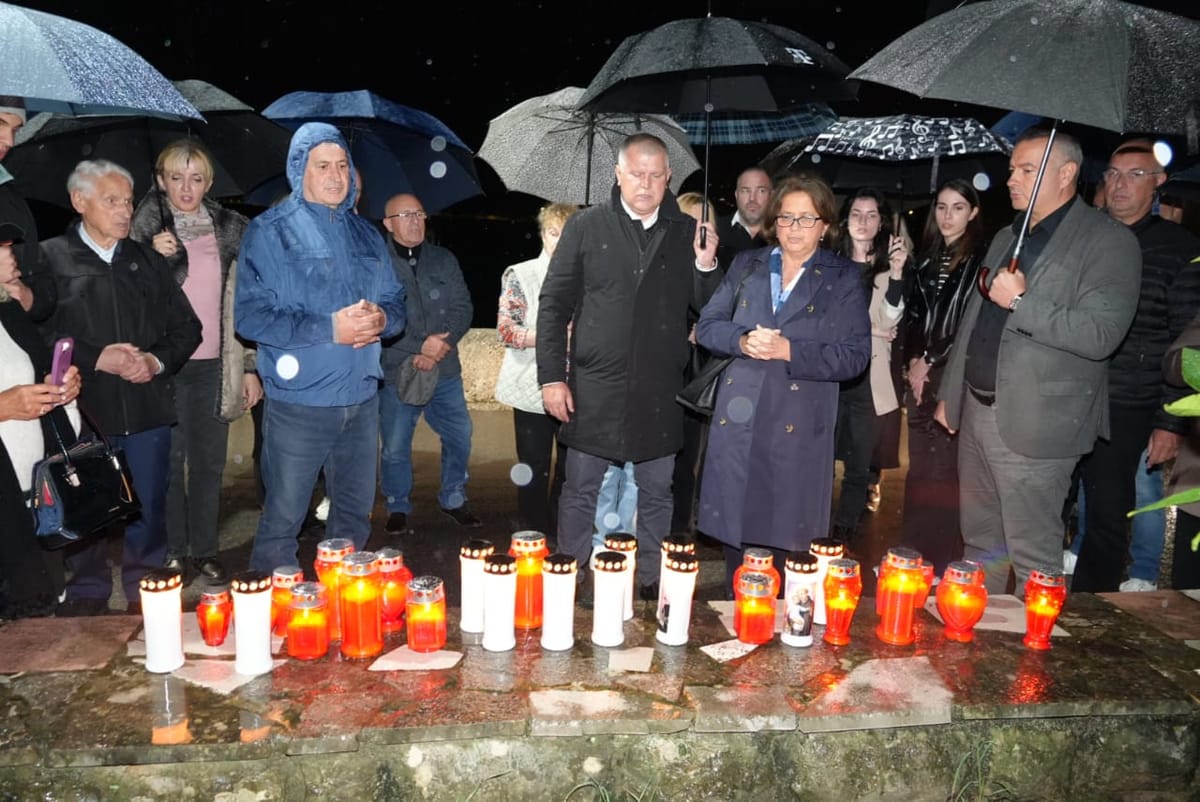
According to him, a referendum would have given the local parliament a clear position from the citizens before a final decision was taken.
“Whatever the citizens said in a referendum would have been acceptable and binding for us, regardless of the outcome. That would have preserved the town's dignity. Now we have ended up in a situation where Kotor was not consulted on this at all. I think a great opportunity was missed for the town to hear the position of its citizens, and for the Municipal Assembly to have a basis on which to build its further actions.
I'm afraid the referendum was not called precisely because the Government's later decision would then have come up against the clearly expressed will of the citizens. We know the Statute and what it prescribes, but I believe the procedural issues could have been resolved if there had been the political will. Evidently, there wasn't,” Kovačević stressed.
He also recalled earlier attempts to settle the question of the pool's name in the local parliament, saying that, as he saw it, the majority being sought was not one to keep the existing name, but one to change it.
“That majority was not found, and then the Government of Montenegro did what it did. We believe this has taken a power away from local government. I don't want to put it more harshly and say that this is the road to abolishing local self-government, but it does raise the question of what will happen tomorrow if some decision by Kotor does not suit the national authorities.
It turns out that local government decisions are acceptable only if they are in line with the Government's intentions and thinking. If they are not, the regulations are changed and powers are taken away. That leaves us in a state of some legal uncertainty, because we don't know what might happen tomorrow if someone doesn't like a particular decision,” Kovačević said.
As for the decision to name the city swimming pool after Petar II Petrović Njegoš, Kovačević said that, apart from the question of jurisdiction, the way in which the new name was chosen was also contentious.
“One of the Kotor Movement's core slogans is that decisions about Kotor are made in Kotor. I believe that in this case the Government breached even the new Law on Sport, as amended. Because of a requirement concerning the time that must have passed since a person's death, those amendments did away with the pool's previous name, which honoured Zoran Gopčević.
However, after that the owner of the facility was supposed to propose the new name. That is clearly written, but that was not made possible either. The Government simply chose the new name practically overnight, probably wanting to wrap the whole story up as quickly as possible and avoid fresh controversy.
I understand why the name of Petar II Petrović Njegoš was chosen. They were probably counting on everyone backing down in the face of his name, or on it acting as a unifying factor. I don't want to argue about Njegoš, who is one of the most important figures in Montenegrin history. There are many institutions and buildings that could bear his name. The point is that Kotor was not given the chance to decide for itself,” Kovačević said.
Turning to the Kotor Movement's political position and the upcoming local elections, Kovačević confirmed that the movement would once again take part in the election race, although preparations have not yet begun.
“After the last elections the Kotor Movement had one councillor. To be honest, we haven't yet started either our preparations or our campaign for the next local elections, but what is certain is that we will take part. We are not giving up on the programme we set out back in 2024.
We are not satisfied with our participation in Kotor's local government, above all because we did not manage to implement our programme. It is no excuse, but we had only one councillor, who was often not decisive in forming a majority in the local parliament.
We will keep fighting for Kotor and for matters concerning the wider Bay of Kotor area. We will push for certain powers to be returned to the town, above all the management of the coast, and for a clearer relationship between the revenue generated in Kotor and the funds that come back to the town. Of course, we will also look after culture, sport, young people and socially vulnerable citizens.
I won't list everything now, because that would start to look like presenting an election programme, and we haven't entered the campaign yet. What I can confirm is that we will stand in the next elections,” Kovačević said.
Answering a listener's question about why more had not been done to reduce traffic congestion during his term as Deputy Mayor, Kovačević said the problem could not be solved by short-term measures, only by major infrastructure works.
“What could we have done? Forced the people of Kotor to stop using their cars and ride bicycles? It is easy to ask why something wasn't done, but you have to look at what can actually be done. We all drive every day and mostly see local number plates. We also have a problem with a lack of parking space.
I have been talking about this for years, but that approach has not been accepted. I believe that some future administration, if not this one or the next, will have to give it serious thought. I like to say that Kotor's problem is not just traffic jams, but above all the lack of alternative routes.
The congestion won't ease next year, or in two or three years' time. On the contrary, it is clear that there will be more and more tourists and cars. Kotor needs an alternative traffic route, and without one I see no possibility of a lasting solution,” Kovačević stressed.
He recalled that a Kotor bypass was being discussed almost two decades ago, but that none of the solutions considered was ever carried out.
“As far as I know, back in 2007 there was a conceptual design for a route from Škaljari to Dobrota, or rather Doljuta. Even UNESCO pointed in its reports to the need for an alternative route for Kotor.
When we say that Kotor is under UNESCO protection, I have the impression that we often use it as an alibi for doing nothing. There are other protected areas in the world where people build and live in line with modern needs.
Kotor needs a shallow bypass. Where it will run and what it will look like is something that needs to be discussed. If the first solution is not acceptable, we should look for a second, a third or a fourth. We need to talk to UNESCO representatives and try to find an acceptable solution. We cannot simply give up on solving the problem,” Kovačević said.
He said that, as far as he knew, significant funds had also been earmarked for the project considered at the time.
“As far as I remember, around €35 million had been secured at the time, but certain circles in Kotor decided that the project should not go ahead. The money was then redirected to other works – as far as I know, to completing the Vilusi–Žabljak road.
Today we see a bypass being built around Budva, whose value, if I remember correctly, is estimated at around €220 million. Kotor cannot finance a project like that on its own, but we have to ask ourselves why our problem is not being tackled more seriously,” Kovačević said.
Kovačević believes that transport infrastructure, as well as other development issues, should be planned at the level of the whole Bay of Kotor, rather than each municipality acting separately.
“If Budva solves its bypass problem, that doesn't mean the traffic jams in Kotor will disappear. Traffic problems don't stop at the signs marking municipal boundaries. We are all connected in the Bay of Kotor – Herceg Novi, Kotor, Tivat and Budva.
This applies not only to traffic, but also to the coast, water supply and spatial planning. I support the boulevard project, without going into its financial side now, but what happens? We get from Budva to Kotor or Tivat faster, and then we get stuck in traffic again.
We have to start looking at the Bay of Kotor as a single whole, rather than each municipality trying on its own to solve problems that are shared,” Kovačević said.
As an example of insufficient coordination, he also cited spatial planning, recalling the memorandum of cooperation between the municipalities of the Bay of Kotor.
“A memorandum on joint spatial planning was signed between Kotor, Tivat and Herceg Novi, in December 2025 I think. However, when the planning of the coastal area came up recently, I checked and asked for the documentation on my own initiative. The Bay of Kotor did not act together; the municipalities acted individually.
I don't think we can go on working like that. If we want to tackle problems seriously, we need a joint approach, because the Bay of Kotor is a single whole, both as a space and as a place to live,” Kovačević stressed.
Speaking about the pressure on the historic centre, Kovačević pointed to the large number of visitors who come to Kotor on cruise ships and coaches, saying that the town's capacity and its residents' quality of life must be considered more seriously.
“Almost every day, when three or four ships come in, we have around 10,000 cruise passengers, plus a large number of coaches bringing several thousand more visitors. The question is whether the town centre can withstand that much pressure and whether we can provide a good service to so many people.
We keep boasting about how many passengers we have taken through the town in a few hours. I don't think Kotor needs to be discovered by anyone any more, because everyone knows about it. At some point we have to think about limits or look for different solutions.
A serious study needs to be done to establish how many people live in Dobrota, Orahovac, Risan, Kostanjica and Morinj, what the traffic volume is and who really needs to pass through the town centre. Future solutions should be planned on the basis of such data,” Kovačević said.
He also warned of changes in the way of life in the Old Town, saying that more and more space is being given over to amenities aimed at short visits.
“I know that many people from Kotor no longer even intend to go into the Old Town. That is a separate topic, because there is less and less everyday life in the Old Town. We have subordinated almost everything to day-trip tourism.
We have a large number of cafés, restaurants and souvenir shops, and I have nothing against that, but we must find a way to bring life back to the town. We cannot see everything purely in terms of the number of tourists who will come and go within a few hours.
We must take care of the people who live here all twelve months of the year. Their quality of life must be one of the main priorities,” Kovačević concluded.
You can listen to the interview on TOWN Magazine .