We ended our previous story in the early 1990s – at the moment when the system in which Kotor's tourism had grown for decades was changing.
Large companies and organisations were entering a new era.
Some changed their form.
From a system to a modern destination
We ended our previous story in the early 1990s – at the moment when the system in which Kotor's tourism had grown for decades was changing.
Large companies and organisations were entering a new era.
Some changed their form.
Some, their owners.
Some disappeared.
And tourism, as so many times over the previous century, looked for a new way to carry on.
“Fjord”, which broke away from the “Montenegroturist” system in 1990, was transformed into a joint-stock company in 1997. The hotel that in 1986 had been a symbol of a new tourist Kotor closed in 2005.
And one of the most recognisable images of Kotor's tourism in the eighties slowly became a thing of the past.
But tourism in the town no longer depended on one hotel, one company or one system.
Increasingly, it was made up of small hotels, private accommodation, restaurants, travel agencies, guides, excursions and hosts who opened their doors to guests.
The way Kotor presented itself to the world changed too.
In 2005, the Tourist Organisation of Kotor Municipality was established.
Within a different social and economic framework, it carries on what had been repeated in various forms throughout the century – promoting the town, informing visitors, bringing together what the town offers tourists, supporting events and showcasing the qualities that bring people to Kotor.
Meanwhile, another old route to Kotor took on an entirely new meaning.
The sea.
The sea by which steamships and passenger ships once arrived became the route of large cruise ships.
Kotor's waterfront is once again the place where the town meets the world.
Only the ships are bigger, the journeys different, and the number of people passing through the town gates in a single day far greater than Kotor's first tourism workers could ever have imagined.
The guest has changed too.
Today they often don't buy their ticket at a counter.
They book their accommodation from the other side of the world.
They get to know the town before they arrive.
They can send a photo from the Square of Arms home the very moment it is taken.
And yet some questions have remained almost the same as those we found in documents nearly a hundred years old:
Where shall we stay?
How do we travel on?
What should we see?
Where can we eat well?
What story will we take home with us?
Technology has changed the answer.
It has not changed the essence of hospitality.
And that is exactly why it is interesting to go back to the beginning of our research.
To the societies that looked after the town.
To “Auto-turist”.
To “Jadranski fjord”.
To Čekada's hut.
To the drivers who took passengers along the serpentine road.
To the steamships along the waterfront.
To the old hotels and their guest books.
To the cafés, ticket offices and tourist offices.
To the holiday resorts and campsites.
To “Autoboka”, “Fjord”, “Oceanija – Turist Komerc”, the tourist societies and the SIZ (self-managed community of interest).
To the people who furnished rooms again after the war.
To those who reopened the town after the earthquake.
And to all those who carried on after them.
Because what lies between the Kotor of 1926 and the Kotor of 2026 is not just a century.
It is generations.
In the jubilee year of 2026, the town also received further international recognition – at the World Travel Awards, Kotor was named Europe's leading emerging tourism destination.
It is lovely that such an award should come in the very year when we look back to the beginnings of organised tourism.
But no award begins on the day it is presented.
Behind it lie decades.
Behind it are people.
That is why we do not want to end the last story in this series with a number of guests or the name of a hotel, company or award.
We want to end it with gratitude.
To everyone who worked in Kotor's tourism and hospitality over the past century.
To those who founded tourist societies and companies.
To hoteliers, receptionists, chambermaids, waiters and cooks.
To tourism workers, guides and tourist information staff.
To drivers, boatmen and the people who sold tickets.
To the hosts who gave up rooms in their own homes to guests.
To the staff of holiday resorts, campsites, restaurants and tourist offices.
To the organisers of local festivities and events.
To those who promoted the town, photographed it, wrote about it and safeguarded its heritage.
And to everyone whose work may never have been recorded in newspapers or photographs, but without whom Kotor's tourism story would not have been possible.
Many names we have preserved in documents.
Many live on in family stories and memories.
And some have been lost over time.
That is why this gratitude belongs to everyone.
We remember with particular reverence those who are no longer with us, and who wove part of their lives into the town and its hospitality.
We owe them more than gratitude.
We owe them remembrance.
This series began as an attempt to find traces of the first organised steps of tourism in Kotor.
We end it knowing that we have found much more.
We have found the story of a town that knew how to welcome.
How to change.
How to survive wars and an earthquake.
How to open its doors again.
And how to remain, throughout a whole century, what its guests remember it for.
Kotor.
A town people come to.
And come back to.
To everyone who built tourist Kotor over the course of a century – with respect, reverence and deep gratitude.
We end this story where all its threads meet again – at the exhibition “A Century of Vision – Centuries of Hospitality: Kotor from Travel Writers and the First Travellers to 100 Years of Organised Tourism”, which rounds off our celebration of this great anniversary.
We invite you to join us at the opening of the exhibition on Friday 20 November 2026 at 12:00 in the Glass Gallery of the “Nikola Đurković” Cultural Centre in Kotor, and to look together at part of the story we have spent this year researching, writing down and sharing with you.
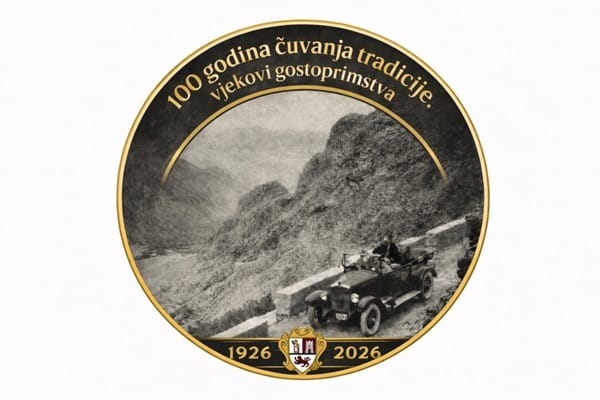
100 years of organised tourism in Kotor | 1926–2026
Centuries of hospitality.
Popular searches