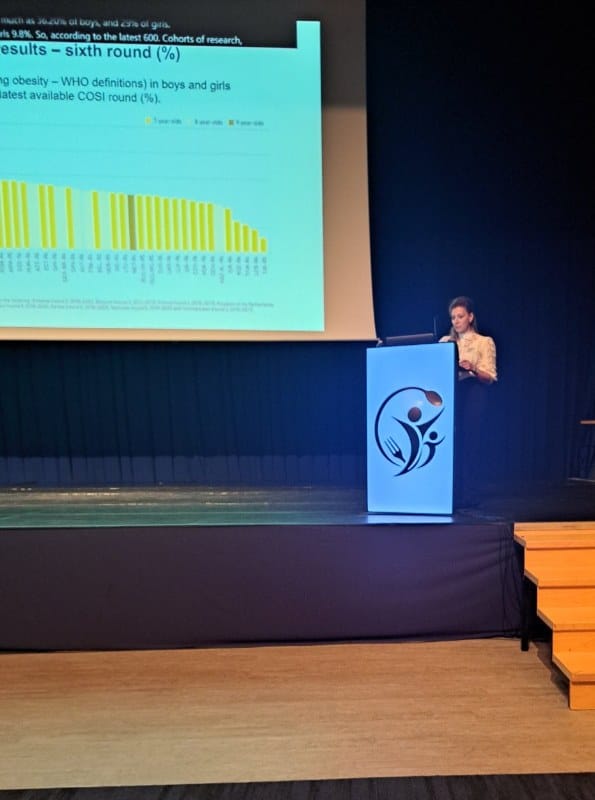
Speaking about her impressions of the conference, Brdar stressed that the topic is particularly important for Montenegro, given World Health Organization figures showing that roughly one in three seven-year-olds is overweight or obese.
“These figures point to the need to start prevention as early as possible and to pay particular attention to the quality of children's meals in educational institutions,” Brdar said.
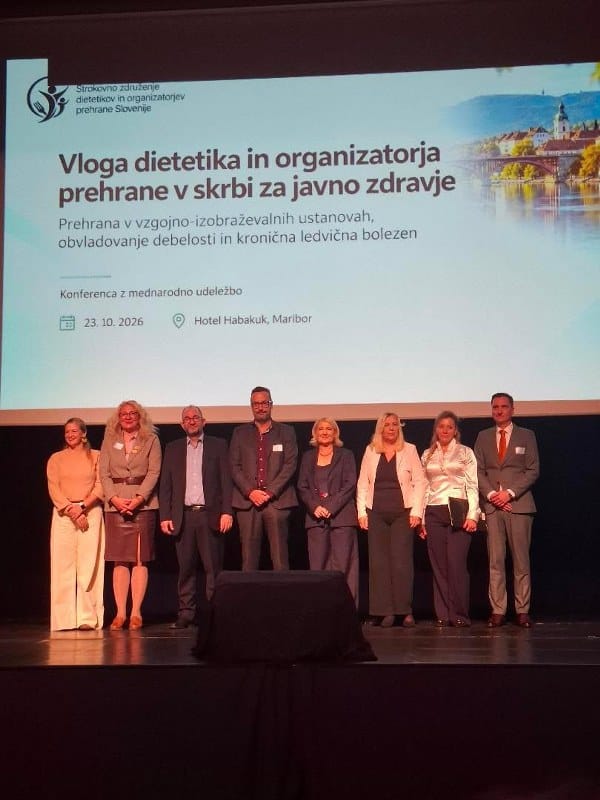
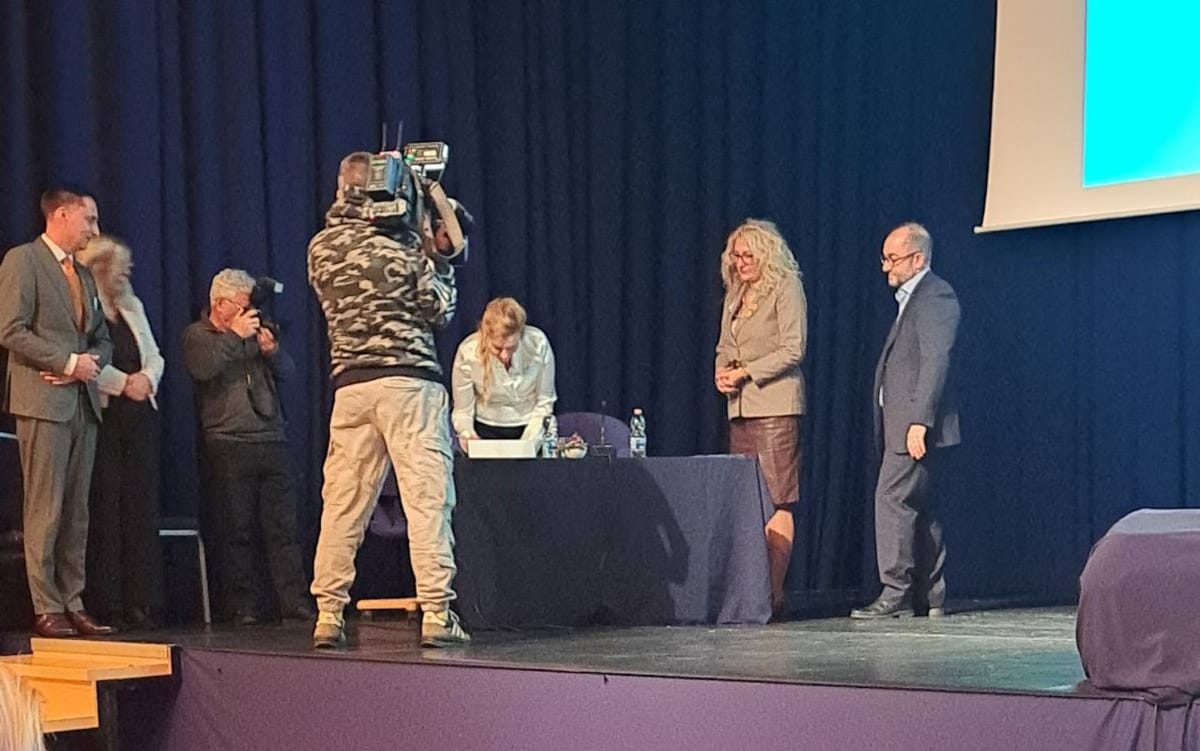
The conference was held on 23 October in Maribor, with experts from various European countries taking part. Discussions covered the importance of nutrition specialists, the quality of meals in educational institutions, obesity prevention and improving public health.
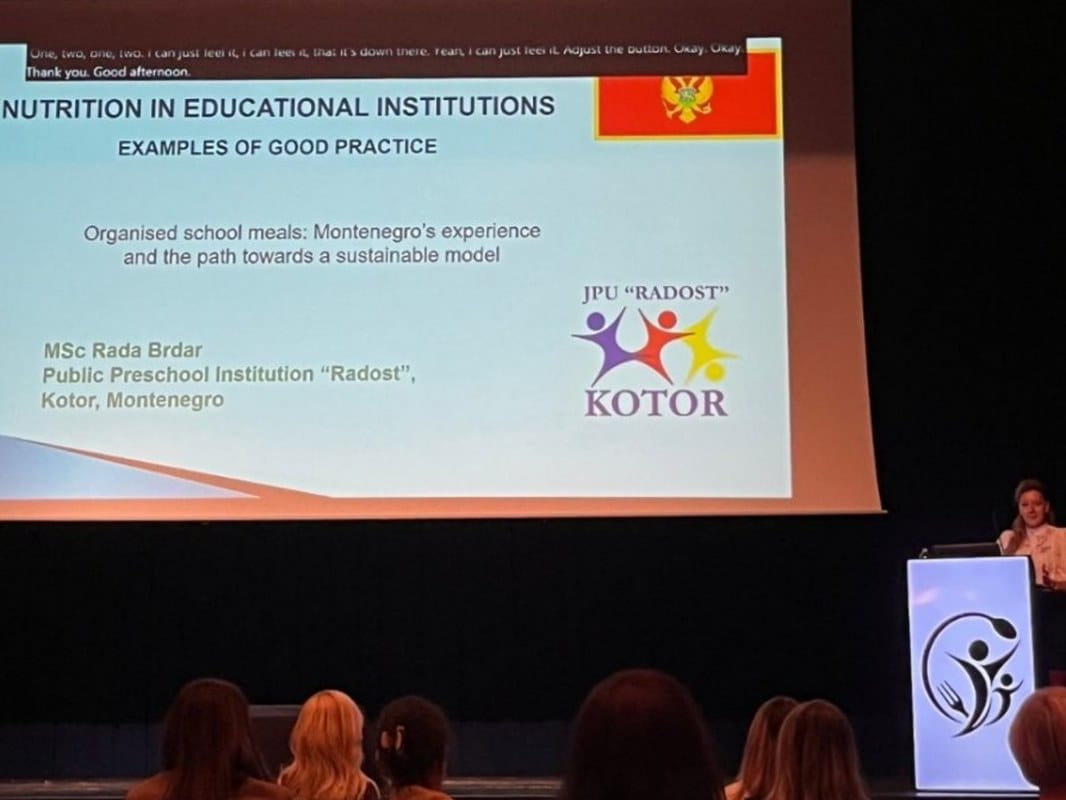
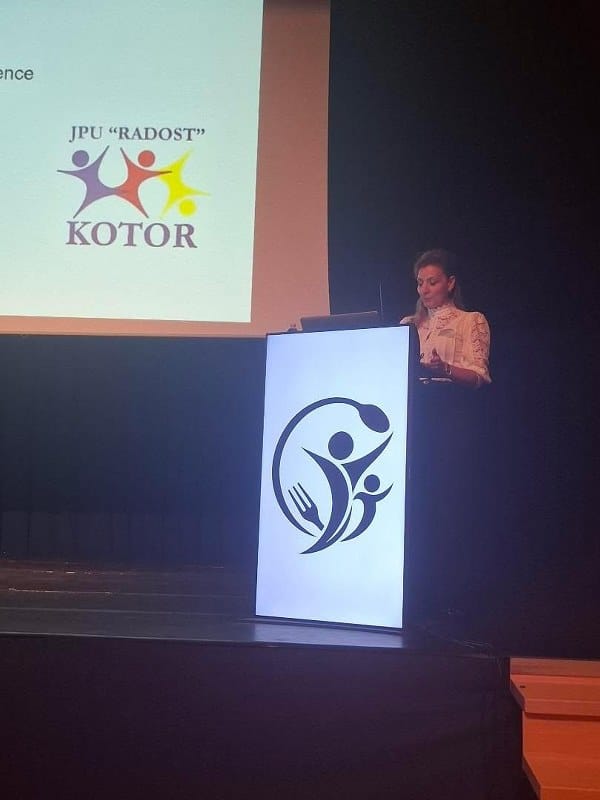
Brdar presented the work done so far and examples of good practice from Montenegro, including the “School Snack” project and the School Scheme programme, carried out in cooperation with hygiene doctors from the Institute of Public Health.
“It meant a great deal to me to have the chance to present our country's experience and exchange views with European colleagues,” she said.
One of the conference's important messages is contained in the Maribor Declaration, which highlights the importance of investing in good-quality food for children. According to Brdar, meals in kindergartens and schools cannot be seen simply as preparing and serving food, but as an investment in the health, education and future of society.
She stressed that good-quality meals in educational institutions require well-planned menus, enough specialist and kitchen staff, suitable equipment, good working conditions and adequate funding.
“I believe these messages are very important for Montenegro. We have examples of good practice, but we need to keep improving the system, strengthening the specialist workforce and creating the conditions for every child to get a good-quality, nutritionally adequate meal,” our interviewee said.
She singled out Slovenia as a positive example of how school meals can be organised, which, in her words, shows how important professional meal planning, clear guidelines and access to good-quality food in the school environment are.
“Countries in the region are also making attempts at organised school meals. We all face similar problems – a lack of funding and the need for meals to be consistent and available to all children, regardless of their parents' financial means. I think Slovenia is a good example of organised school meals because it shows how important professional meal planning, clear guidelines and access to good-quality food in the school environment are. While in kindergartens we try to monitor what children eat and develop healthy habits through meal planning and education, once they start school, children often come across more readily available energy-dense foods, as well as energy-dense drinks, which contain few or no nutritionally valuable ingredients. That is why it is important for healthy habits to continue to be developed in schools too, and for healthy choices to be available to children. In this way, this European initiative to improve school meals, together with Slovenia's experience, can serve as guidelines for developing a better system in Montenegro,” Brdar said.
Recalling how school meals used to be organised, she pointed out that eating together also had an important social dimension. In her words, the organisation of school meals has not developed continuously, and schools have not had enough investment or capacity to keep up with the needs of a growing number of pupils. Still, it is encouraging that the importance of a proper diet is once again being recognised as an important part of the education system.
Preschools play a special role in shaping healthy eating habits, because it is in early childhood that patterns of behaviour are adopted and carried into later life.
Brdar says that the “Radost” preschool in Kotor runs educational workshops adapted to the children's age, in cooperation with the preschool teachers.
“At the moment, through autumn workshops, the children are getting to know autumn fruit and vegetables and learning about their importance for health,” explained Rada Brdar, nutrition specialist at the “Radost” Public Preschool Institution (JPU) in Kotor.
Through various games, tasks, pictures and visual presentations, the children are introduced to the healthy eating pyramid and learn which foods they should choose more often, why it is important to eat a varied diet and what should be on their plate.
The experiences presented at the conference in Maribor, together with examples of good practice from Slovenia and other European countries, can serve as guidelines for further improving the school meals system in Montenegro. The shared message is that healthy habits do not come about by chance, but are built from the earliest age, through good-quality meals, continuous education and the support of educational institutions.
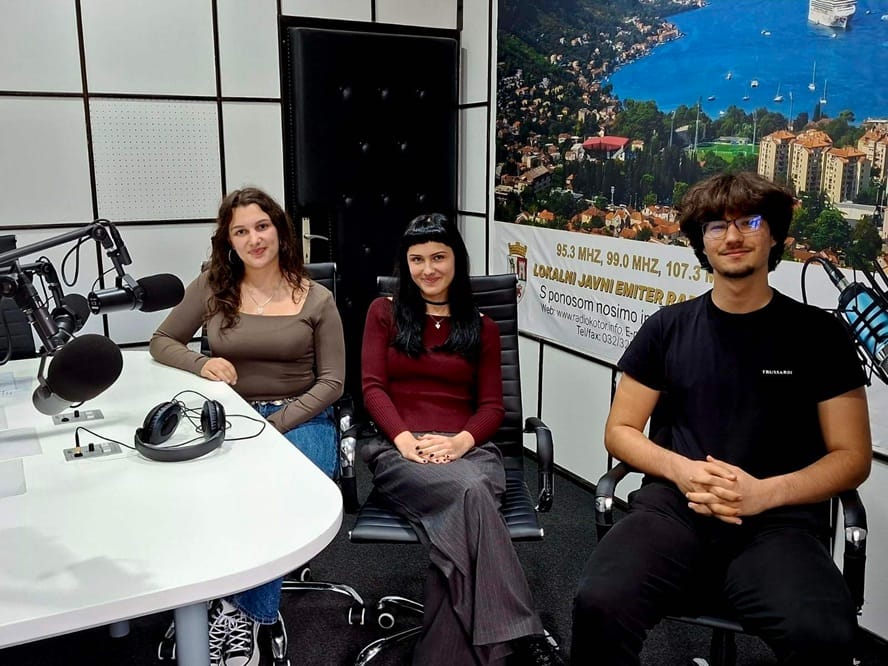
You can listen to the full interview at this link: Joy.