Where there is enlightenment – there is progress,
where there is enlightenment – nationhood flowers;
where there is nationhood – there is life of the spirit,
where there is none – a statue without a soul.
Among the many monuments of Kotor and its surroundings, the Gymnasium, as a living educational institution, has been the pride of the town for a full 160 years, and in Yugoslavia it was considered, together with those in Zadar and Dubrovnik, the oldest. Before the Gymnasium, through the Middle Ages, there was a grammar school, but a school of the gymnasium type meant a step forward that the municipality of Kotor fought for persistently under Austrian rule, until it secured it with the official signature of Emperor Franz Joseph. During his stay in the Bay of Kotor in 1875, the emperor visited the Gymnasium in person. He was greeted by three pupils, in German, Serbo-Croatian and Italian.
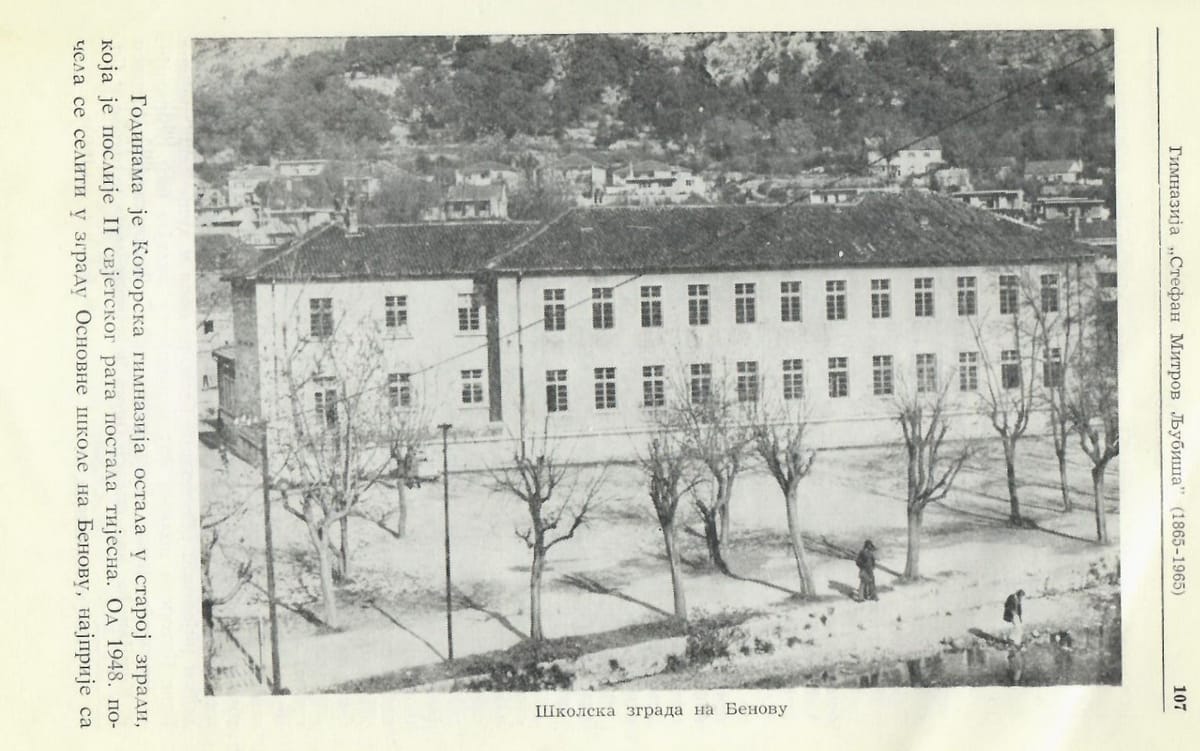
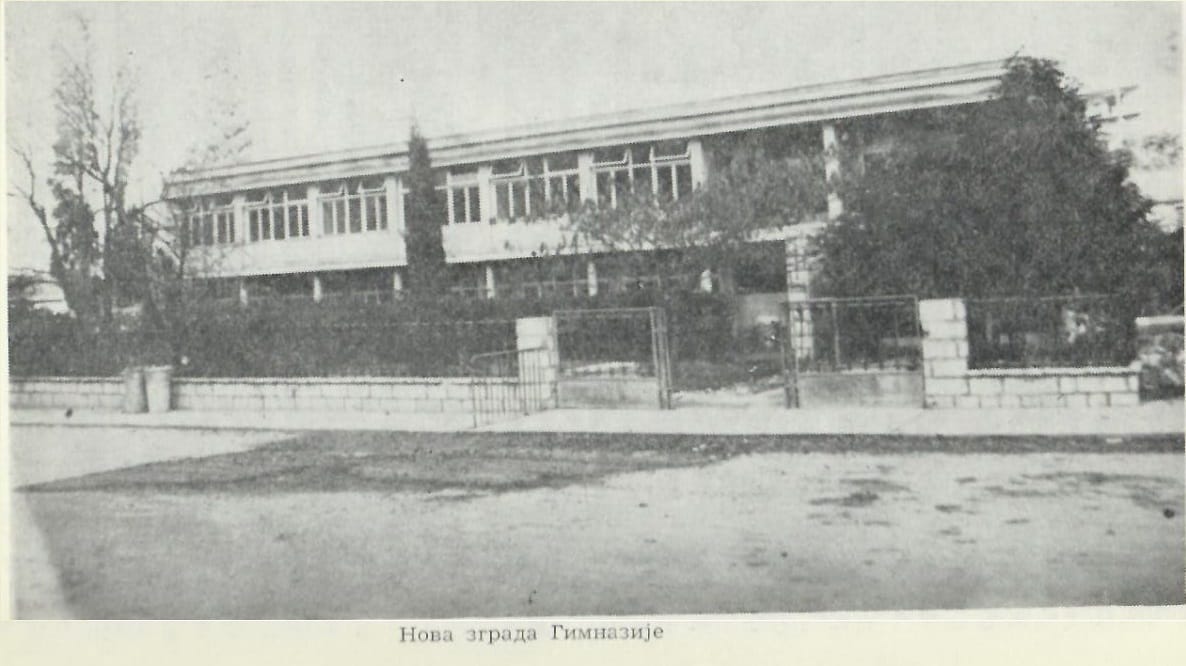
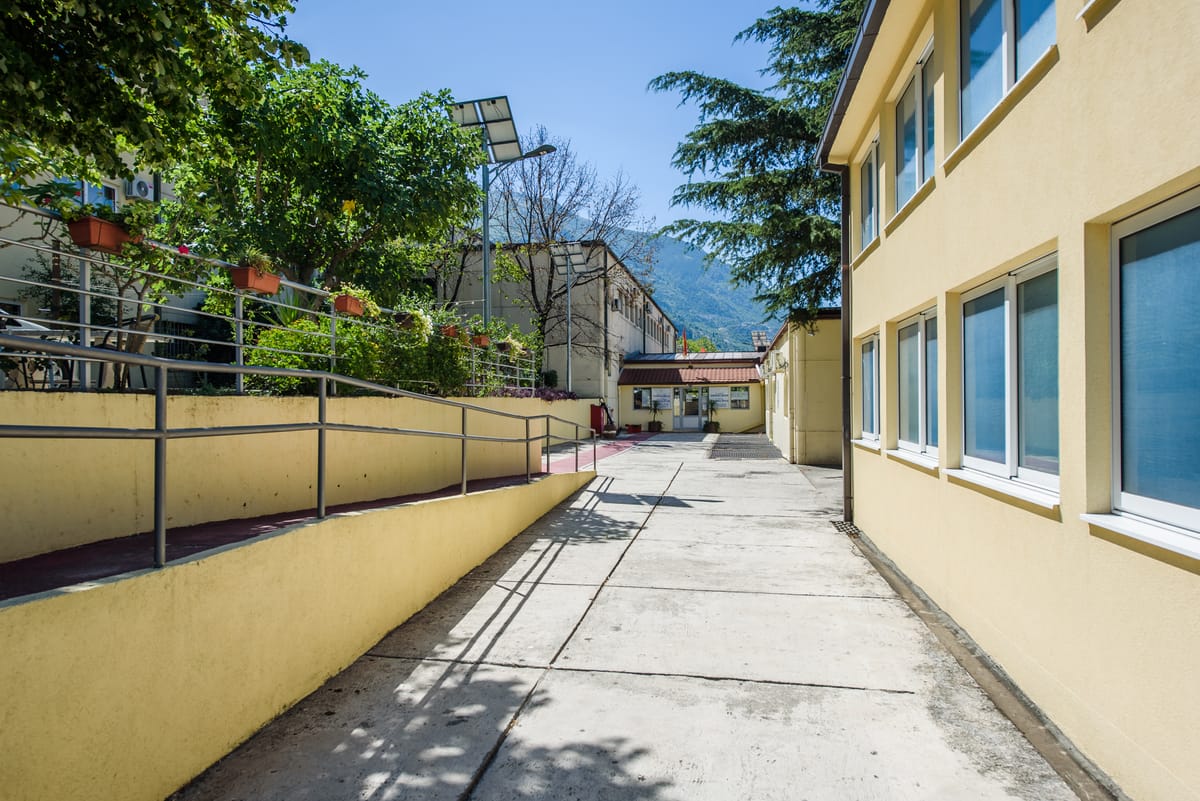
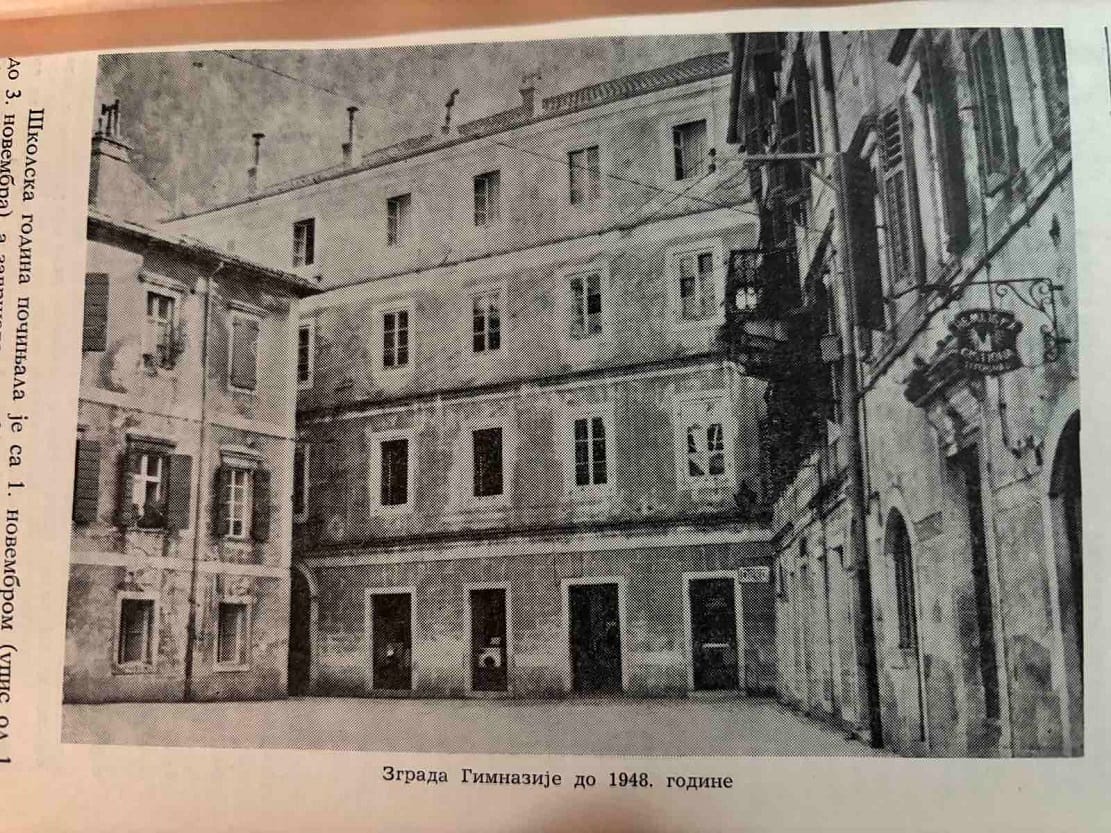
The administrative formalities needed to found the Gymnasium were completed in 1864, but for practical reasons, and to secure the necessary conditions for its work, it officially opened on 8 January 1865, in the building of Spiridon Bjeladinović, where the Girls' School and the Nautical School were already operating. Today that building houses the Hotel Marija, and as early as the 1868/69 school year the Gymnasium moved to the palace of the Pasinović brothers (today the Faculty of Tourism and Hotel Management), where it stayed for a long time, until 1948, when it moved to the primary school building at Benovo. When that building was removed, the Gymnasium first moved to the Maritime School building, where the Kamelija shopping centre stands today, and in the 1965/66 school year it moved into the building on Tabačina that now houses a kindergarten. Finally, after the devastating earthquake of 1979, a prefabricated building was put up, into which the Gymnasium and the Maritime School moved, forming a School Centre where they are still located today, once again as two separate legal entities.
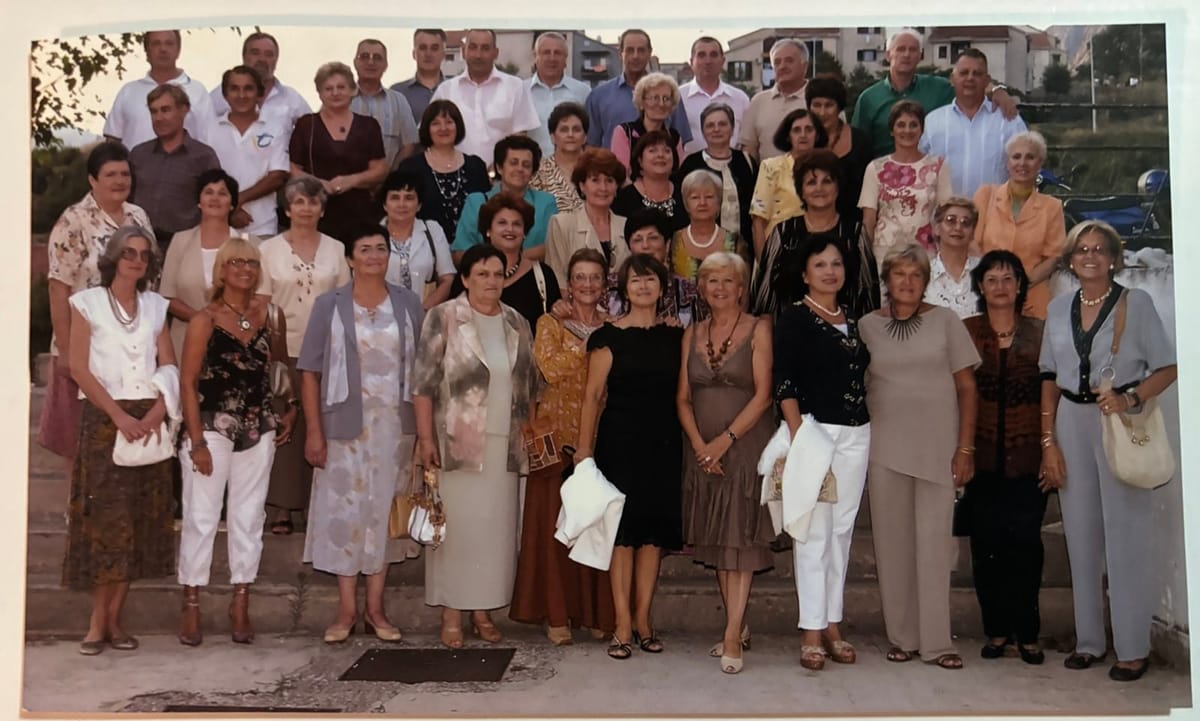
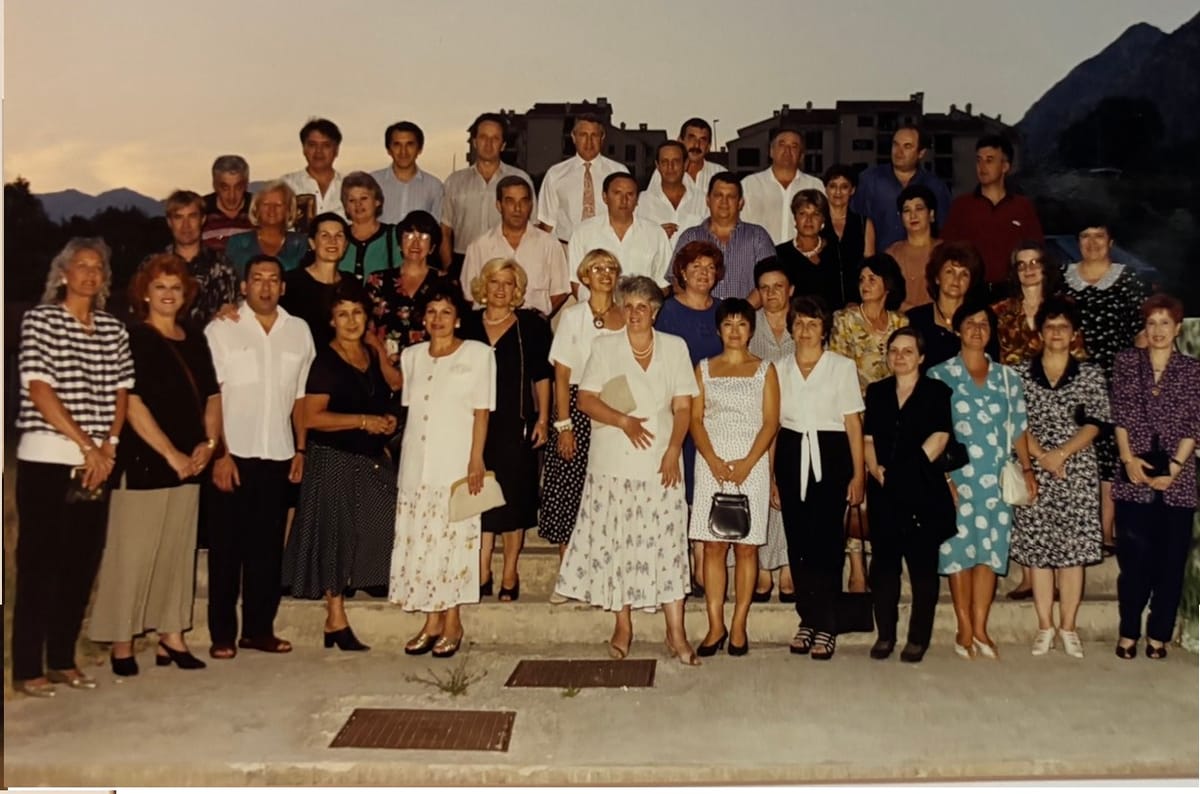
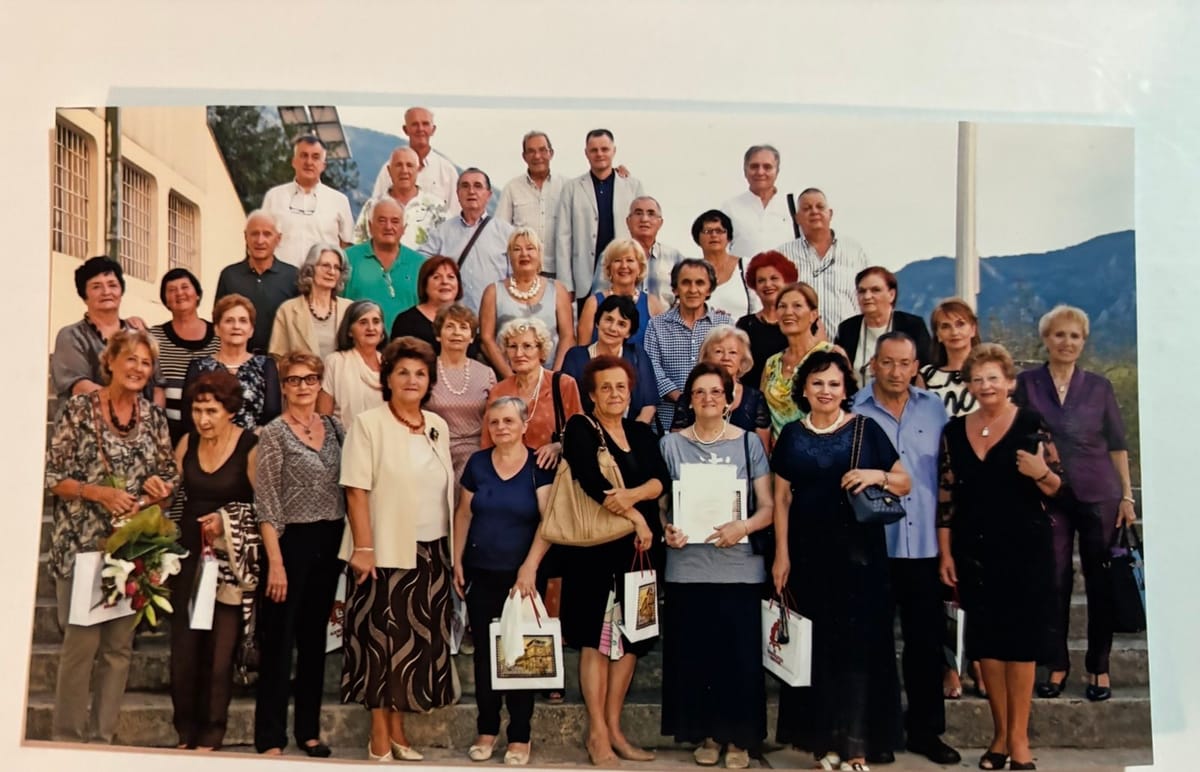
Sixty years ago, with great ceremony, the Gymnasium moved into the building on Tabačina. It was named after Stefan Mitrov Ljubiša, and his bust, a gift from the municipality of Budva, adorned the school courtyard. This is especially remembered by the hundredth generation of the Kotor Gymnasium, who this year will mark 60 years since their school-leaving exams, on the third Saturday in June. There were 88 school-leavers in four classes, and their form teachers were Jelisaveta Subotić, Gracijela Simović, Rozmari Bjeladinović and Tomo Ivanović. Two of the classes followed the social sciences and languages stream and two the natural sciences and mathematics stream. Like many other generations, life took them to all corners of the world, but the years they spent at the Gymnasium were unforgettable, as they always stressed at their reunions every ten years. The headmaster was Gracija Pasković, and, something that still matters a great deal to the school-leavers, their graduation trip in September 1965 went by boat to Split, then by train to Belgrade, with visits to Oplenac and Stražilovo on Fruška Gora, then Zagreb, Ljubljana, the Postojna Cave, Rijeka and, again by boat, back to Kotor. Today's generations look to trips beyond the borders of the former Yugoslavia.
Although the Gymnasium in Kotor remembers 1285 and 1864 as its milestone dates, the monograph that the hard-working archivists and researchers Snežana Pejović, Jelena Mršulja and Joško Katelan have carefully prepared over several years of work has still not seen the light of day, because it is waiting, as the usual phrase goes, for the financial package to be put together. Hopefully that too will be agreed soon, because there are many more interesting details, like the ones we have published in this piece thanks to the kindness of the monograph's authors.