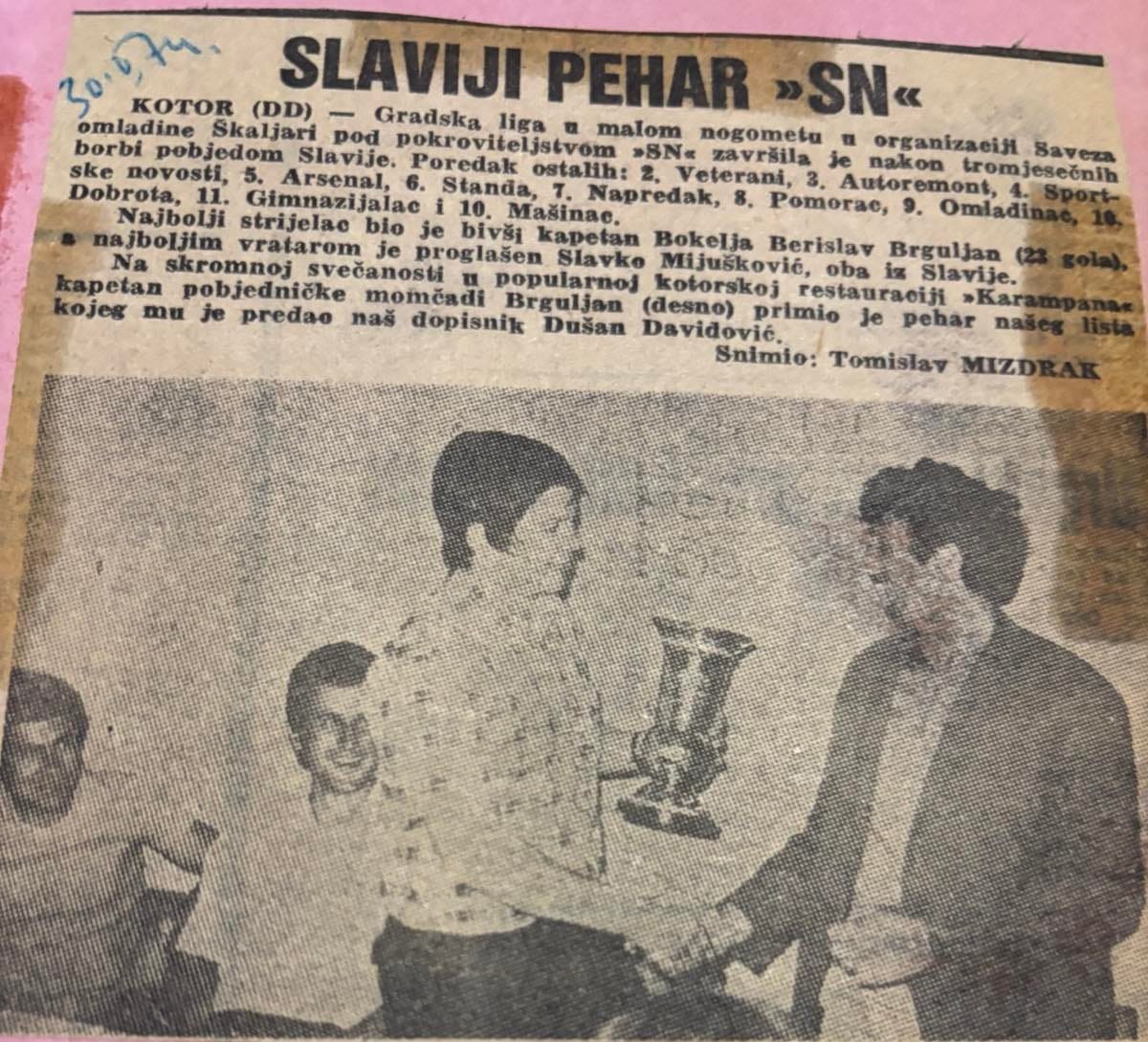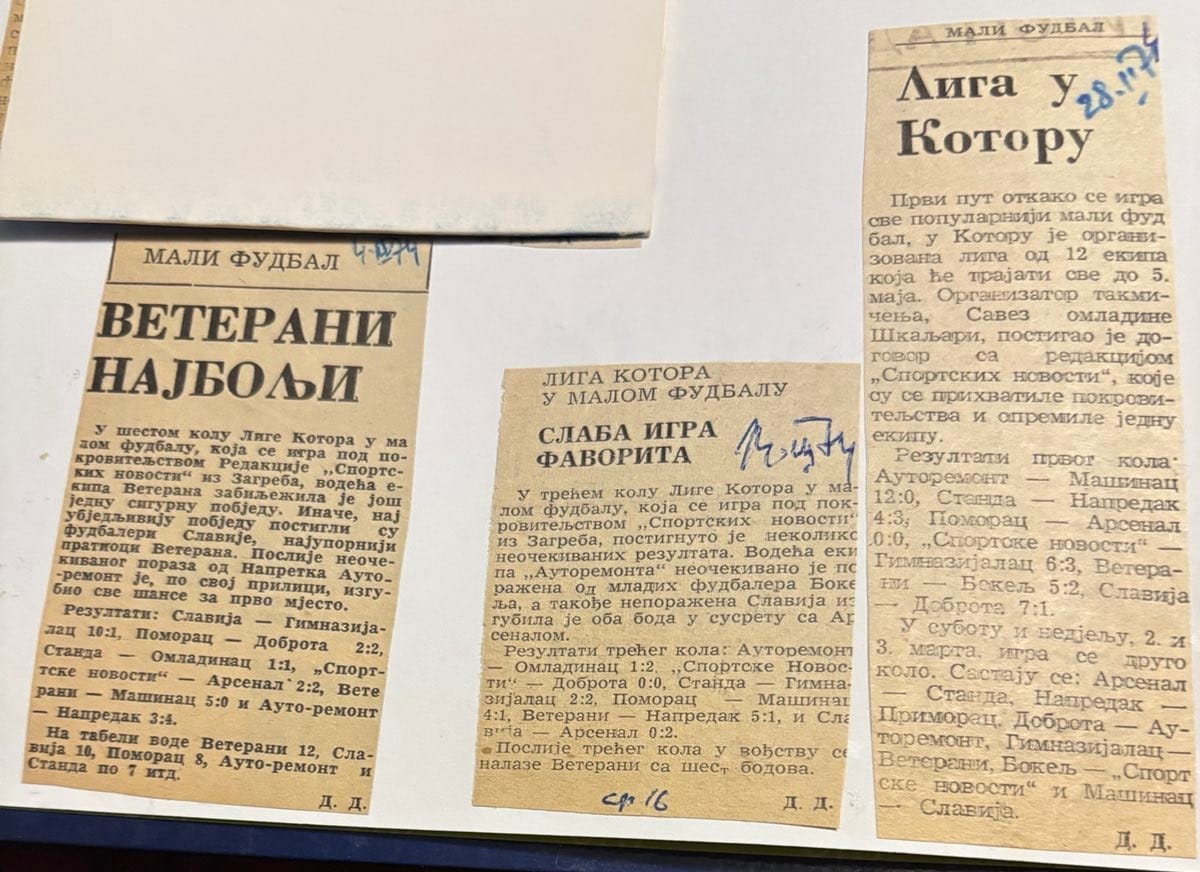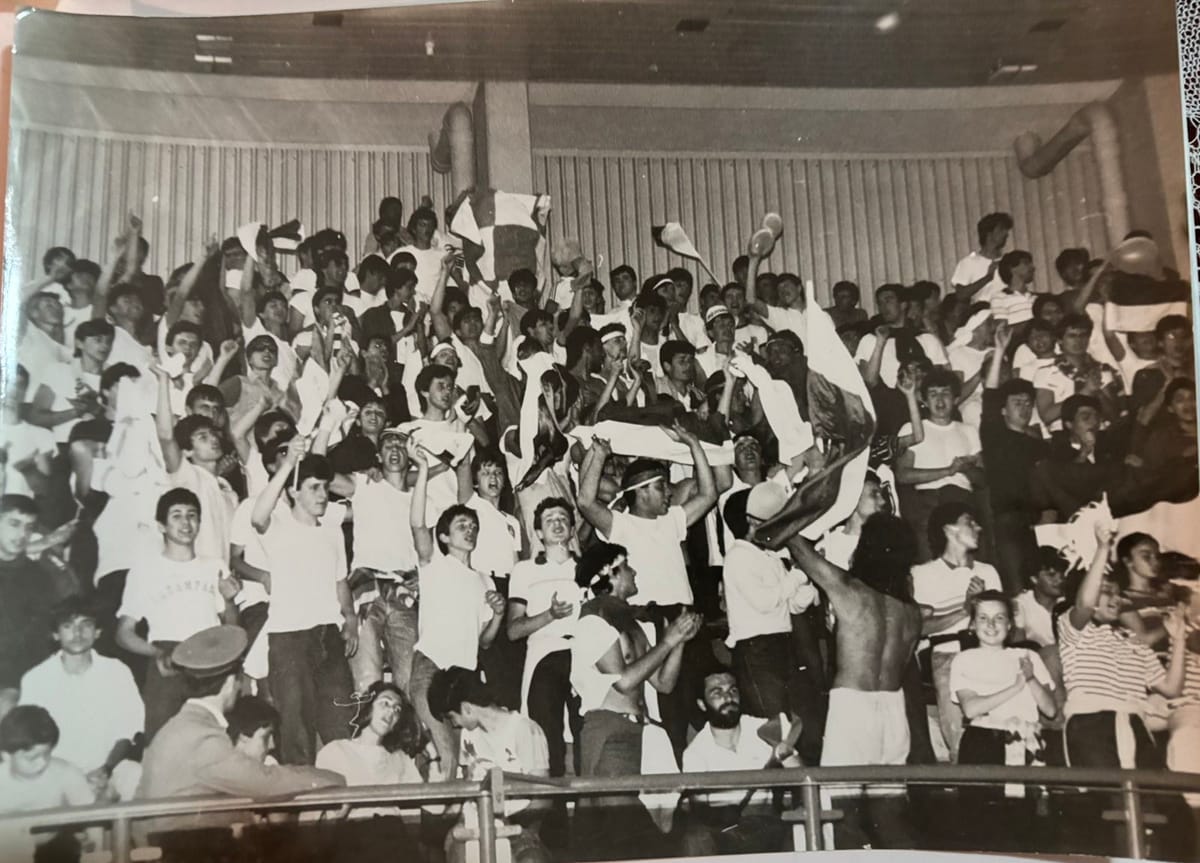
At that time it was, as a rule, mostly played on the pitch of the Institute for the Deaf and Mute, and Kotor was one of the towns known for the number of its teams and the quality of its five-a-side. Indeed, in the first half of 1974 a Town League was held with 12 teams, with regular rounds played at weekends and strict records kept of players, results and every necessary detail. In the end, first place went to Slavija, followed in order by Veterani, Autoremont, Sportske novosti, Arsenal, Standa, Napredak, Pomorac, Omladinac, Dobrota, Gimnazijalac and Mašinac. The league's top scorer was Beri Brguljan with 23 goals, and the best goalkeeper was Slavko Mijušković, both from Slavija.
From those early days of five-a-side in Kotor, besides those already mentioned, the talented players remembered include Vlatko and Dakan Franović, Bato Radulović, Gajo Brguljan, Pavle Đurović, Mišo Begović, Pavle Vičević, Pana Milošević and Darko Čelanović, and later Bato Marić, Jovo Suđić, Kinjo Vujović, Miodrag Otašević, Jovo Buzdovan, Slobodan Guberinić and many others.
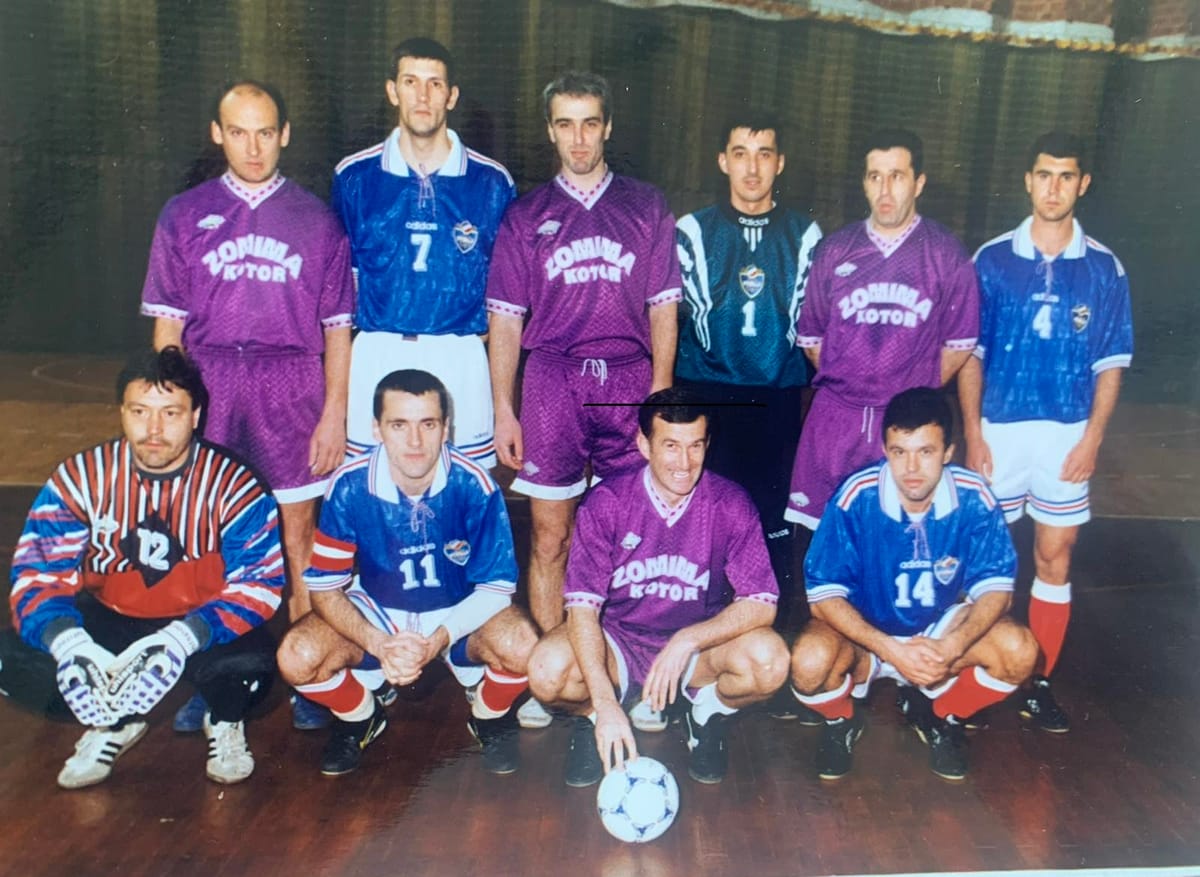
Then came a period dominated by the teams Fjaka, Troja, Veš mašina, Nikšićko pivo and then Zomime, today Katara, and Boka, which play in Montenegro's First and Second Futsal League respectively.
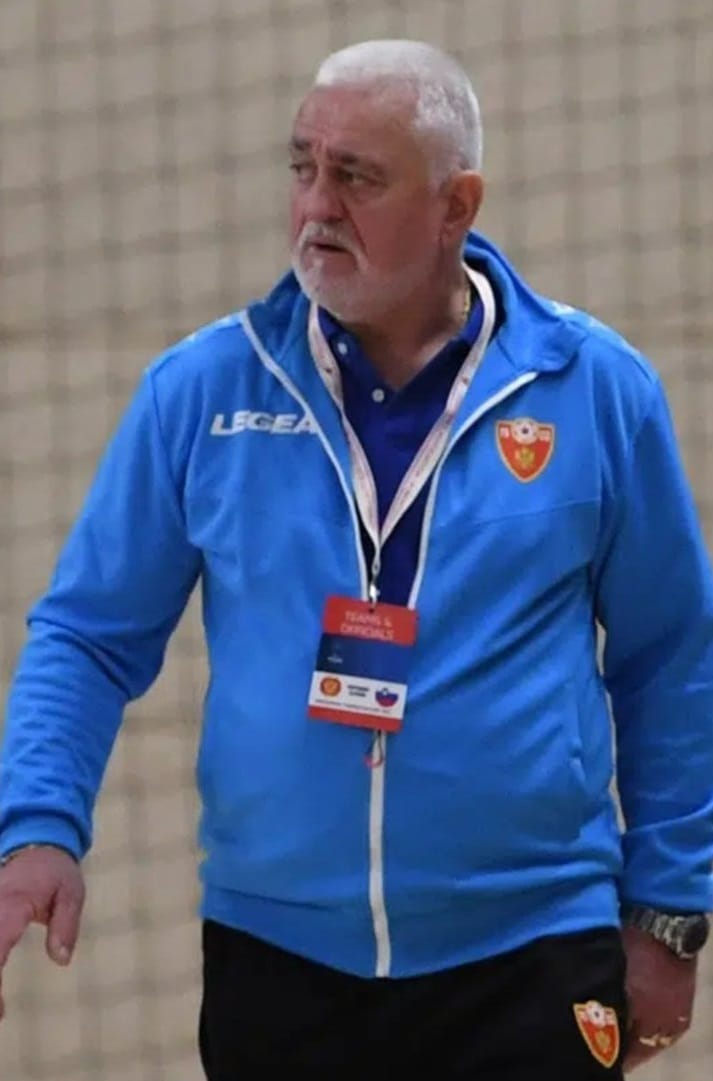
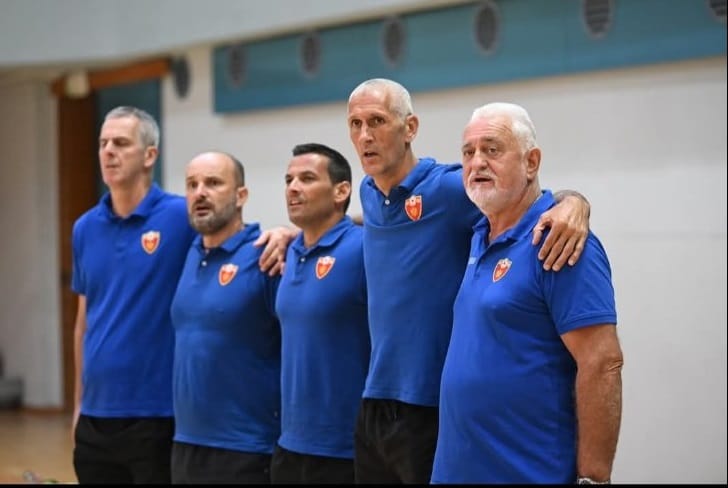
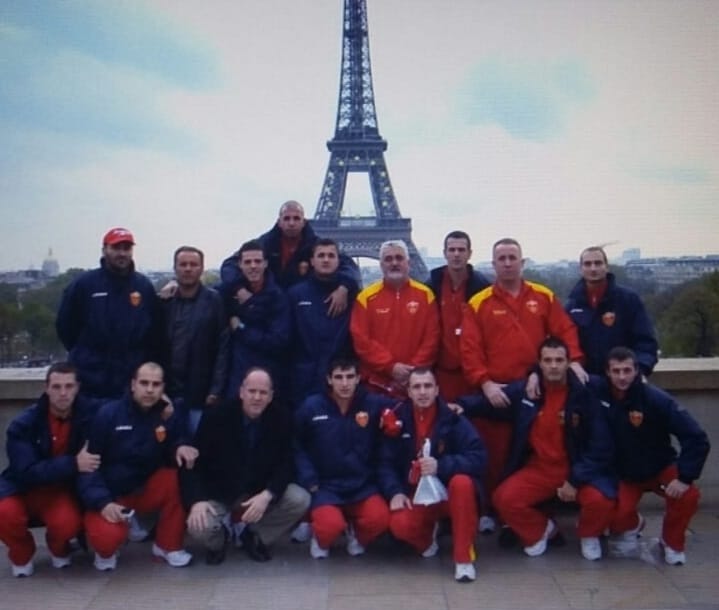
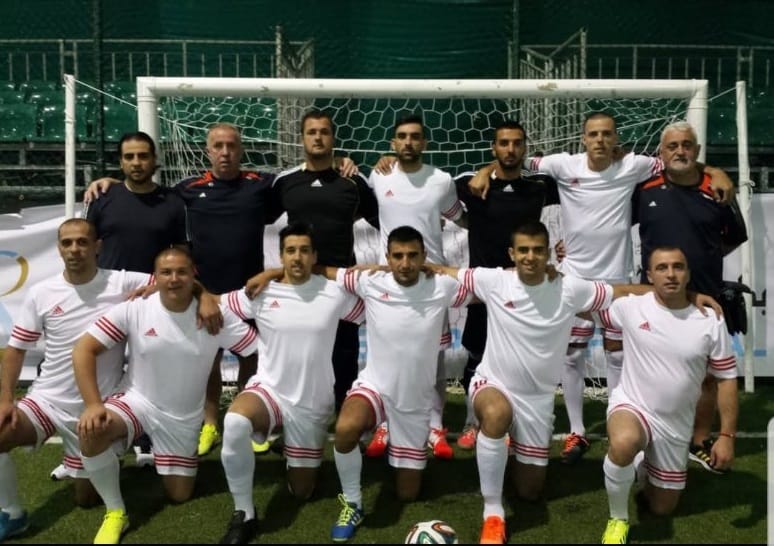
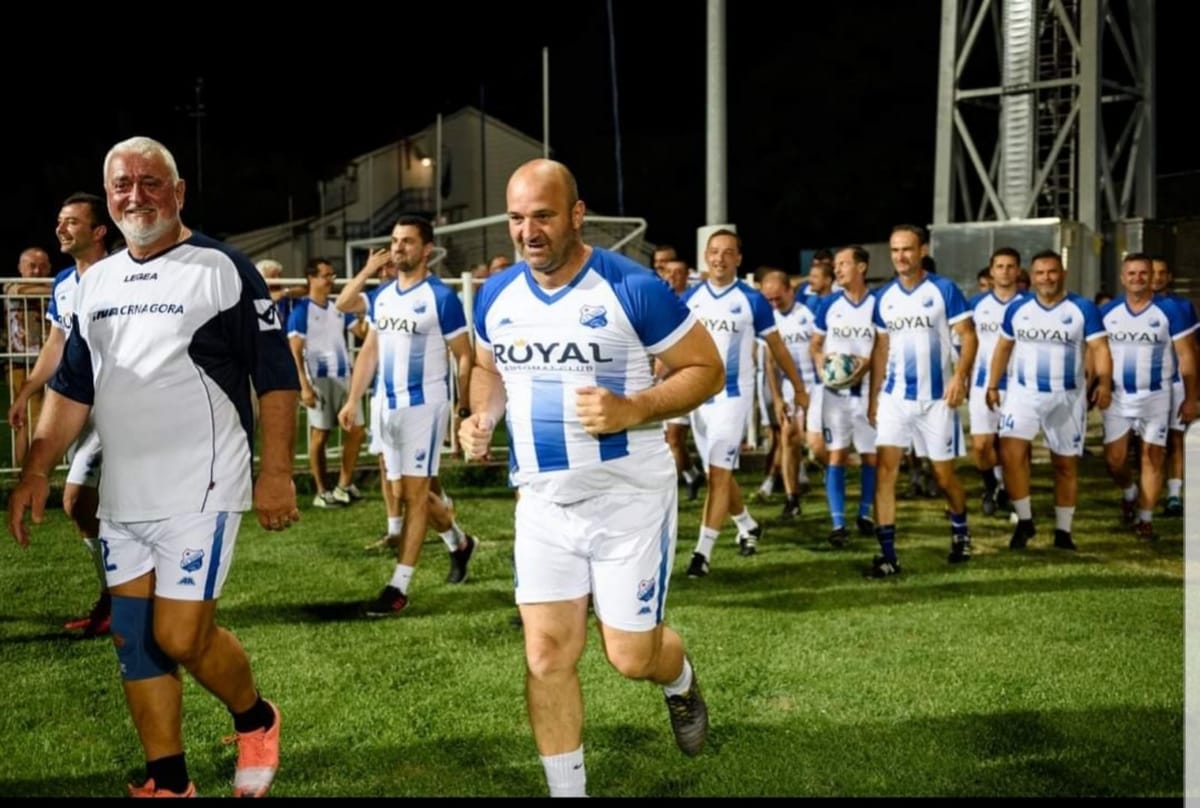
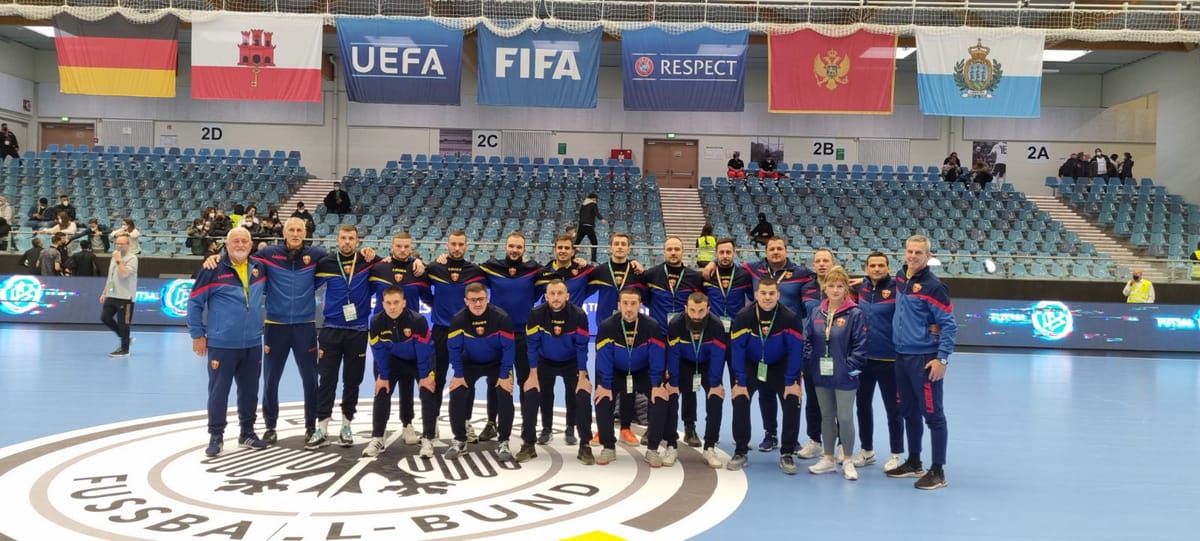
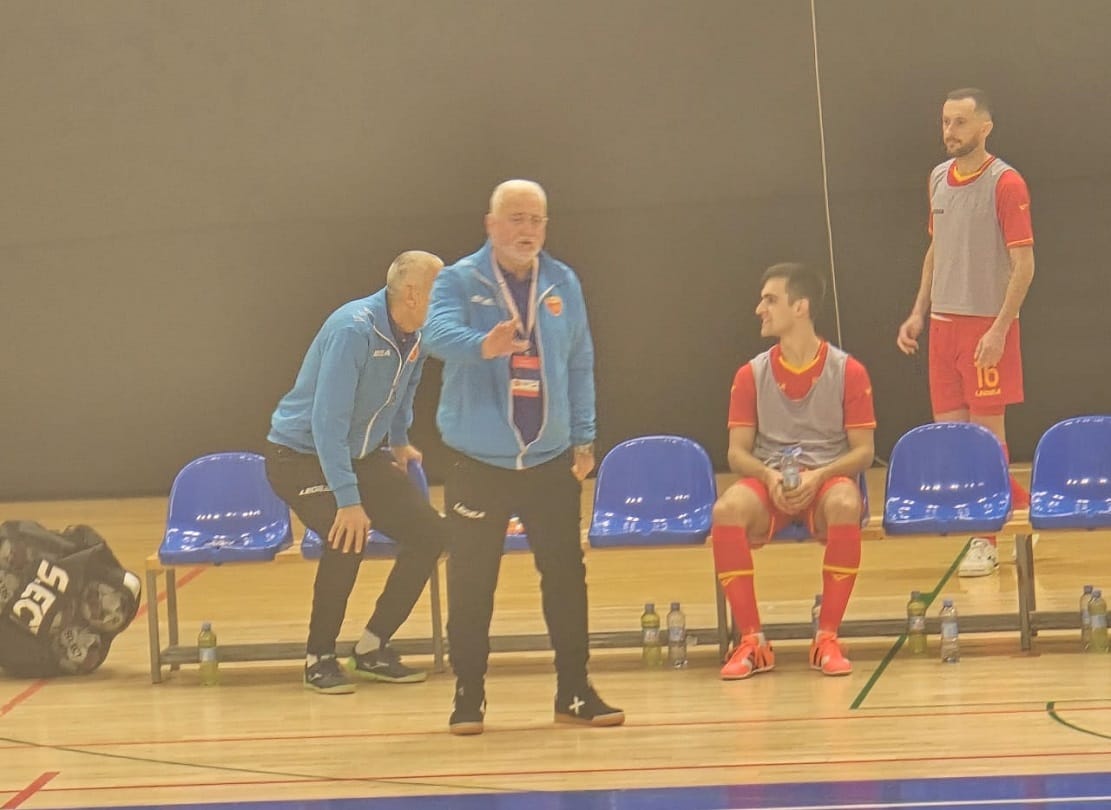
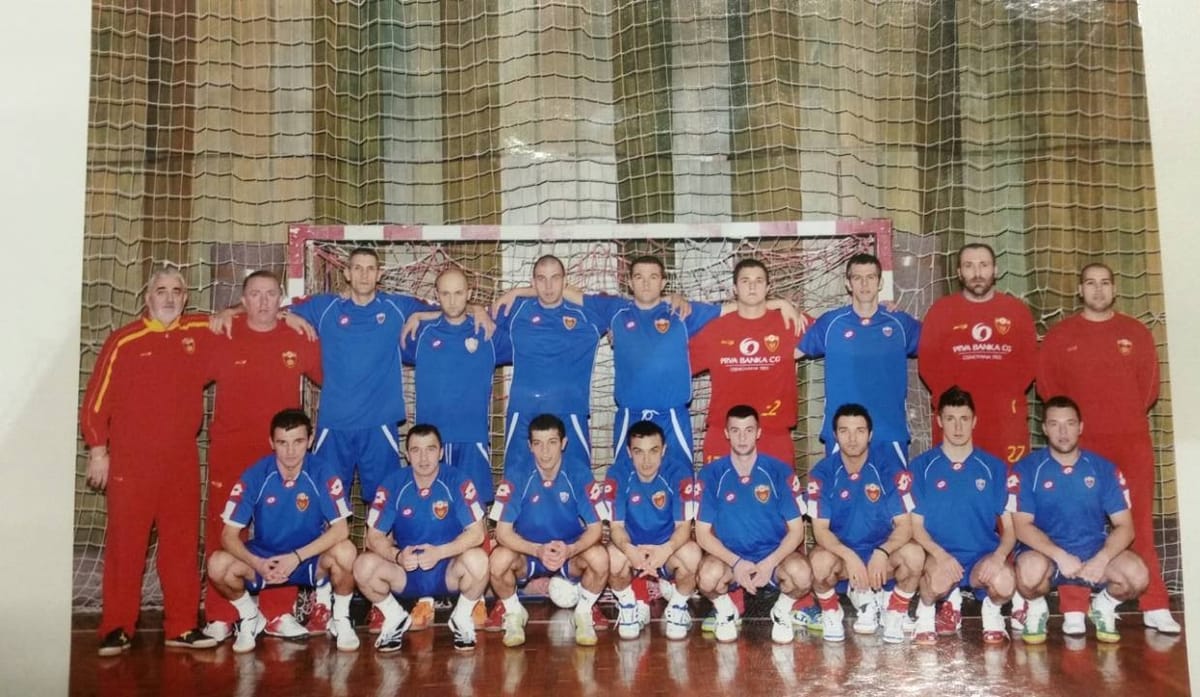
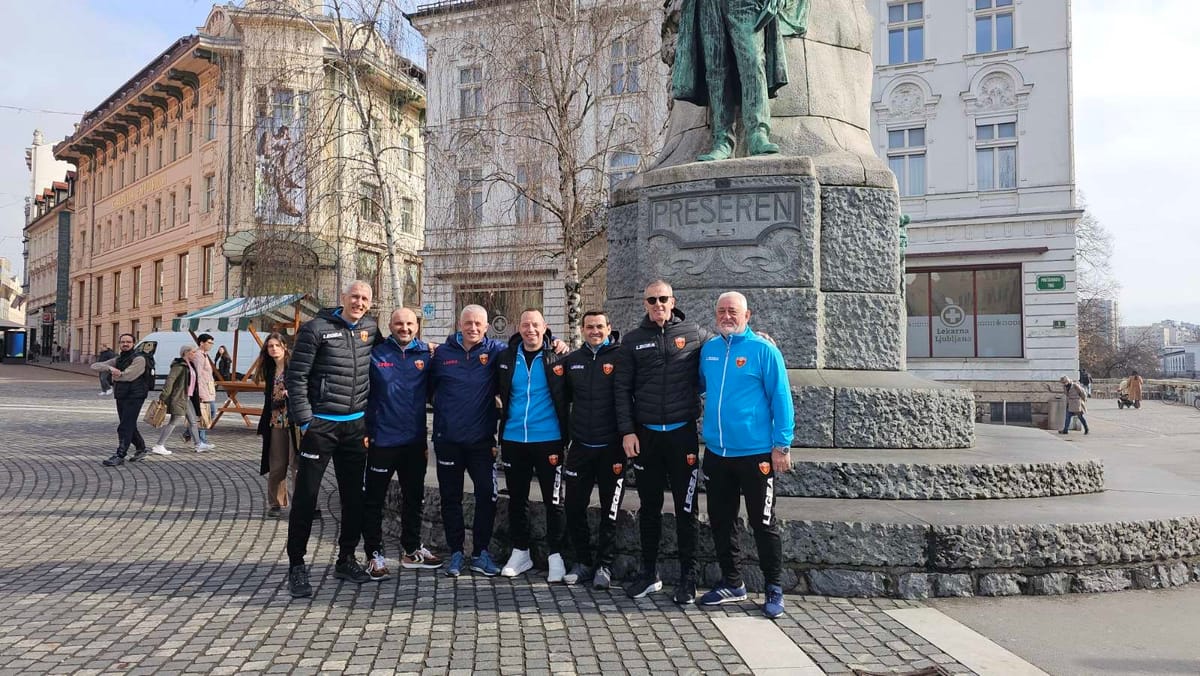
But a special status in Montenegrin five-a-side, or futsal, belongs to Sveto Ljesar, who has been head coach of the national team since 2007. After a playing career with Bokelj, Ljesar played five-a-side for Kotor teams, then took on the role of club coach, then coach in the FR Yugoslavia national set-up, before becoming head coach almost 20 years ago. He has spent more than 400 matches on the national team bench in Montenegro's colours, travelled to many countries and earned authority and acquaintances around the world as an expert in a sport that is increasingly popular in every corner of the globe. Ljesar points to the growing interest in futsal in Kotor, and in Montenegro generally. His lists also include talented players from Kotor, especially Luka Vuletić, who plays professionally in Slovakia and is very well known among futsal fans in Europe. So, over five or six decades, the sport has come a long way in our town, from the first matches at Račete, then on the pitch of the Institute for the Deaf and Mute, to sports halls where it is played in much more comfortable conditions and attracts the attention of players and spectators alike.