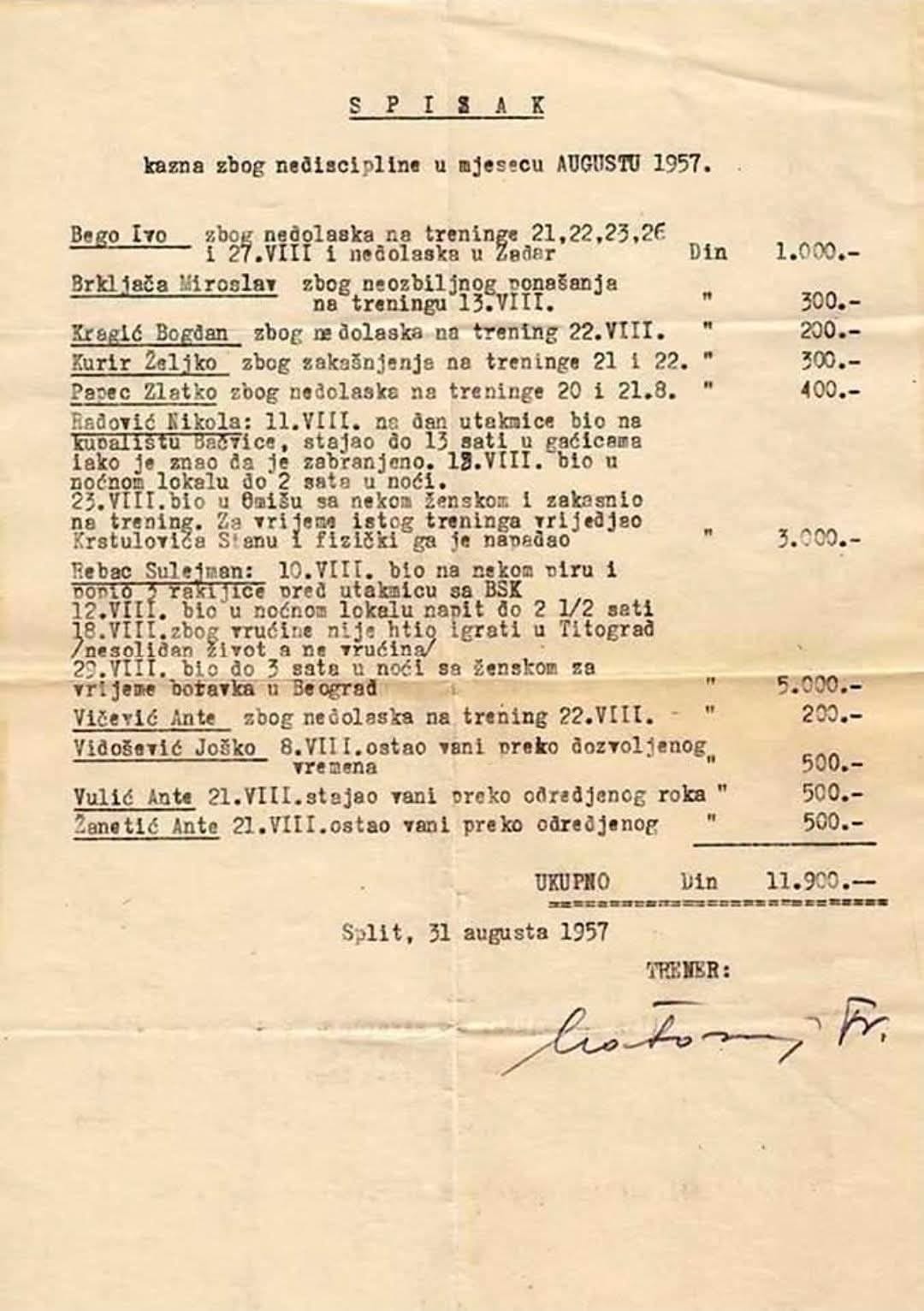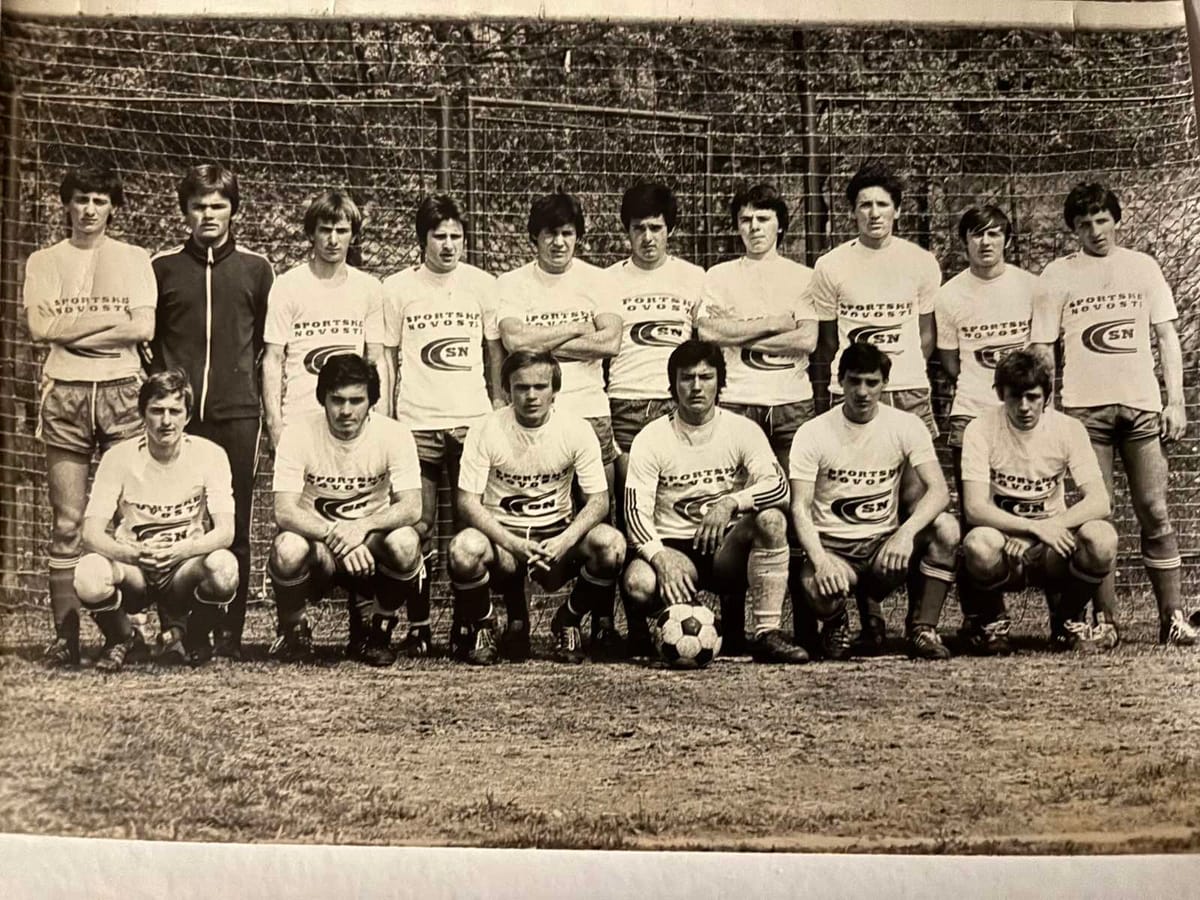
That prompted us to recall, with the help of a document left in 1957 by the then Hajduk coach, the legendary Frane MATOŠIĆ, how he, for example, set the penalties for particular misconduct by Hajduk players.
Frane Matošić /1918-2007/ was champion of Yugoslavia four times with Hajduk and won 16 caps for the national A team, and at various stages he was Hajduk's coach and even its president.
All clubs had disciplinary rules and set penalties for players' offences and behaviour, both on the pitch and off it. But perhaps nowhere else were the reasons for a penalty explained and written down as openly as Matošić did it. In those times of hidden professionalism, the rewards were special too: furniture, household appliances, sometimes even cars, or paid trips and holidays.
Today rewards are concrete and clear, as are penalties, and they are mostly expressed in sums of money. Football, as the most popular sport in the world, carries special weight, so whatever happens in and around it draws the most comment. And so people will talk for a long time about how handsomely the most successful players at the World Cup were rewarded, but also about how those who fell foul of the disciplinary bodies for various offences fared.
Frane Matošić's surviving list from 1957 remains a document of its time and an illustration of what behaviour was then considered unacceptable and punishable.