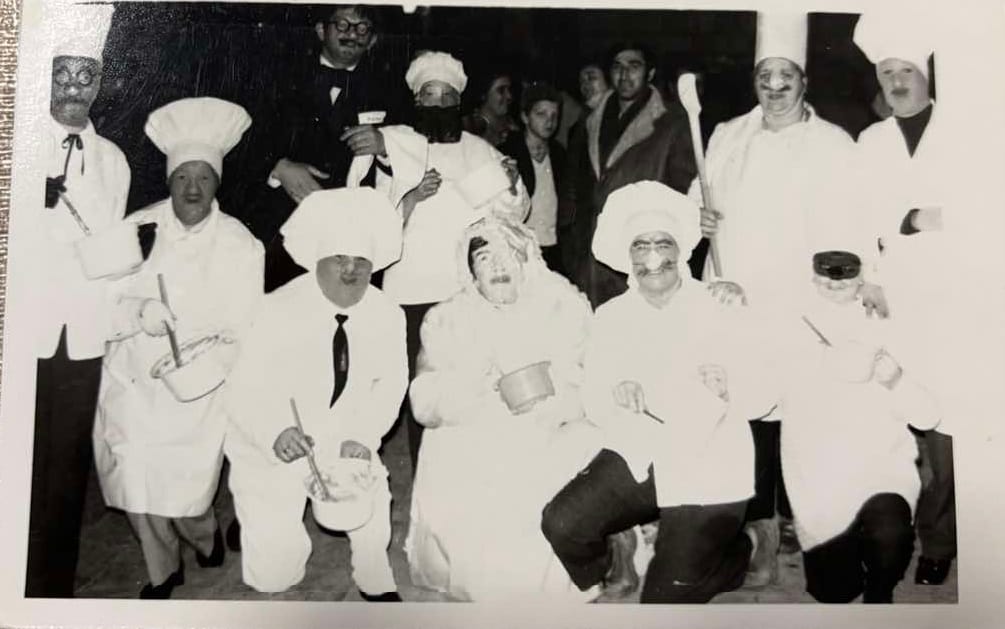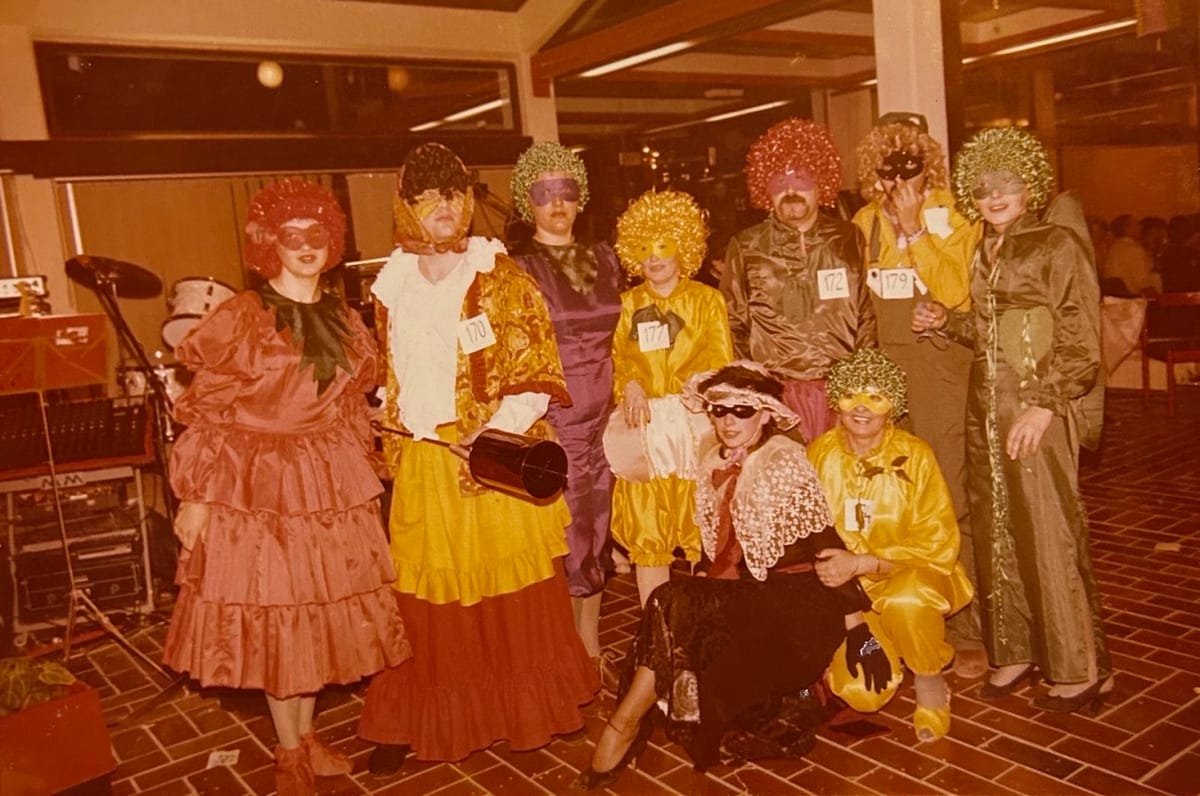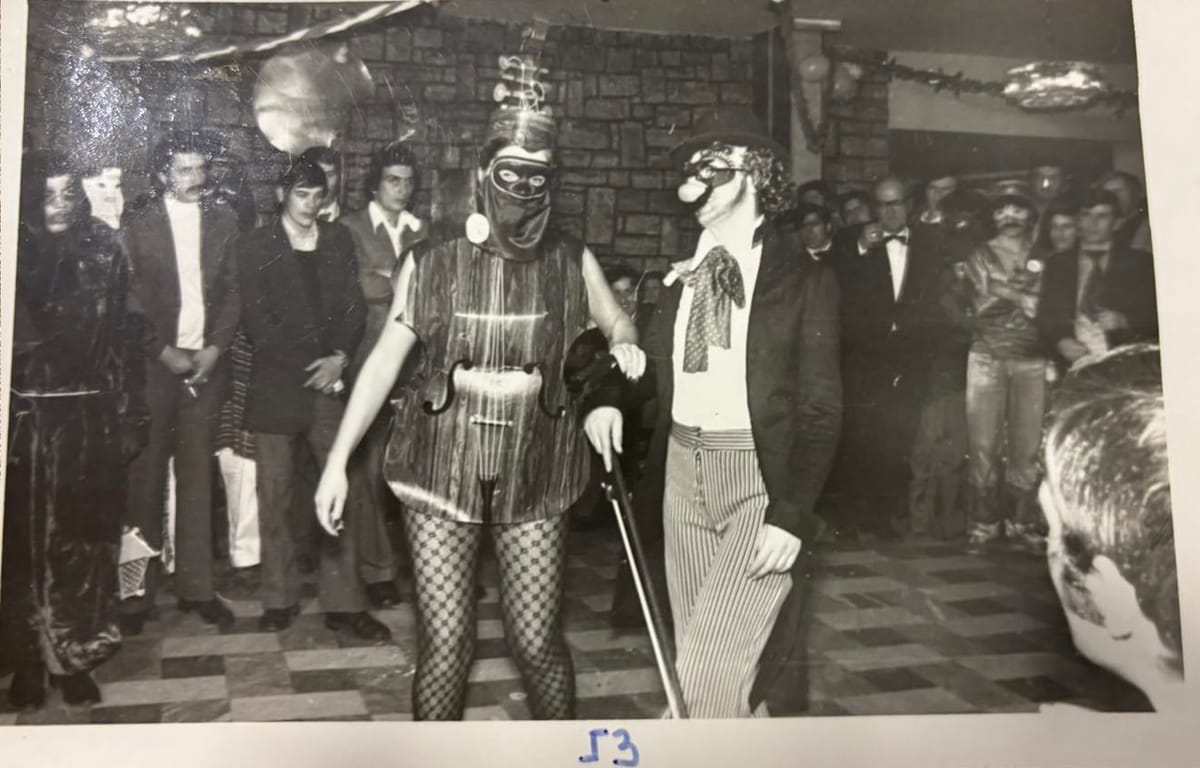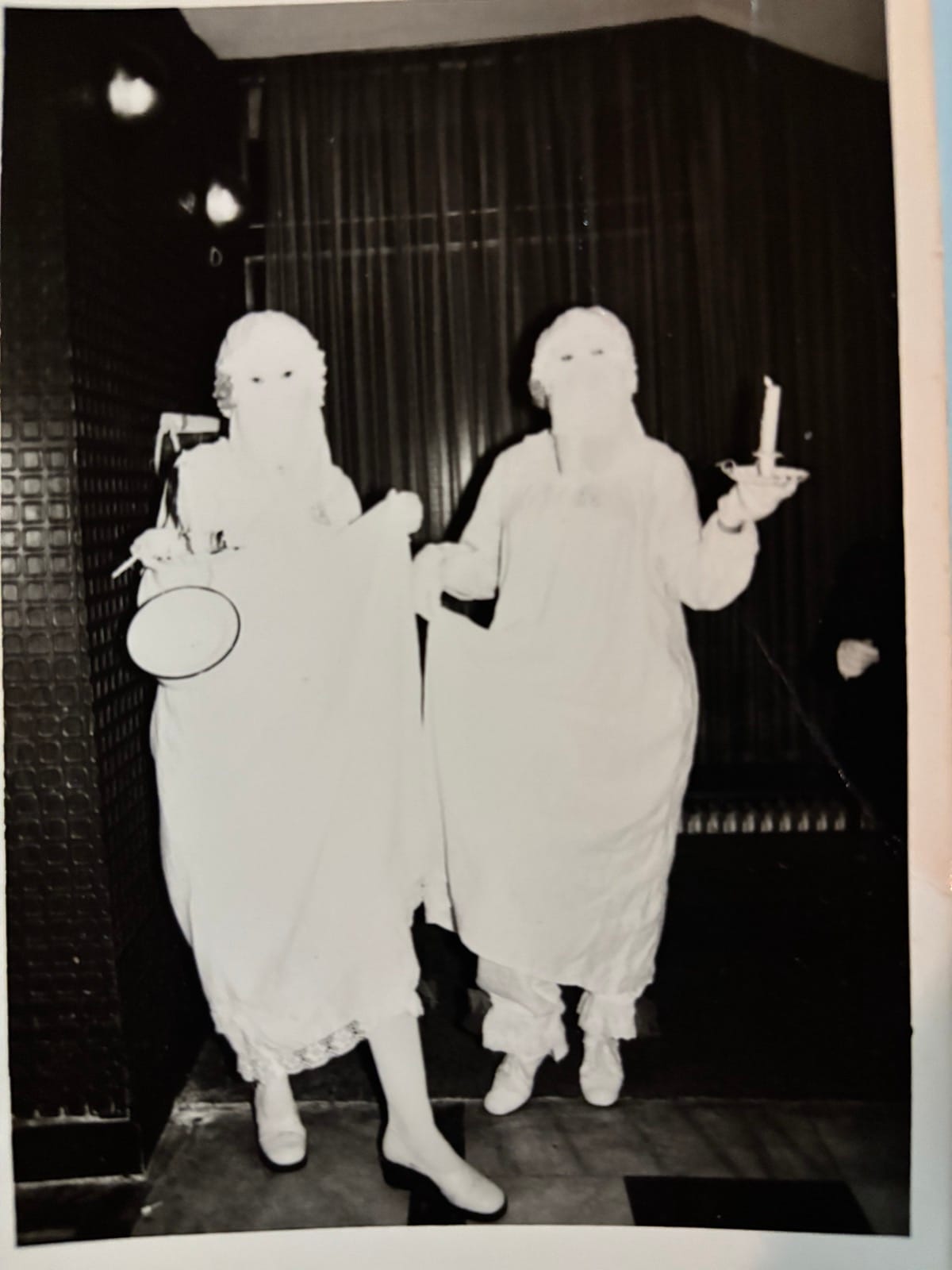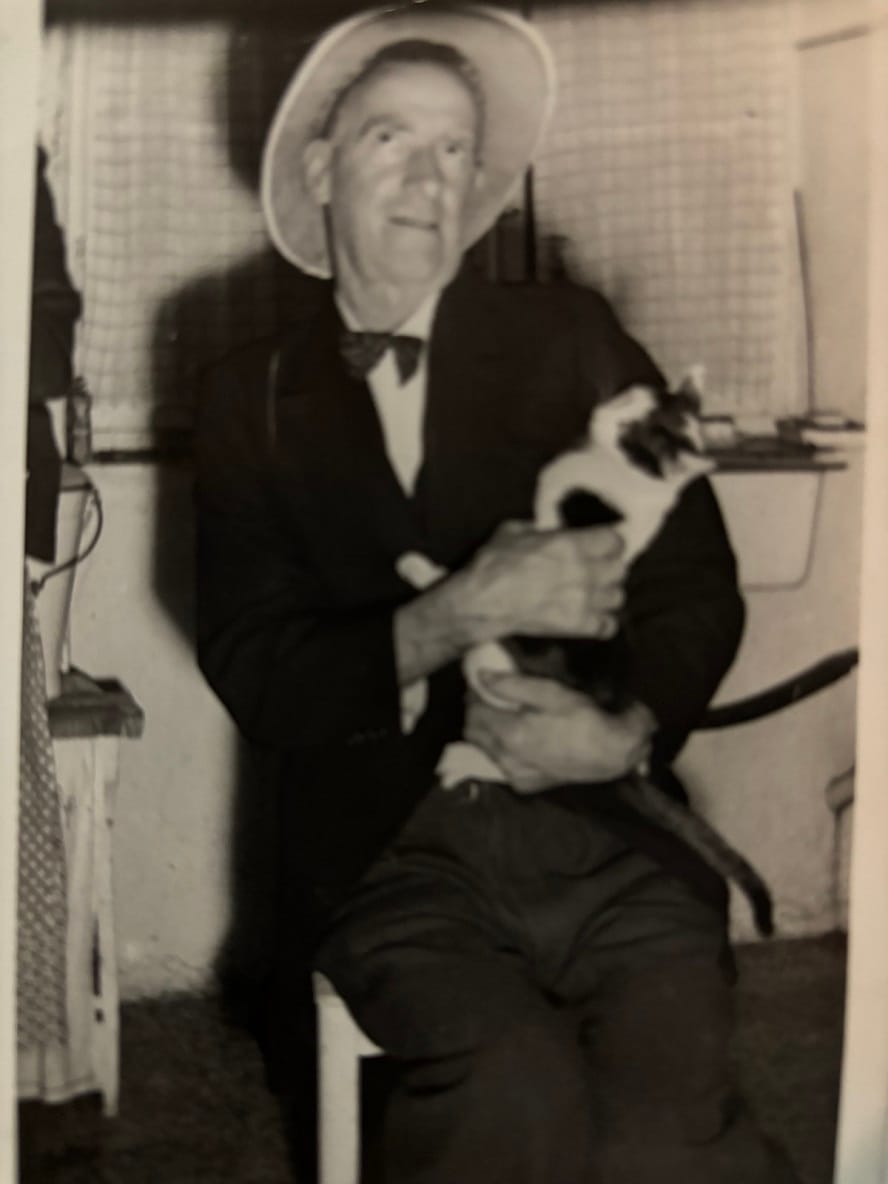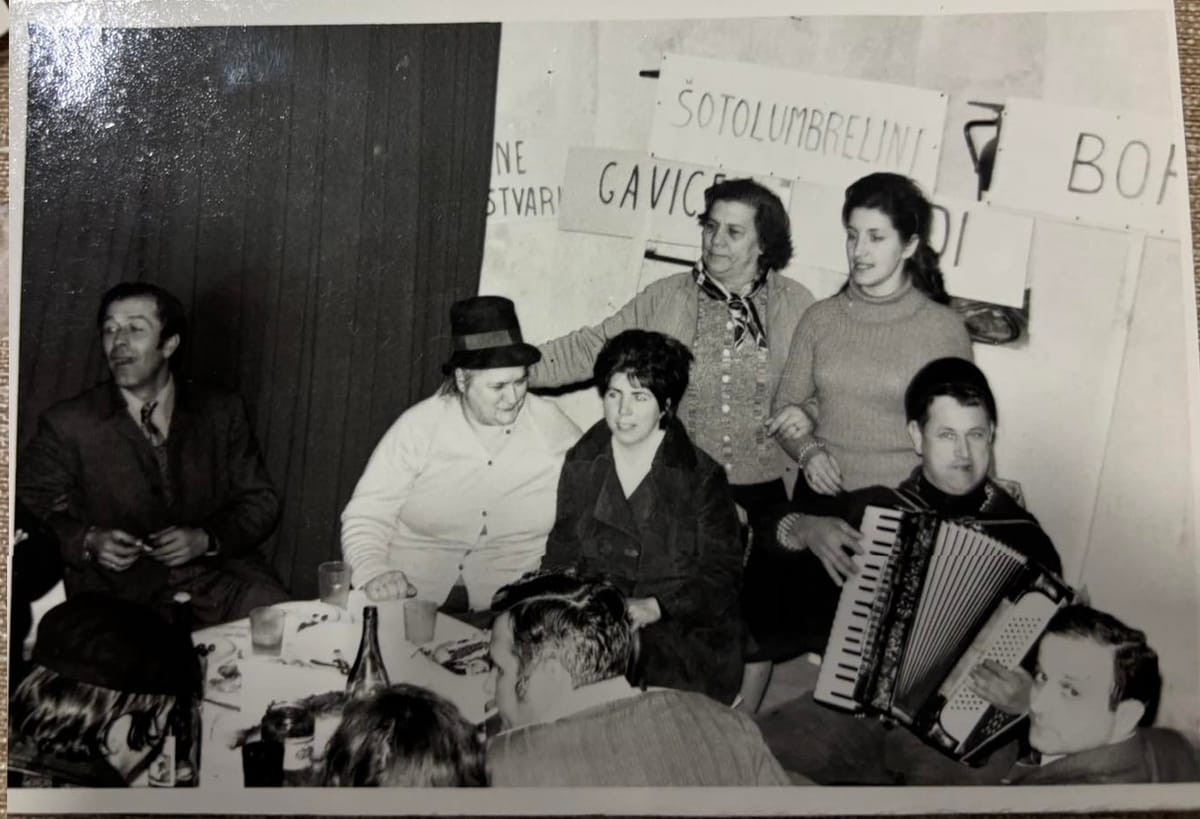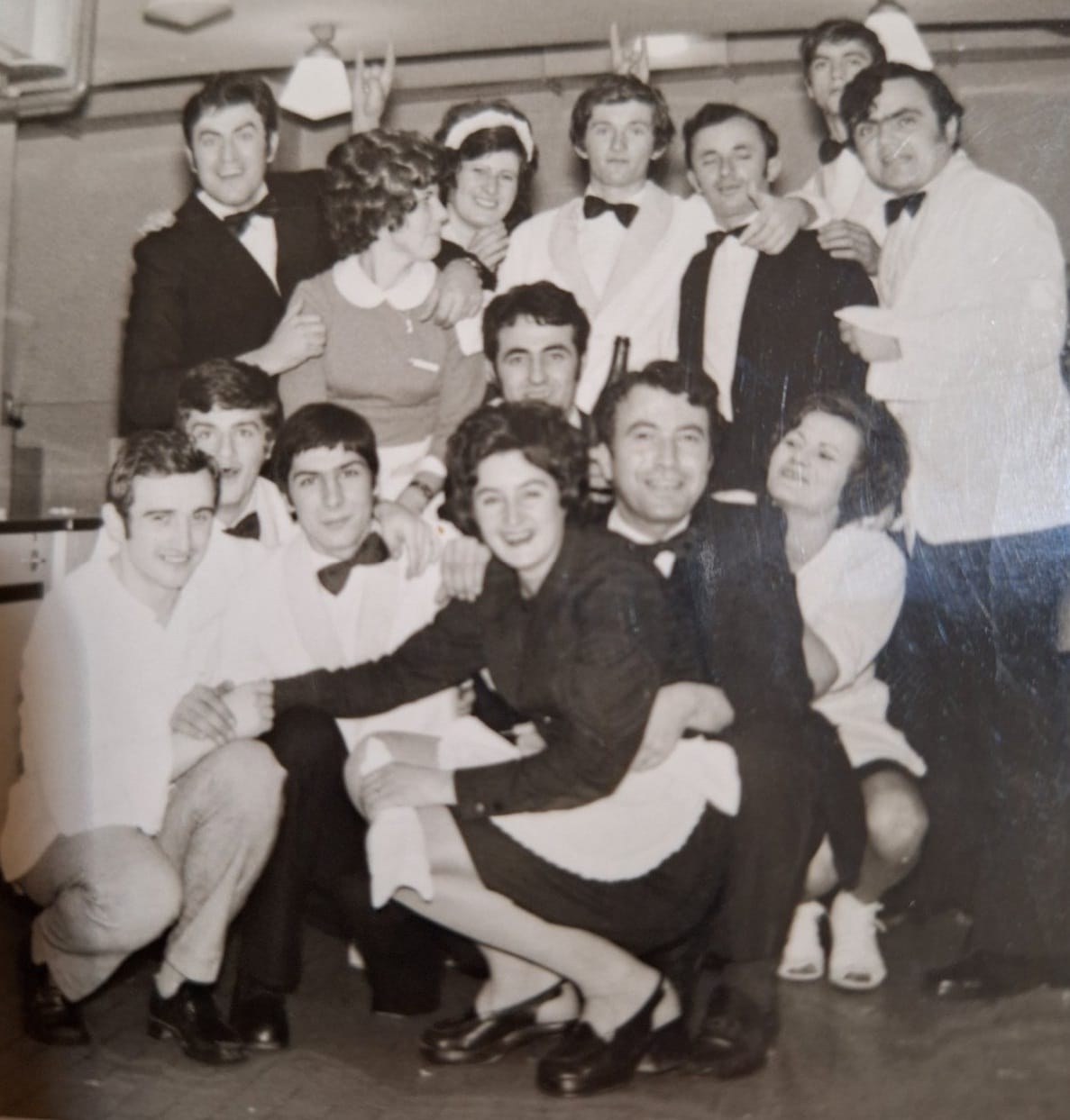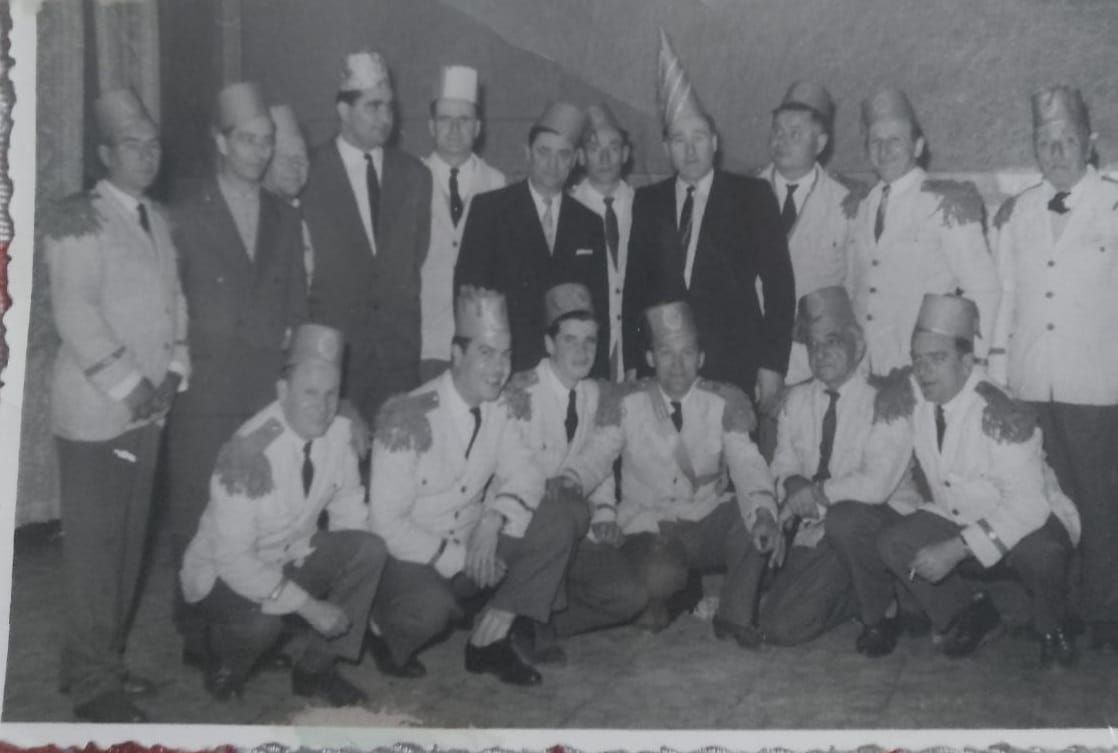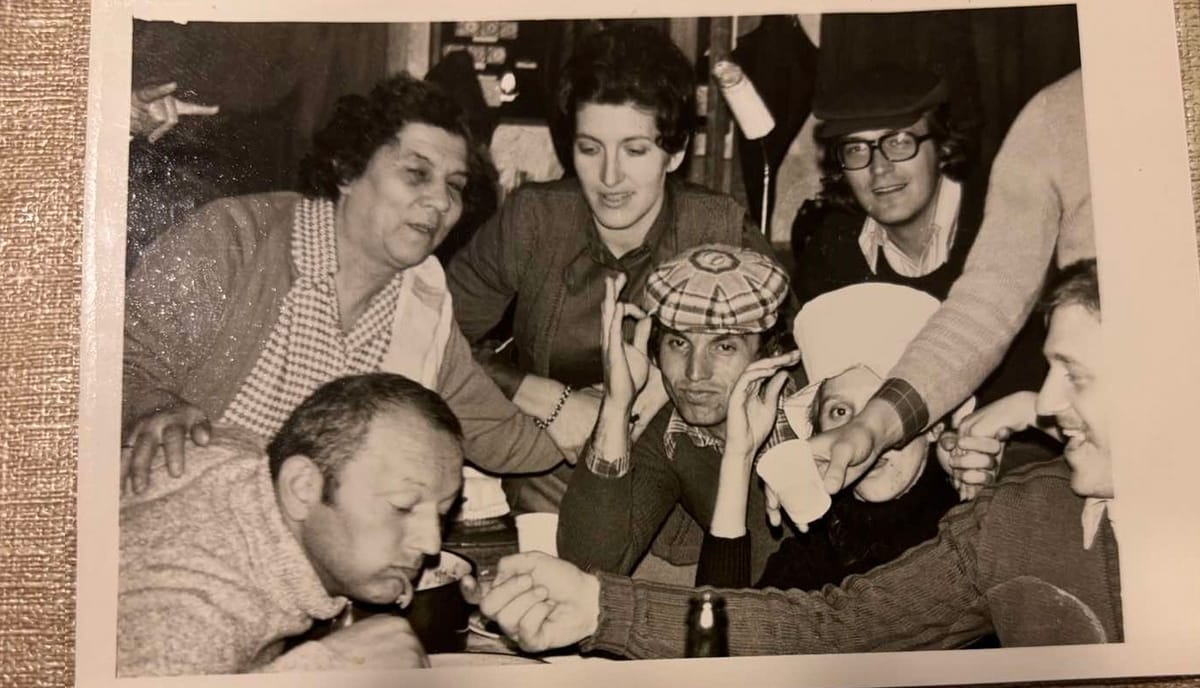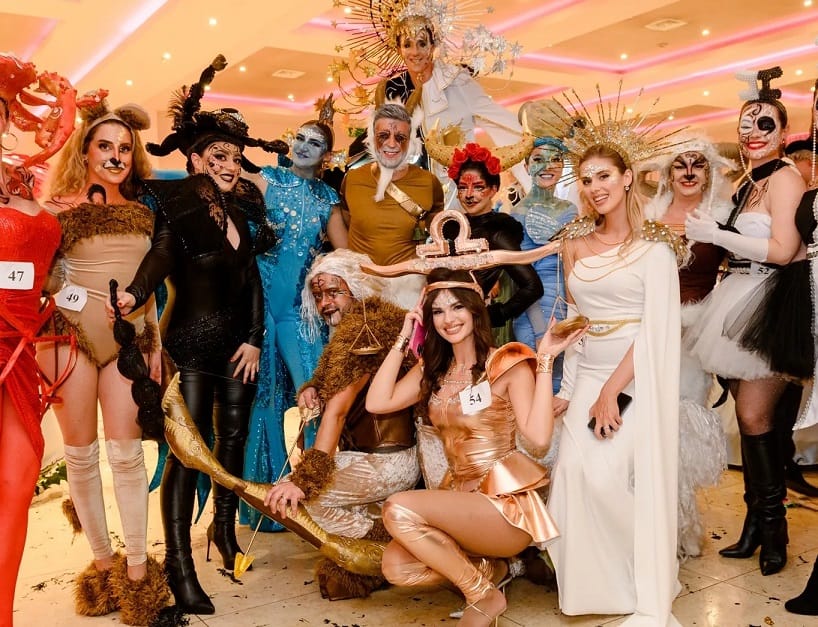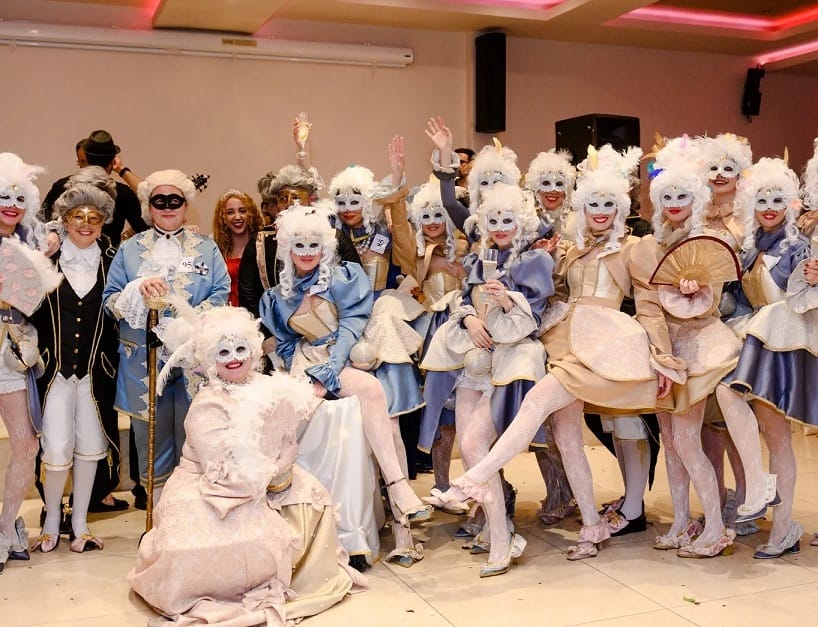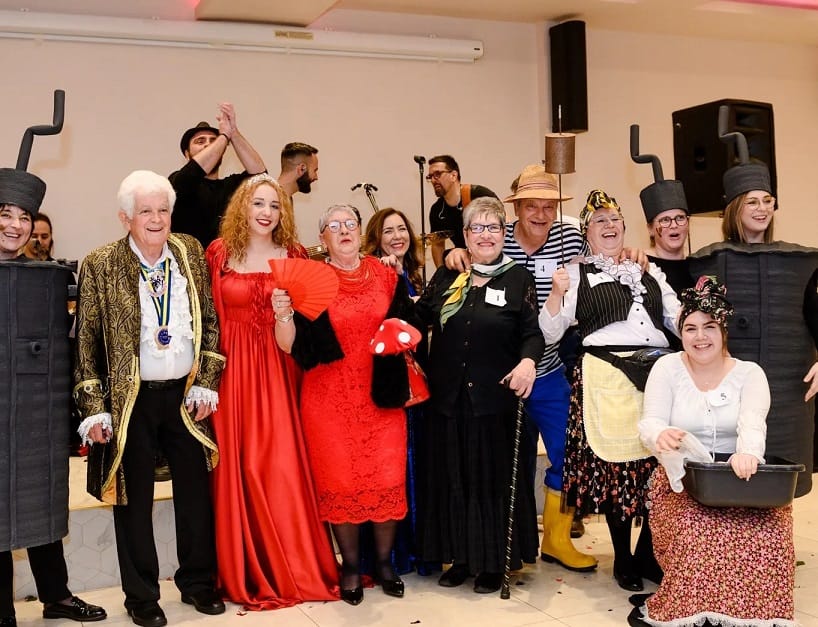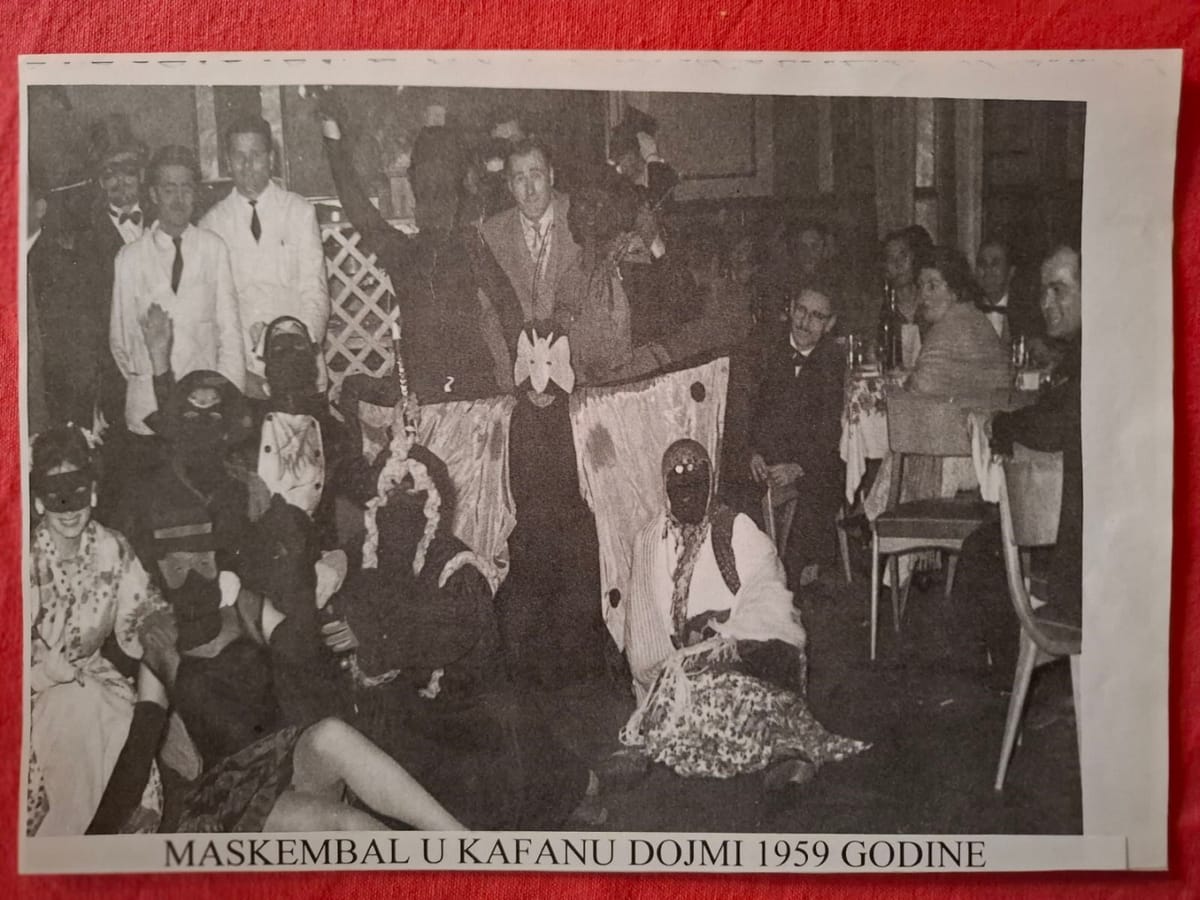
There were masked balls around Kotor too, but those at the Dojmi café are still considered unsurpassed. The original masks with Đuro Cota and Tasija, Venus being lowered from Dojmi’s ceiling, the early-morning rounds of the town by almost the whole company from Dojmi and the return to Dojmi until dawn, with fanfares, are nostalgic reminders of a time that lives on in memory. We remember the unforgettable, cheerful and witty Ivka Lazarević and Marija Huri, Ozana and Milenko Moškov, the Grandis couple, Kata Dončić and Anka Želalić, Branko Đurica and his crew, Nenad Lazarević, Branko and Estera Knežević, Bosa Knežević, Zagorka Tapušković, Ema Muk, and Tanja Dončić, who is still active. And it is only in memory now that parties such as the black-and-white redoute, the costume dance, the masked ball, the firefighters’ ball and the medics’ ball live on, remembered as the height of social life in a genteel, bourgeois Kotor.
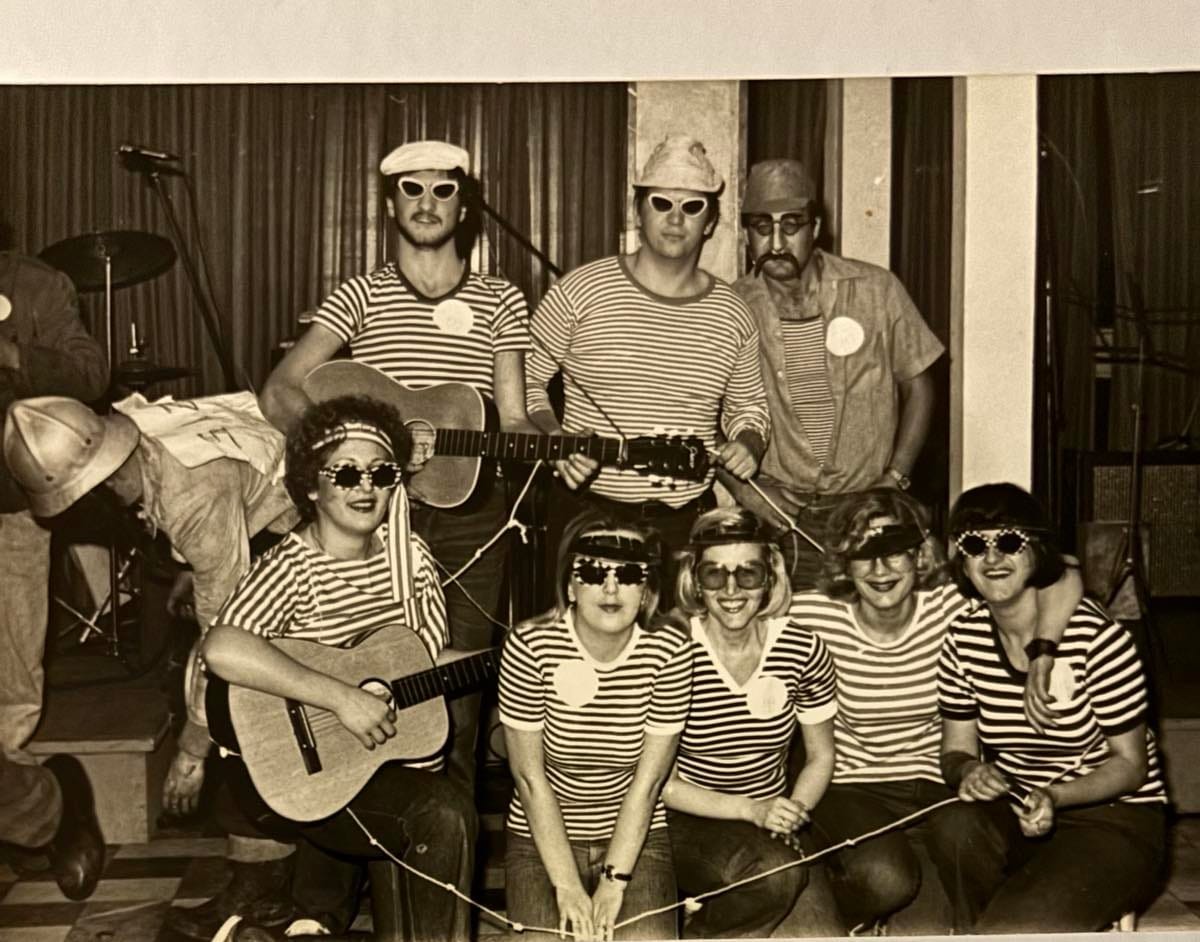
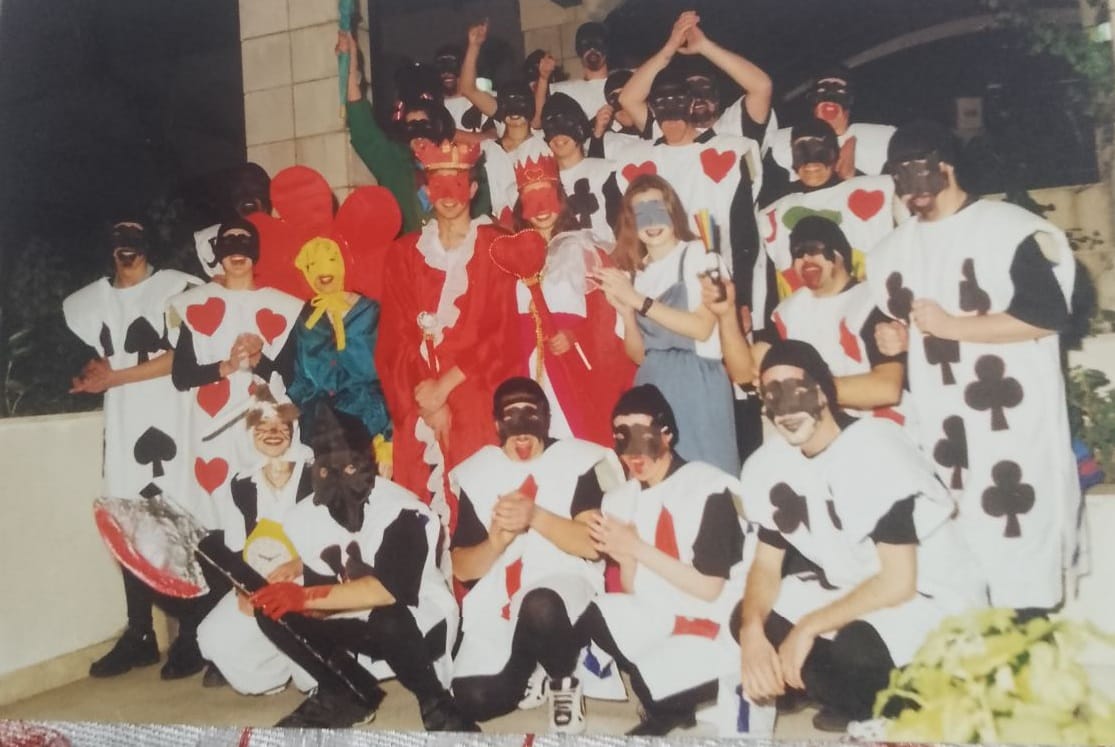
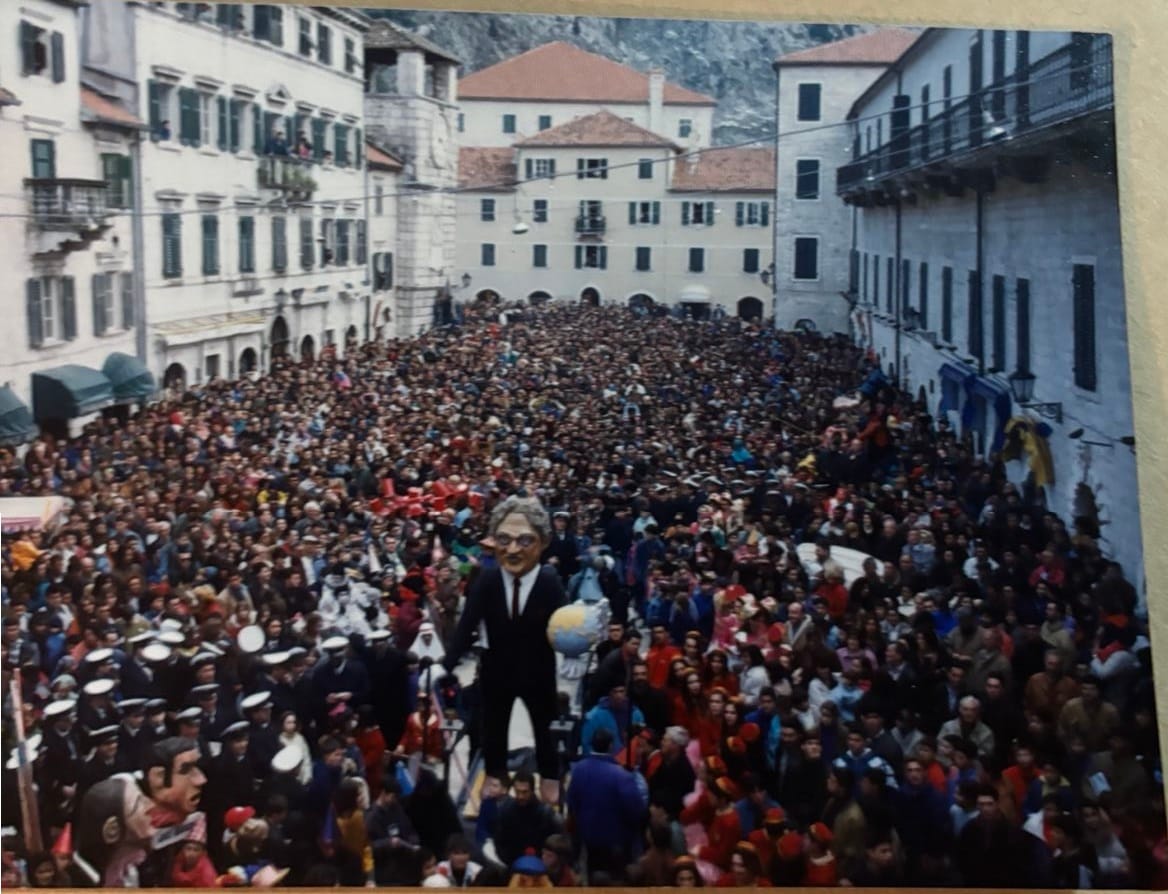
With such a reputation for exceptional parties, the people of Kotor later enjoyed pleasant times at the Fjord too, in both its first and its second location, and in Kotor, a town celebrated in music, masked groups were frequently inspired by popular songs. In the style of, and in keeping with the words of, “Šjora Mare štramacera”, “Kad si bila mala Mare”, “U razdeljak te ljubim” and many other songs, cheerful masked groups would turn up – but generally the rule was that people came to a masked ball on their own, or perhaps as a couple in masks, whereas in recent years groups have dominated, often too large for the cramped venues. Carnivals are something else – there, groups are very welcome.
One more thing: in the old days, young people who were under age, and secondary school pupils in particular, were not allowed to take part in masked balls. Back then, after all, they could not even go to the cinema for the 20:00 evening screening. And at midnight, when the best at the masked ball were announced, the winners, like everyone else in disguise, took off their masks and revealed who they were.
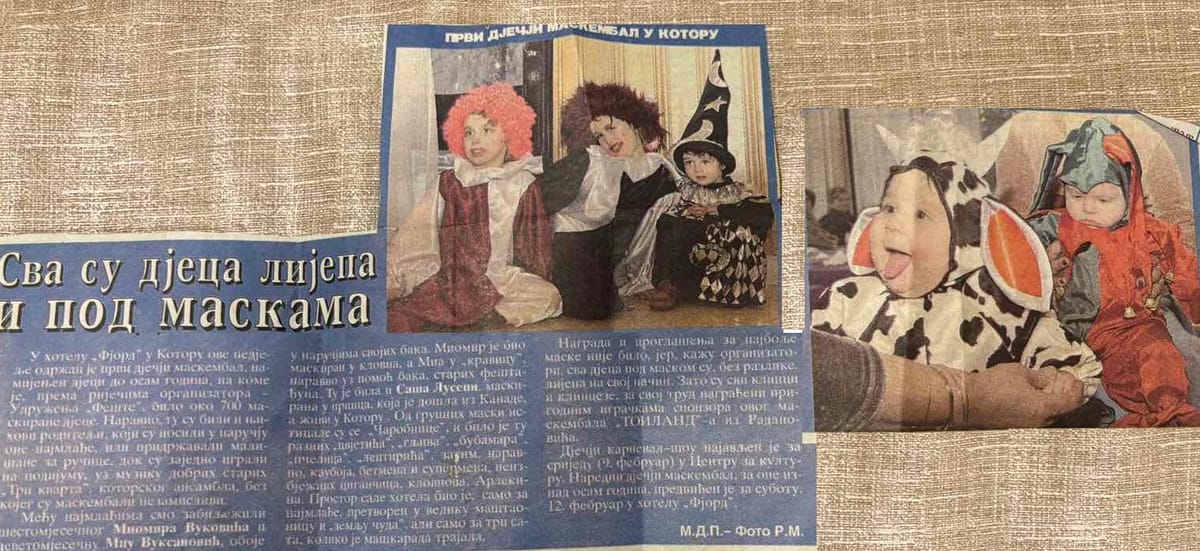
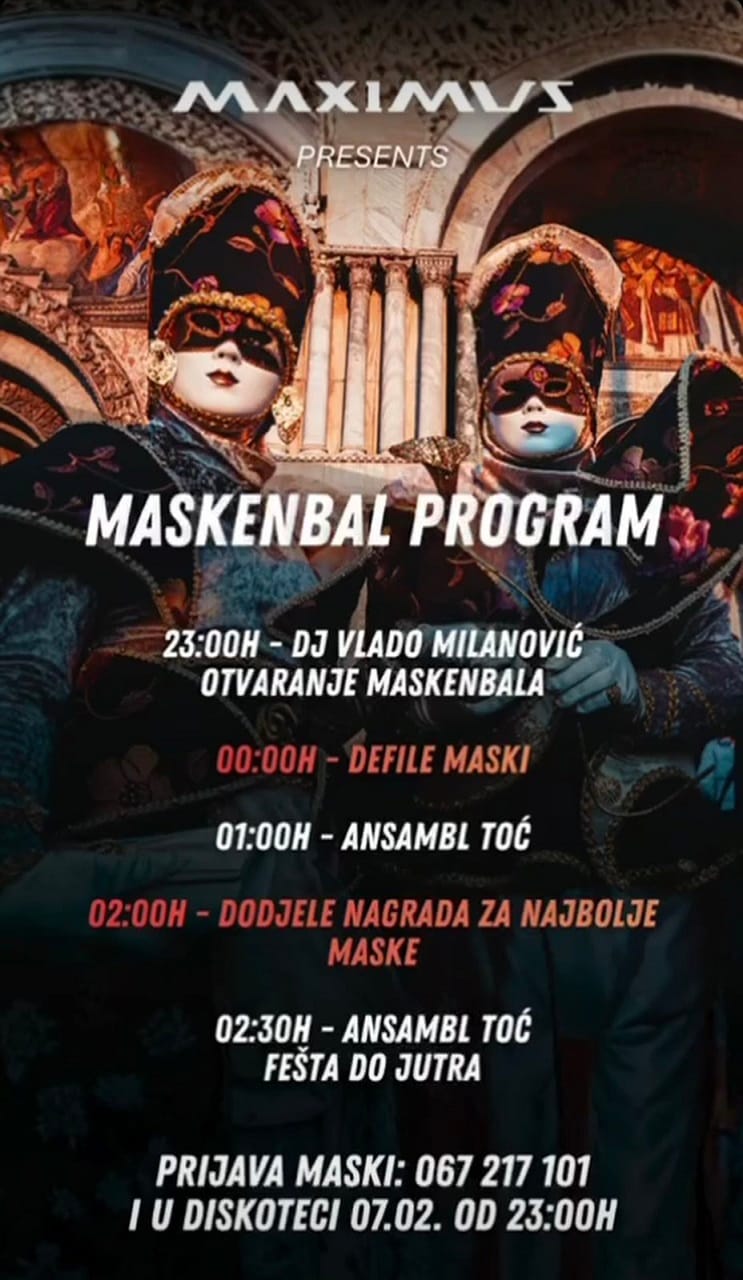
Today, alongside the commercial ones, masked balls are common among children and young people, from nursery through primary to secondary school, which guarantees Kotor a sure continuation of a long tradition that has had, and still has, many devotees in this town.