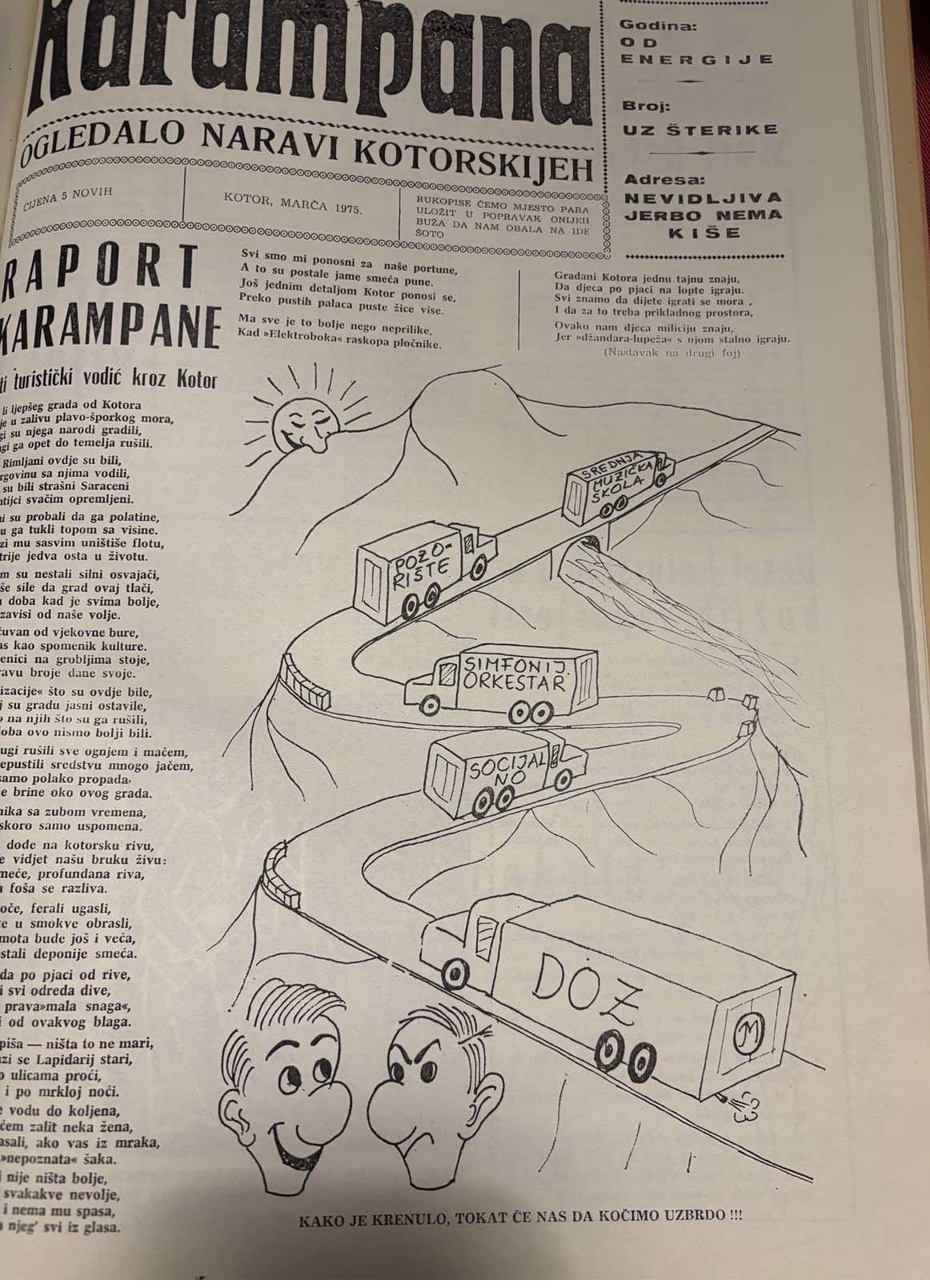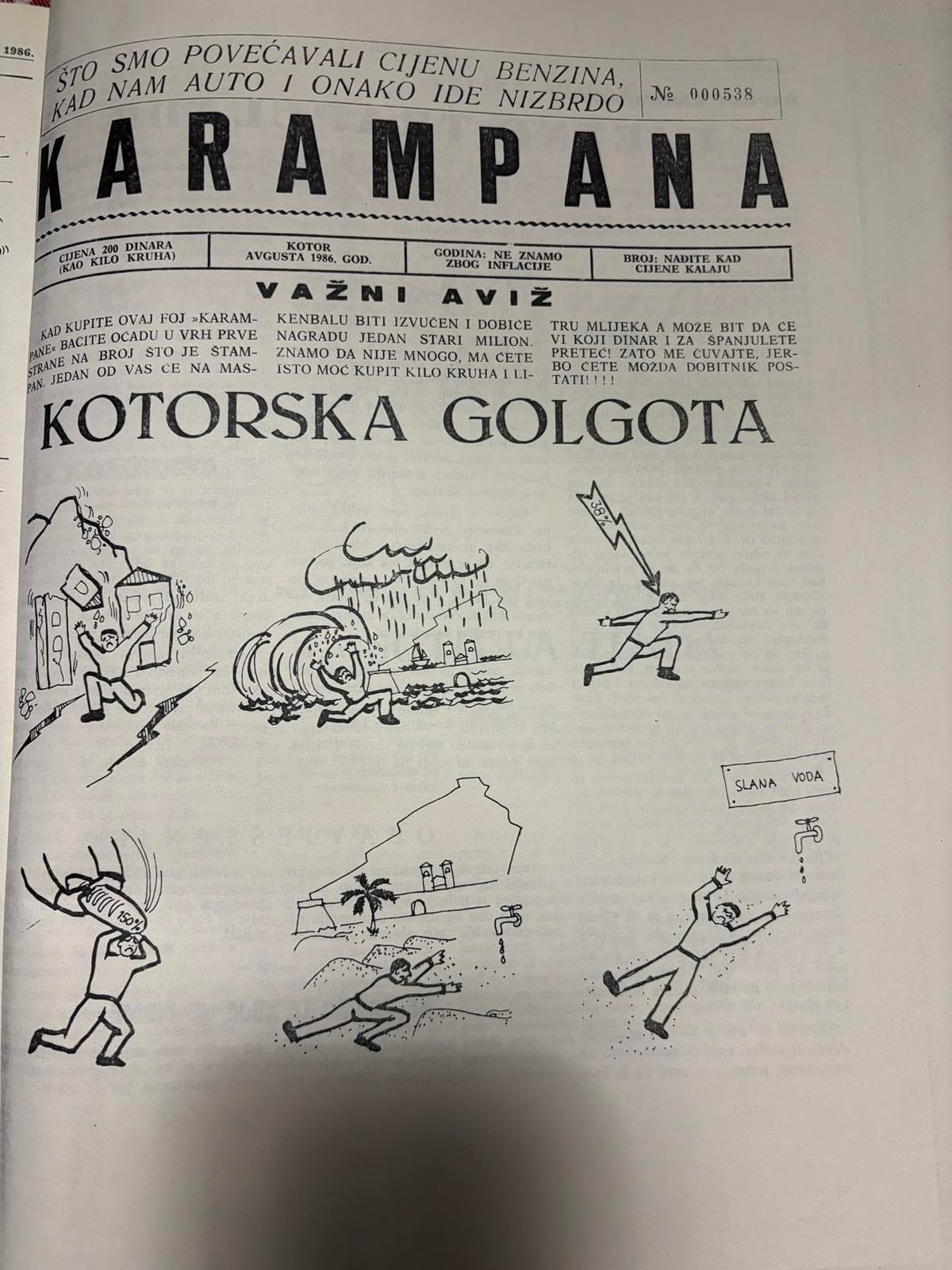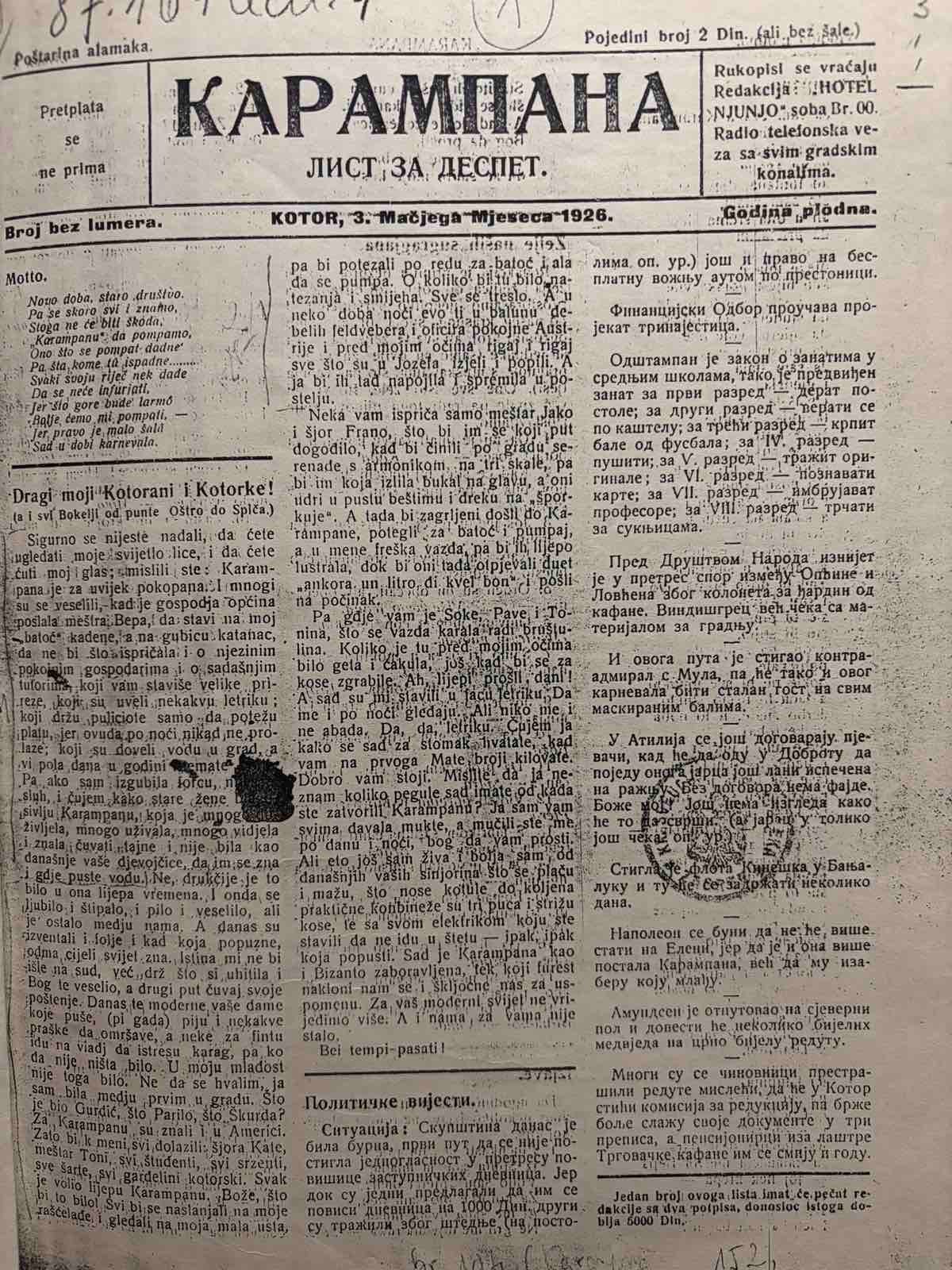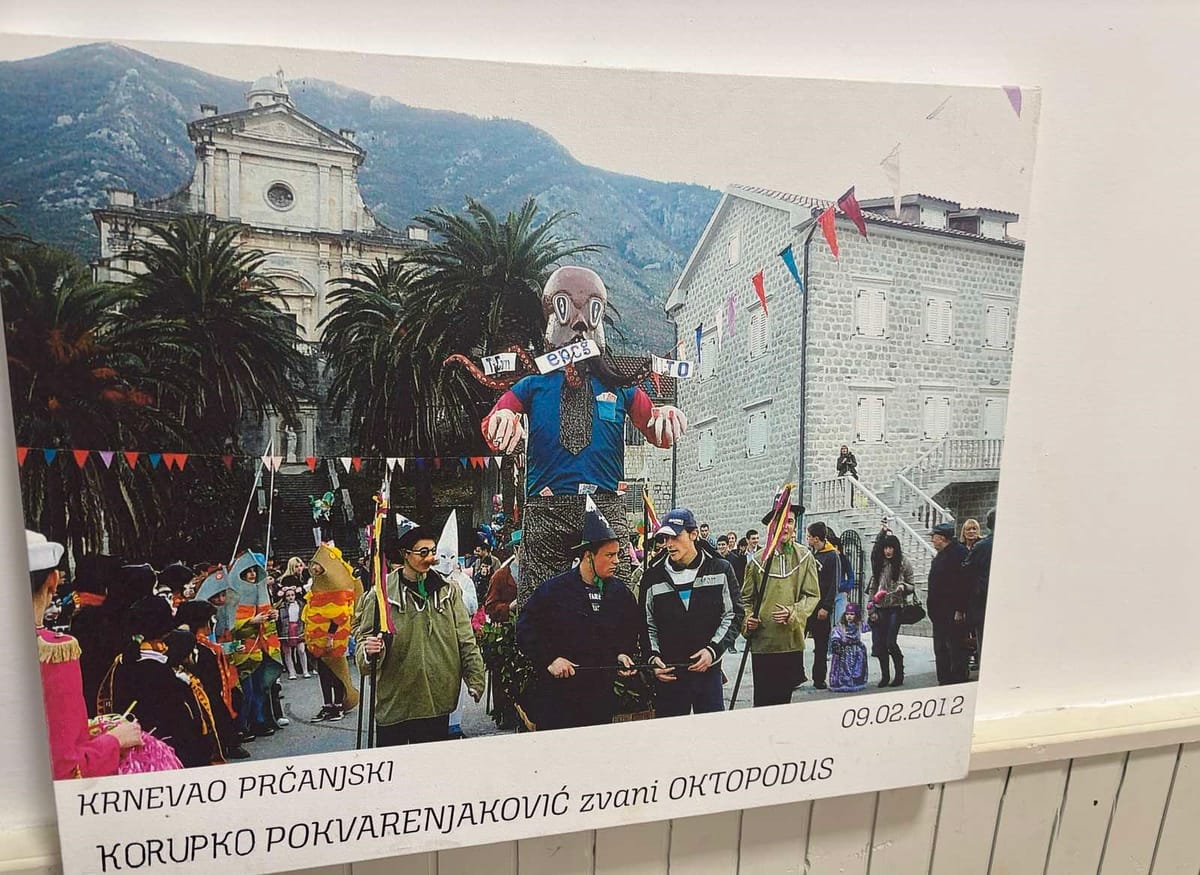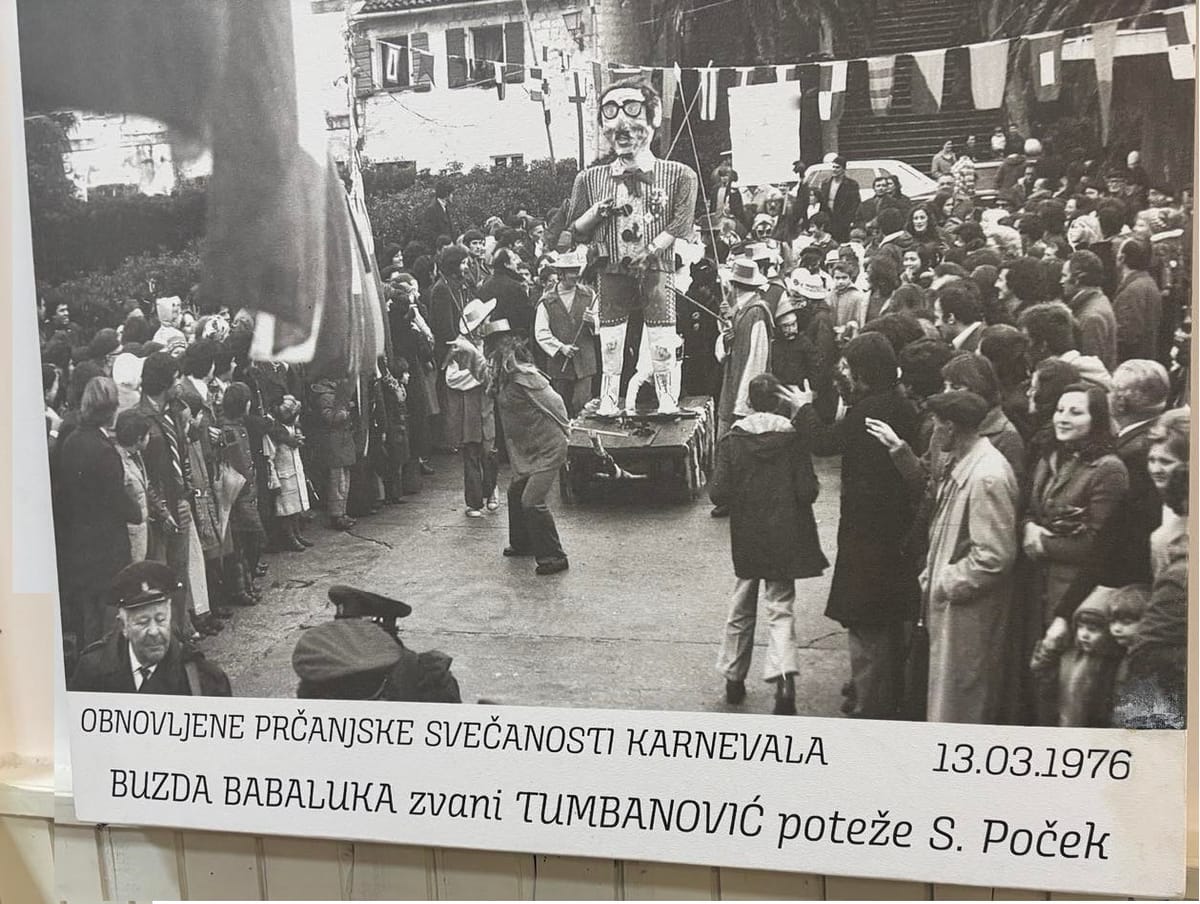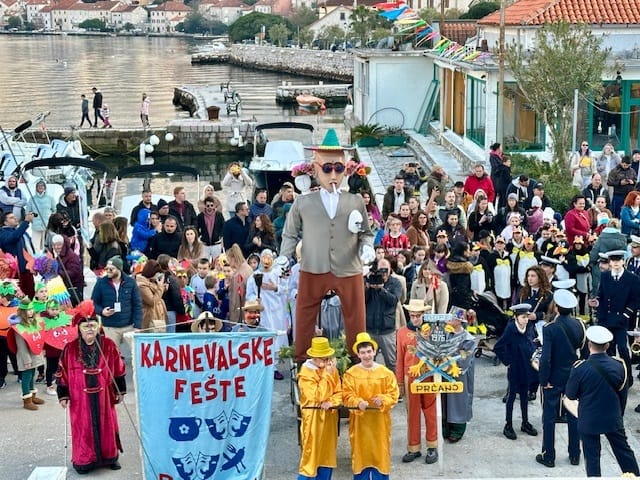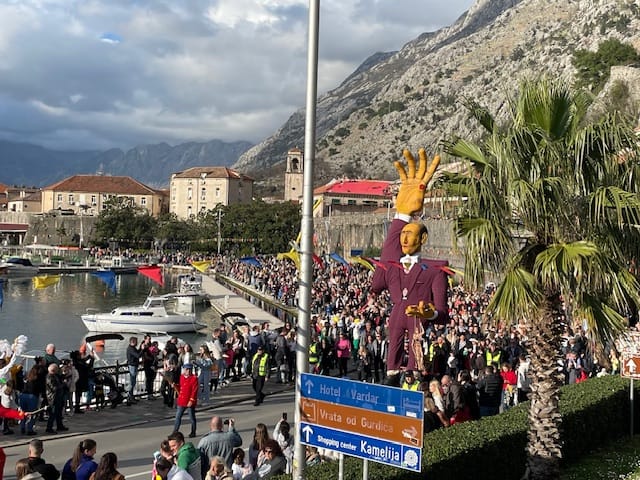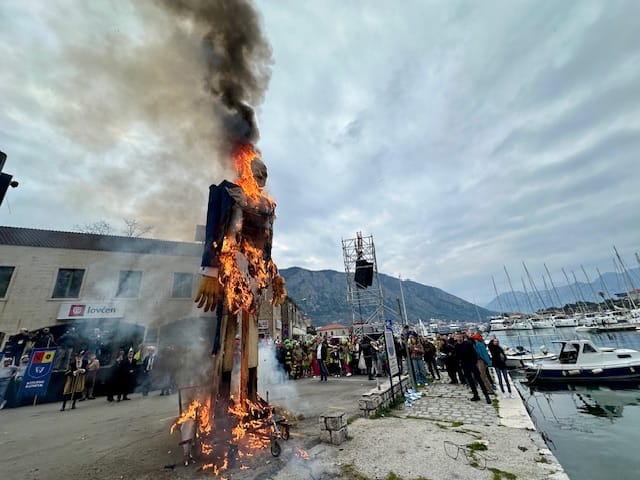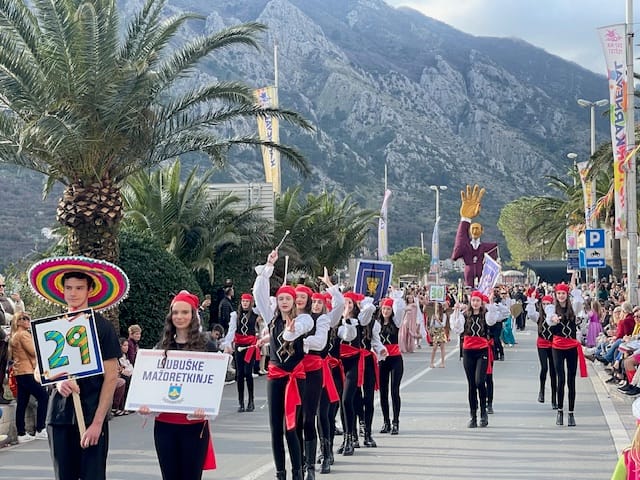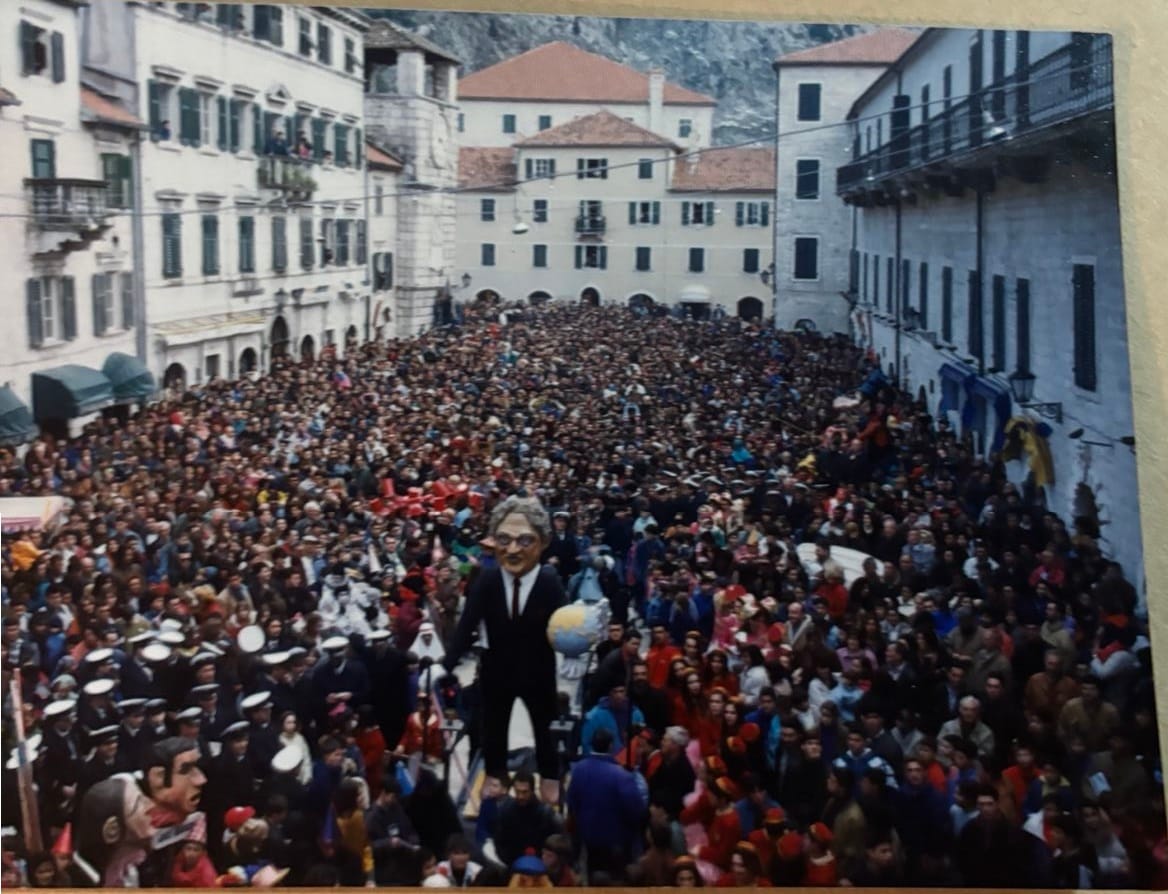
Still, what matters most to everyone on the eve of the carnival parade is whose likeness the carnival mask will bear. After all, only a year ago that choice caused quite a stir in the media. It is a long tradition in Kotor for figures from public life to be blamed for the failings of the past year, whether locally or much further afield. People remember how figures resembling officials – local ones, or those of Montenegro and, earlier, of Yugoslavia – ended up on the pyre this way, and there have been cases of carnival figures closely resembling well-known world personalities being burnt. It is on permanent record that in 1939 a carnival figure bearing a striking resemblance to the Prime Minister of the Royal Government of Yugoslavia, Milan Stojadinović, ended up on the pyre. In that pre-war period, Karampana even ran a prize competition with the question “who is this eminent personage?”, offering as possible answers Mussolini, Hitler, Stalin, Franco or a certain politician from Boka. The ambitions of the people of Kotor have always been great, and Karampana – now a centenarian and the indispensable companion of the carnival festivities – was launched in 1926 on the initiative of members of the Serbian Singing Society “Jedinstvo”. From its first issue it has been printed in both Cyrillic and Latin script. Karampana prints the full text of the trial and the verdict, so that everyone can read at leisure what the members of the jury said at the trial when the sentence was pronounced.
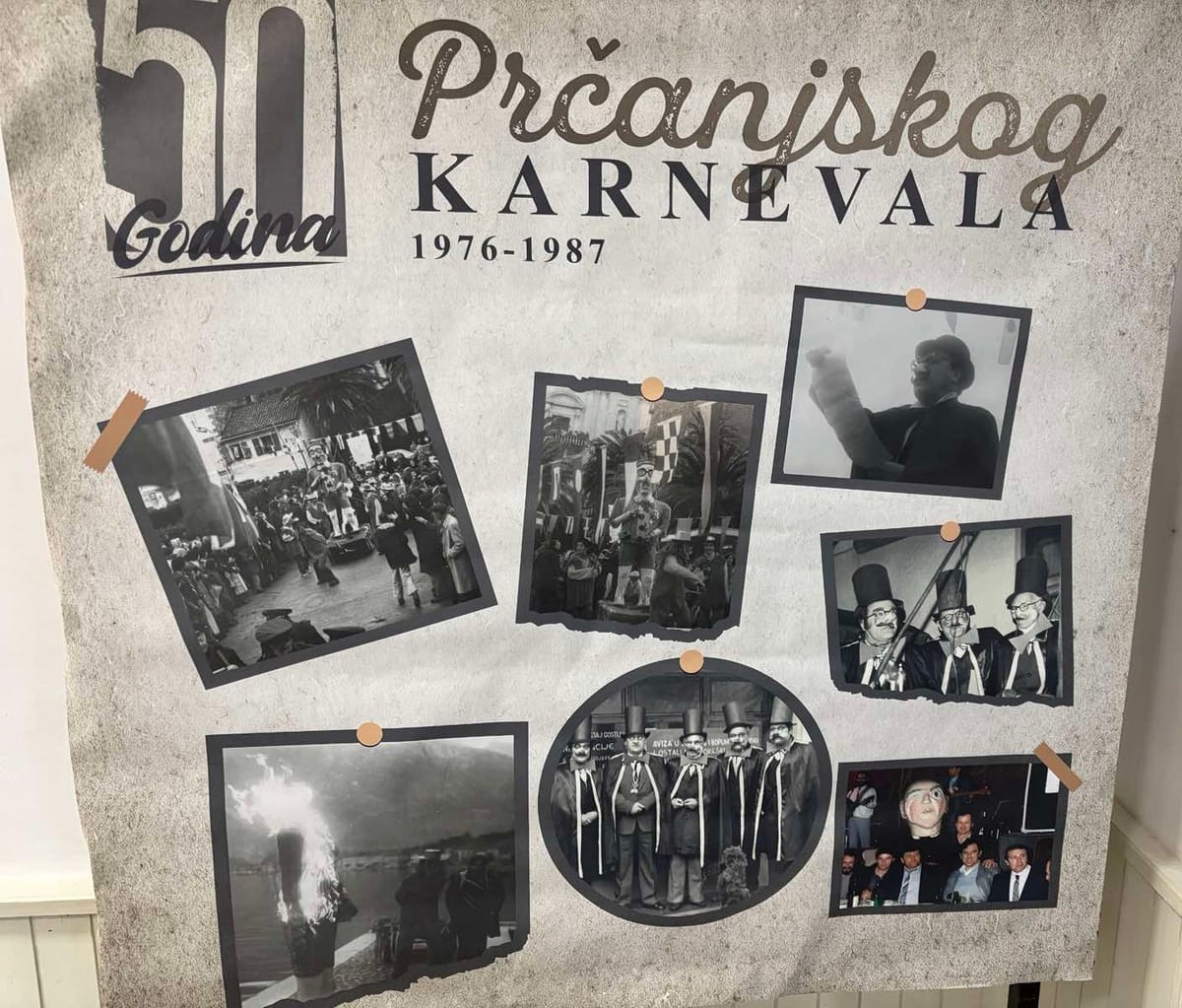
Yet despite traces going back to the Middle Ages, the Kotor carnival, like Karampana and the masked ball, was interrupted for various reasons, and after the Second World War the ideology of the one-party system had no sympathy for the carnival, the masked ball or Karampana, just as the ceremonial celebrations of St Tryphon and the St Sava Academy did not suit it either.
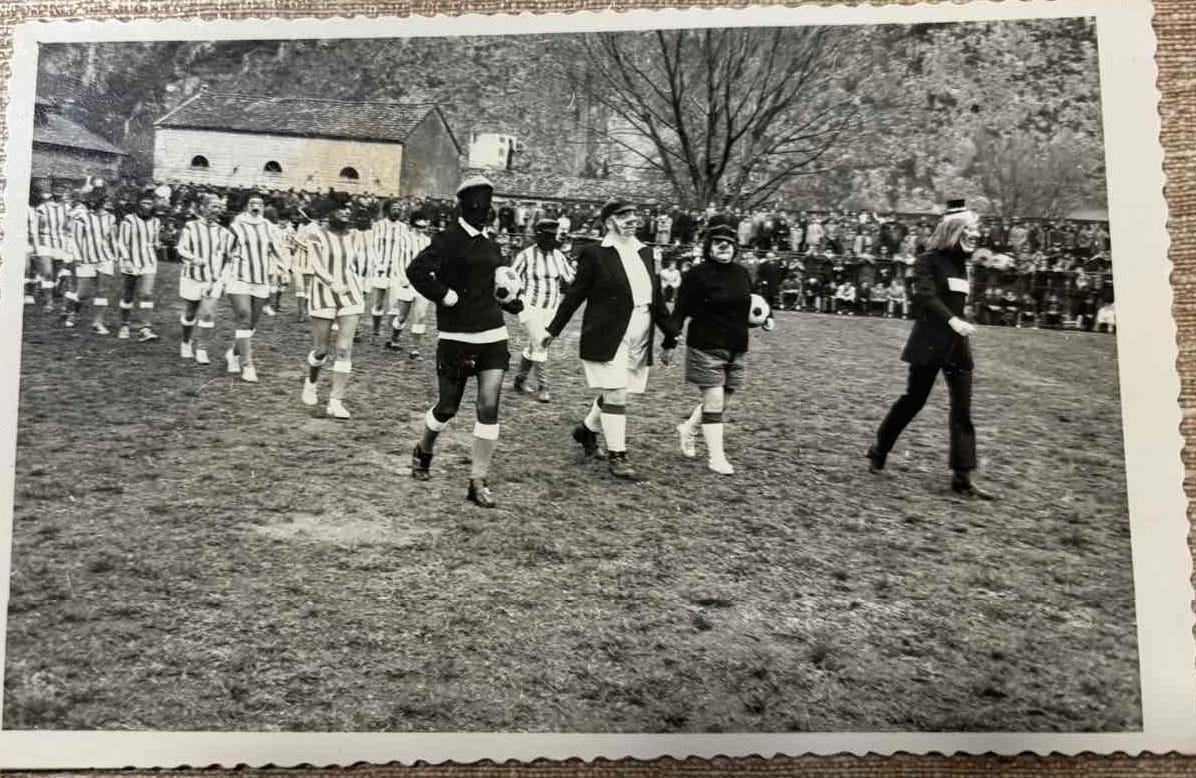
One of the unforgettable carnivals was in 1973, when two teams of Kotor women, dressed in the kits of Bokelj and Red Star, played a curtain-raiser to the football match between Bokelj and Red Star, who were visiting with Džajić at their head.